Indigenous

Treeshop - Indigenous Tree Nursery

I met Piet and Sandra at their nursery north of Pretoria one Friday morning. Piet was six metres up a tall ladder busy welding a steel structure (new shade structures) while Sandra was walking through the farm keeping track of orders and attending to client requests. Piet and Sandra are both nature enthusiasts who love birdwatching, hiking and travelling South Africa. It is through their passion for the bush that Piet’s hobby of growing trees started. Both look fit and energetic and once they start talking about their business their passion and enthusiasm is contagious.

Piet explained how he presented a course at the University to engineering graduates preparing them for working in the corporate environment. One of the modules taught that when you start working you should have a retirement plan in place for when you reach the end of your working career. The theory explains that you should “start a hobby that you enjoy that can become a stream of income when you retire” and so Piet decided to put the theory that he taught into practice.

Sandra took me through the well organised Nursery - a treasure trove of Indigenous Trees

Piet took a percentage of his retirement savings and invested it towards the tree growing business which originally only started as a hobby. Sandra explains that his first seedlings were grown on the covered patio of their home in Vanderbijlpark. It is from here that they developed the business for a period of 12 years while Piet was still employed. During this period they purchased the farm where the nursery is now established. When Piet retired they moved to Pretoria where he was able to focus all his energy to further develop the farm, automate some of the tree cultivation processes and expand Treeshop’s species offer. Piet uses his engineering background to design new technology that benefits the business – from growing seedlings in trays made with 3D printing technology to building new greenhouses.

The new shade structures under construction

Sandra has a vast knowledge about all the trees and plants that they grow

The nursery is continuously expanding and through Piet and Sandra’s passion and dedication it is also innovating as they aim to become the best supplier of indigenous trees in Southern Africa. It boasts a wide range of indigenous trees of varying sizes and they are specifically attempting to grow trees that are not easily available in cultivation because they are either difficult to grow or find.

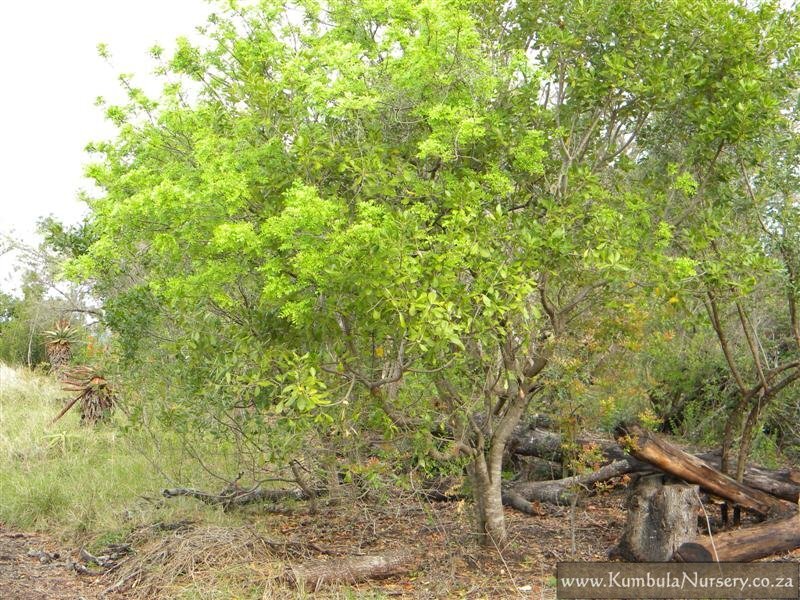
Pittosporum viridiflorum (Cheesewood)

Rothmannia globosa (September Bells)

The nursery also includes a bonsai range and it is amazing to see miniature versions of indigenous trees. They have also positioned themselves as forerunners in the market for growing potted trees. These are ideal if you have limited space or if you want to enjoy indigenous trees in situations that would otherwise be impossible to plant such as patios, balconies or small gardens.

Potted Trees are ideal for difficult to grow situations

Most of the trees that they grow are adapted to the climatic conditions of the Highveld, although some are from warmer parts of the country (eg. Albizia, Commiphora, Sterculia). However, the farm receives temperatures of -4 so they are exposed to colder conditions. Always check frost sensitivity of a tree before deciding to plant it.

If you need help choosing indigenous plants or trees for your garden have a look at the ebook I have written at ebook.sproutlandscapes.co.za. The e-book will guide you to decide what steps to take for your own garden in a simple and encouraging way. There are several plant palettes to help you make correct plant choices including shrubs for screening, trees for screening, and planting in sunny or shady conditions.

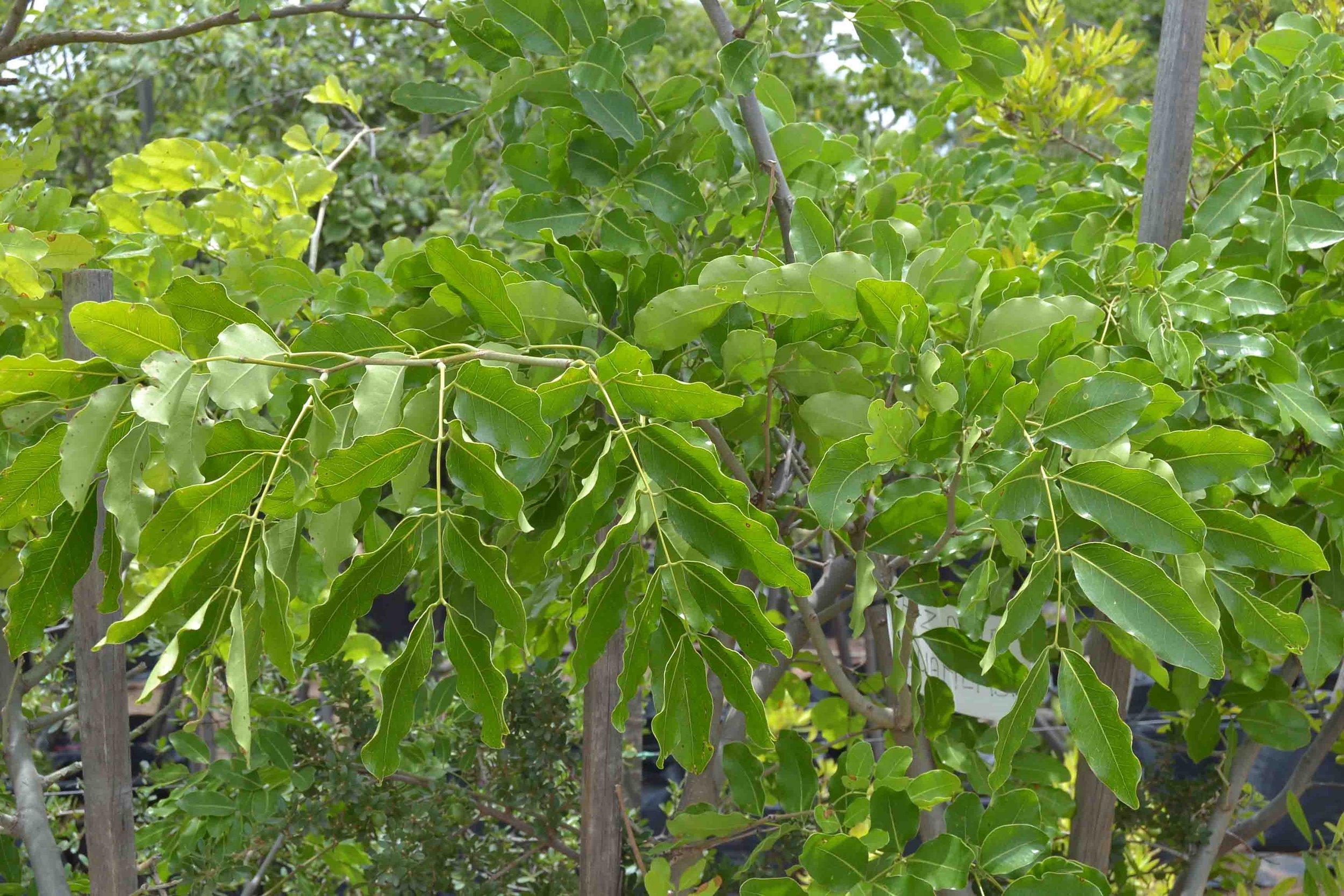
Combretum hereroense (Russet Bushwillow)

Most of the trees that Treeshop grow can be seen on their website but they also grow more unusual species so if you are looking for something specific it would be best to contact them directly to enquire.

Treeshop Nursery sells quality indigenous trees directly to the public and people can purchase through their website www.indigenoustrees.online or by emailing Sandra.

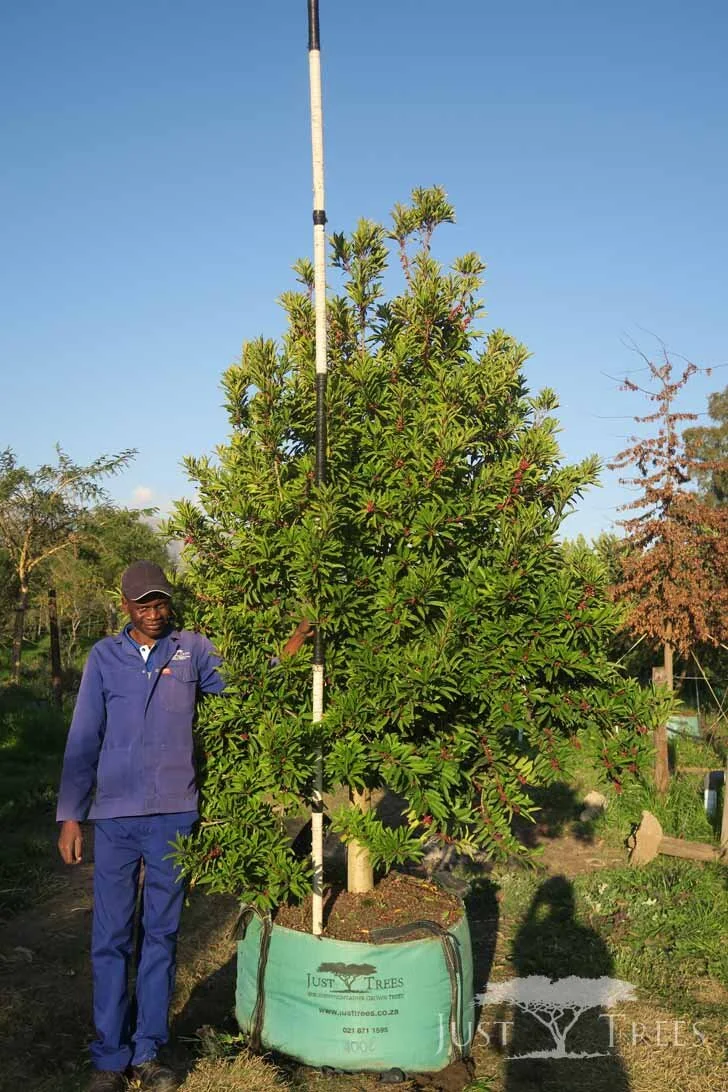
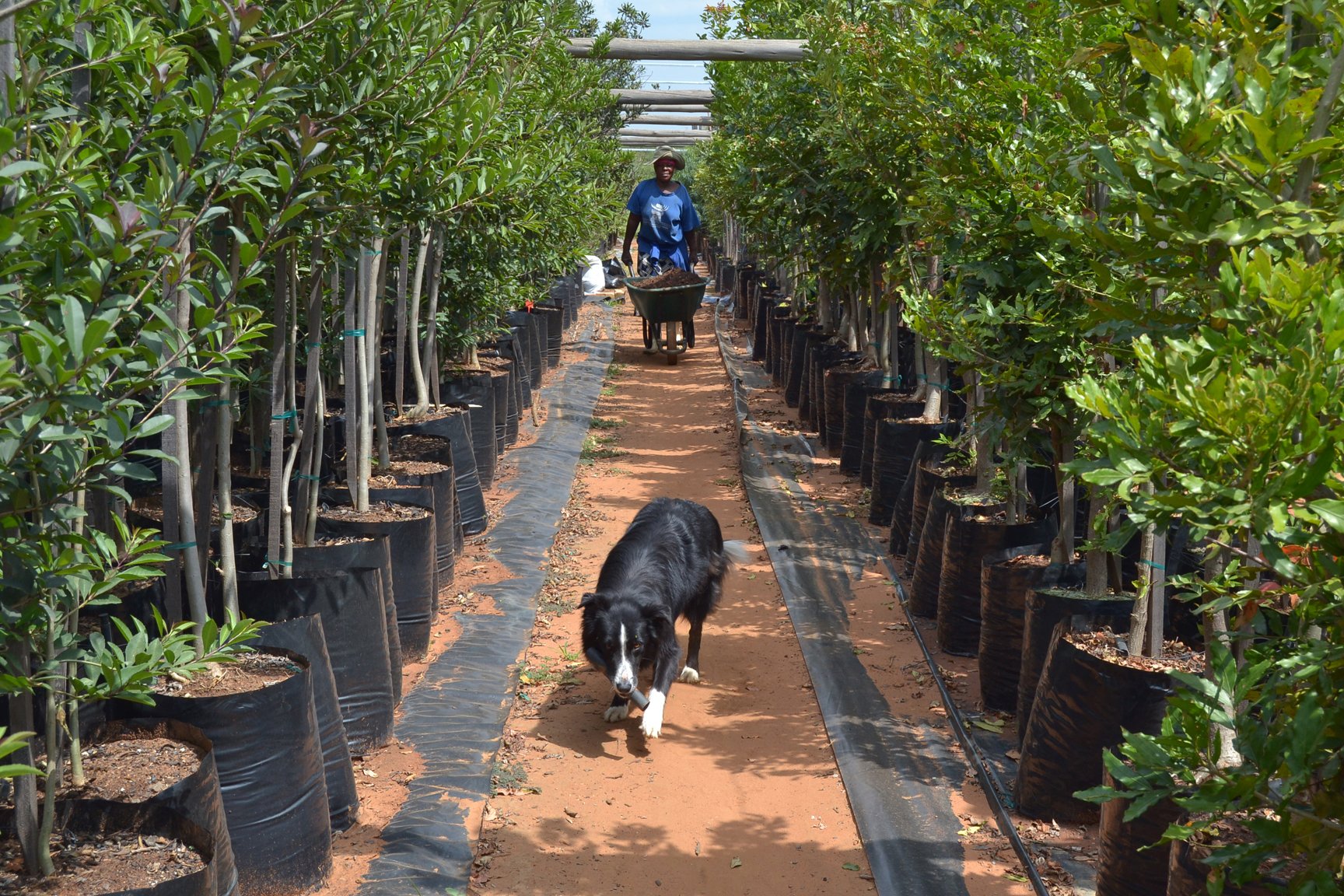
A variety of tree sizes are available - these Ilex mitis (Cape Holly) trees are in 200l. bags

3Bushketeers Wholesale Nursery

3Bushketeers wholesale nursery is located near Brits, north of Hartbeespoort Dam, and grows a wide range of indigenous trees, shrubs and groundcovers as well as fruit trees. 3Bushketeers was established in 2006 by three partners, hence the play on words in the name.

Andries Botha, one of partners, is a passionate horticulturalist and took me on a tour of the nursery and the farm. He is extremely knowledgeable, not only about plants but also about the history of the area and if prompted will share stories about past warriors and wars from the surrounding region.

He explained that originally the nursery was established to provide unique indigenous trees “weird and wonderful, not just the same everyday stuff”, trees that were not easily available at the time. They also wanted to provide indigenous alternatives to the exotic plants that people were commonly using.

We still find that people are often unaware of the exciting indigenous options available to use and the benefits of planting indigenous plants. As you are probably aware, designing indigenous gardens is close to my heart, so if you are looking to upgrade your garden why not consider buying Sprout’s E-book which is a Guidebook for Homeowner’s to design their own indigenous gardens.

Andries in the Display Garden

Projects the Nursery is Involved In

3Bushketeers is involved in reforestation projects in KwaZulu Natal. The rehabilitation and reforestation relies on the education and involvement of local communities. Andries advocates that our environment is a natural resource that holds a lot of potential and value and if managed correctly can create economic opportunities, employment, food, tourism and other benefits. His involvement includes training and seed harvesting so that local indigenous plants can be conserved and used for the benefit of the community.

Several Growing Tunnels are used for growing nursery stock

Some Indigenous/Exotic alternatives:

Teclea gerrardii (Zulu Cherry-Orange) instead of Syzigium paniculatum (Brush Cherry)

Bolusanthus speciosus (Tree Wisteria) instead of Jacaranda mimosifolia (Jacaranda)

Cordia caffra (Septeeboom) instead of Betula alba (Silver Birch)

Cordyla africana (Wild Mango) instead of Caesalpinnia faurea (Leopard Tree) (check frost sensitivity before planting)

Thespesia acutiloba (Wild Tulip Tree) Instead of Hibiscus

Display Garden

3Bushketeers grow a wide range of indigenous trees and shrubs. On an open section of lawn next to the greenhouses they have planted several of these so that people can see established examples of mature specimens.

Some of the trees they grow and sell:

Afzelia quanzensis (Pod Mahogany) – Deciduous tree, frost sensitive. A tree with good shape can be obtained in about 7 years, with an attractive thick stem and spreading crown. Butterfly host tree.

Ataleya alata (Lebombo Kranz Ash) - small to medium-sized deciduous tree, with a sparsely branched crown

Acacia burkei (Black Monkey Thorn) - hardy, deciduous medium-sized tree with fissured bark and rounded crown. Beautiful shade tree, but can be slow growing. Attracts birds and insects.

Sideroxylon inerme (Milkplum) - small to medium evergreen tree more commonly found in coastal gardens, makes an excellent firebreak (SANBI)

Erythrina humeana (Dwarf Coral Tree) – shrub or small tree up to 3m high with long spikes of scarlet flowers.

Acokanthera oppositifolia (Bushman’s Poison) – woody shrub with dark green leaves growing up to 5m high. All parts of the plant are highly poisonous.

I love the image above that captures the simplicity and beauty of farm life.

So if you have any indigenous tree queries or if you are a landscaper looking to buy from a wholesale nursery Andries will be more than happy to help.

For further Information Contact:

Andries Botes 082 498 3321

info@3bushketeers.co.za

Other Nurseries I’ve visited:

Bristlecone Nursery

Gariep Succulent Nursery

Willow Feather Farm Nursery

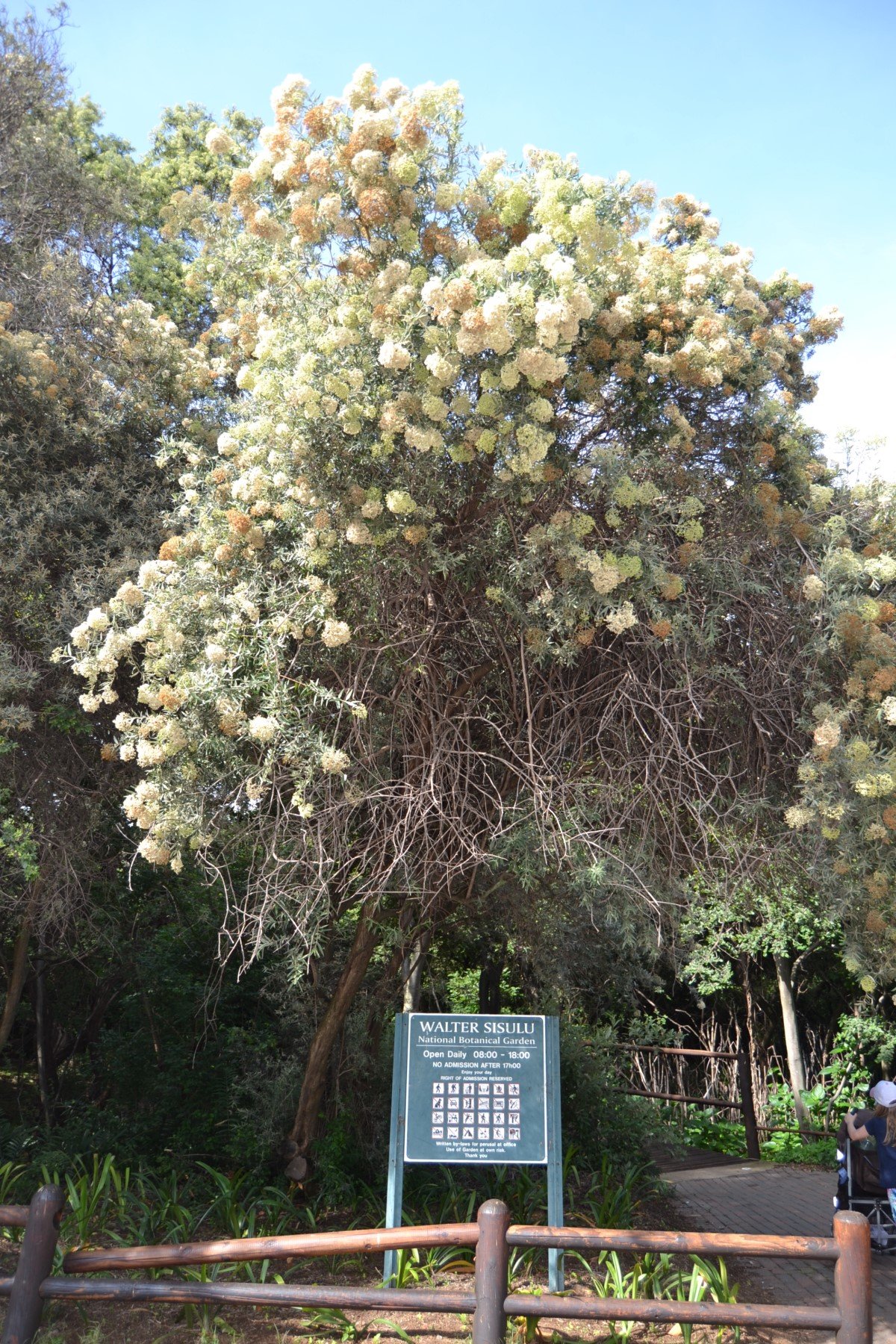
Walter Sisulu Botanical Garden

Walter Sisulu Botanical Garden

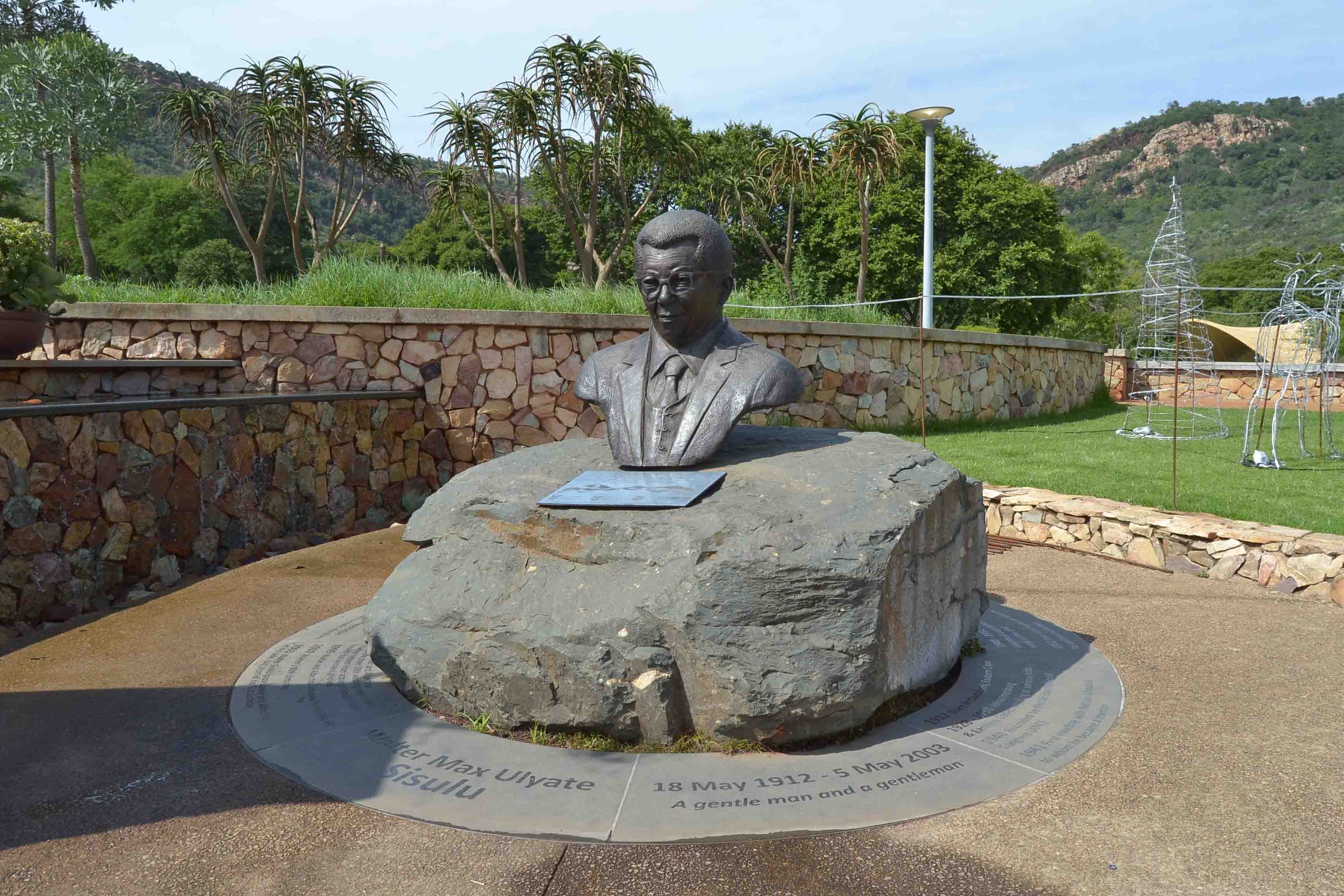
Sculpture of Walter Sisulu at the Walter Sisulu National Botanical Gardens

Walter Sisulu National Botanical Gardens (WSNBG), located in Roodepoort Johannesburg, is an incredibly beautiful garden filled with indigenous gardening inspiration. The nature reserve covers over 300 hectares and was established in 1982. While there are several hikes and trails through the reserve the 25 hectares that are cultivated as gardens gives one ample opportunity to explore this botanical beauty. A highlight of visiting this garden is the beautiful Witpoortjie Waterfall which cascades into a calm stream that meanders through the gardens.

History

In the later 1800s the nearest stop for people to visit the gardens was the railway station in Krugersdorp named Witpoortjie Railway Station, which is believed to be where the waterfall received its name. The gardens were first known as the Transvaal National Botanic Garden and could only be visited by special arrangement. In 1987 it was opened to the public daily as the Witwatersrand National Botanical Garden. In March 2004 it was renamed the Walter Sisulu National Botanical Garden in honour of the late ANC stalwart Mr Walter Sisulu (1912-2003). Walter Sisulu is best known for leading the struggle for a democratic South Africa together with former president Nelson Mandela. (SANBI)

Upon entering the WSNBG one is welcomed by circular stone clad walls surrounding a water feature and statue of Walter Sisulu. We visited in December when they had festive light displays and you could visit the garden in the evening to see the Christmas lights. They often have other events and festivals which are popular and well attended.

Gardens

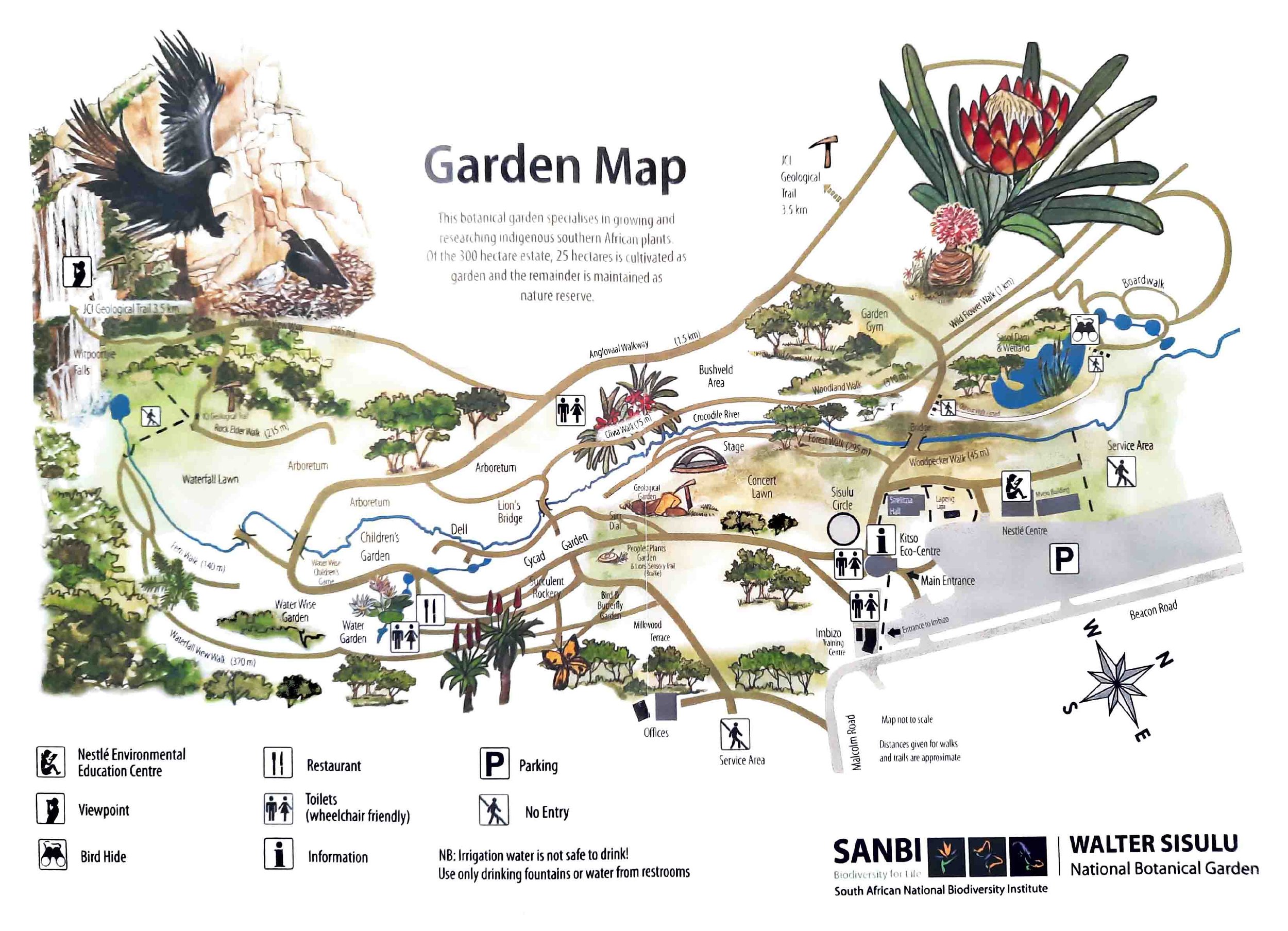
Following the path past the concert lawn you will be enticed to explore several planted areas off the main path including the Geological Garden, People’s Plants Garden and the Succulent Rockery. The Geological Garden has some interesting and beautiful rocks on display. In the Succulent Rockery you will find many different types of succulents. with stone pathways meandering its way through. Throughout the garden there are information boards with explanations to learn from. The Waterwise Garden also has educational information on how to conserve water in your garden.

Restaurant

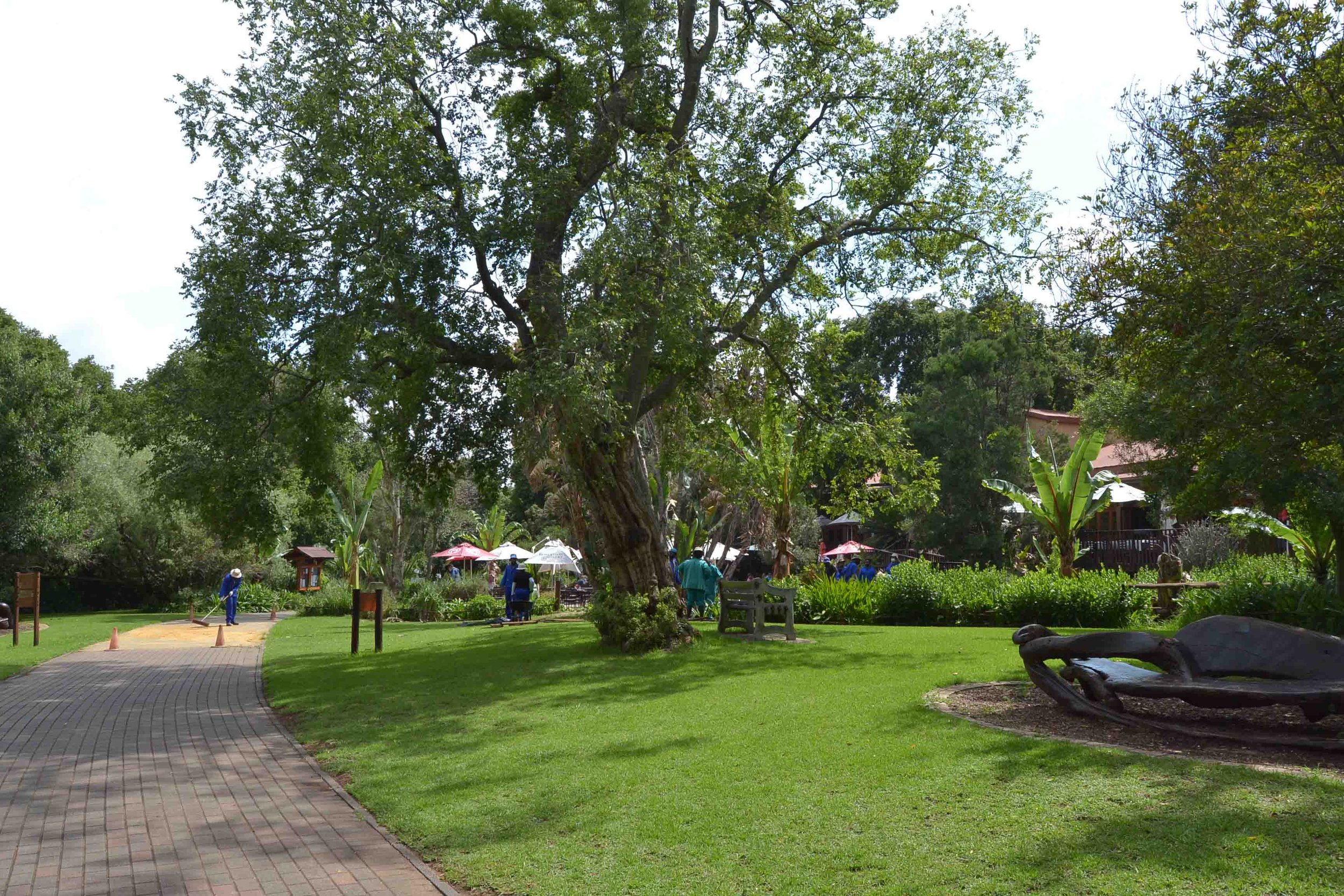
If you continue on the main path you will arrive at the restaurant on your left and children’s play area on your right and if you carry on further you will reach the waterfall area. The restaurant has a tea garden where you can sit and relax and this venue can also be hired for functions. This is a lovely place for a picnic below the large trees.

Restaurant

Children’s Playground

Waterfall

The Witpoortjie Waterfall is a natural waterfall fed by springs upstream and is 70m high. It is regarded as the source of the Crocodile River which flows into Hartebeespoort Dam. Picnicking on the lawn at the waterfall is not allowed because of the high foot traffic in this area. A remarkable Olinia emarginata (Mountain Hard Pear) is in the centre of the lawn and although struck by lightning several years ago it is still alive and being supported to prevent it from falling over.

Birdlife

Over 240 bird species have been recorded in the gardens and it is a renowned breeding spot for Verreaux's Eagles (formerly known as Black Eagles) and popular with birding enthusiasts. The bird list can be requested from sisulugarden@sanbi.org.za

Vegetation

The Garden consists of three main natural vegetation types: Northern Afrotemperate Forest, Egoli Granite Grassland and Gold Reef Mountain Bushveld. This variety of habitats includes over 600 naturally occurring plant species. There are incredible specimens of trees throughout the garden and some impressive examples of Celtis africana and Combretum erythrophyllum can be seen along the Forest Walk that follows the Crocodile River running through the reserve.

If you are interested in indigenous gardening (and I hope you are!) then you will not leave this garden without learning something new or seeing something inspiring. There is always something new to discover.

Visiting the Gardens

The garden is open every day from 08h00 to 17h00.

Remember that there are no bins and you need to take everything that you bring home with you again and No Cash Payments are accepted.

Read more about other Botanical Gardens:

SANBI Website - Walter Sisulu - SANBI

Beautiful Buddleja saligna (False Olive) in flower

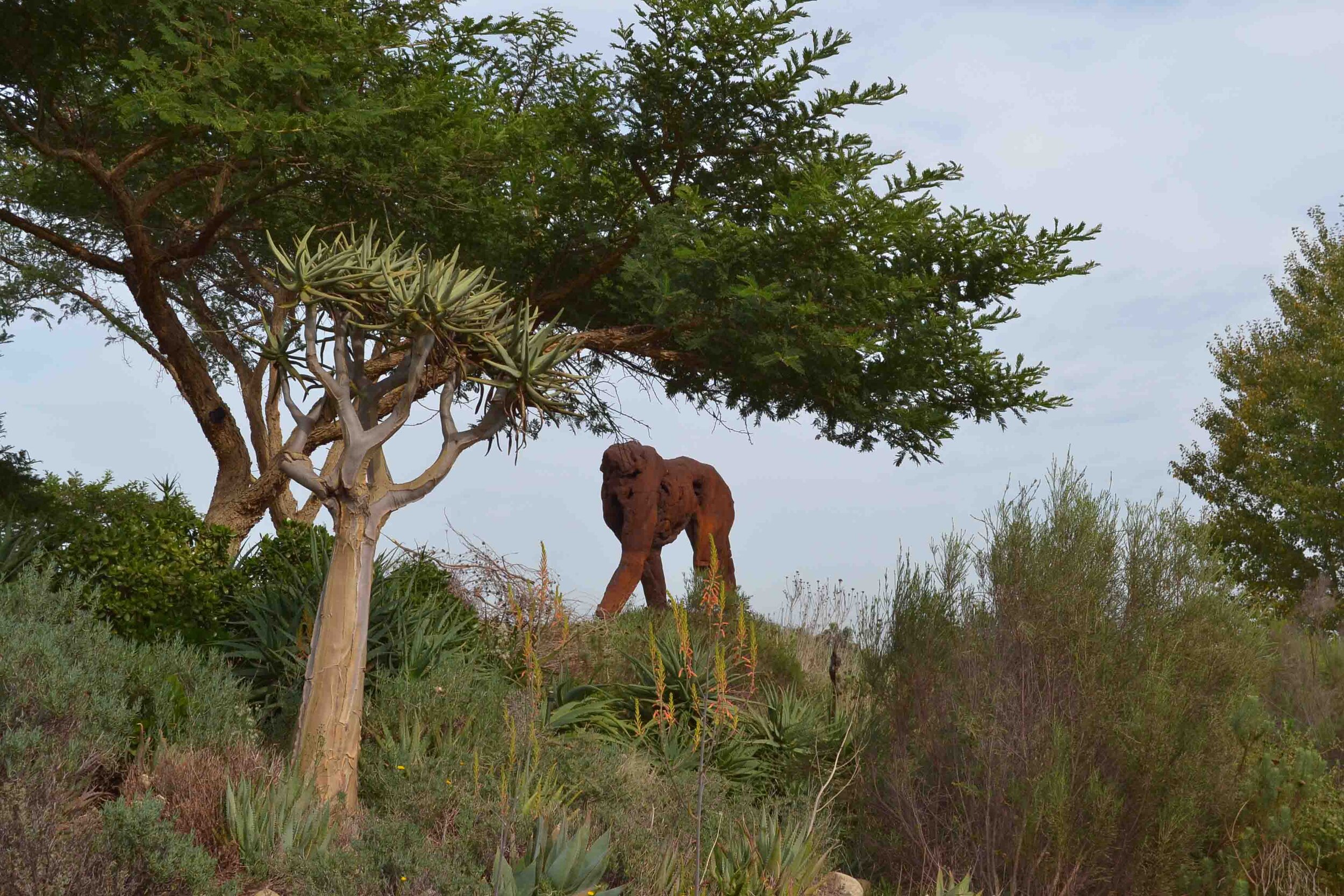
Dylan Lewis Sculpture Park

277.JPG

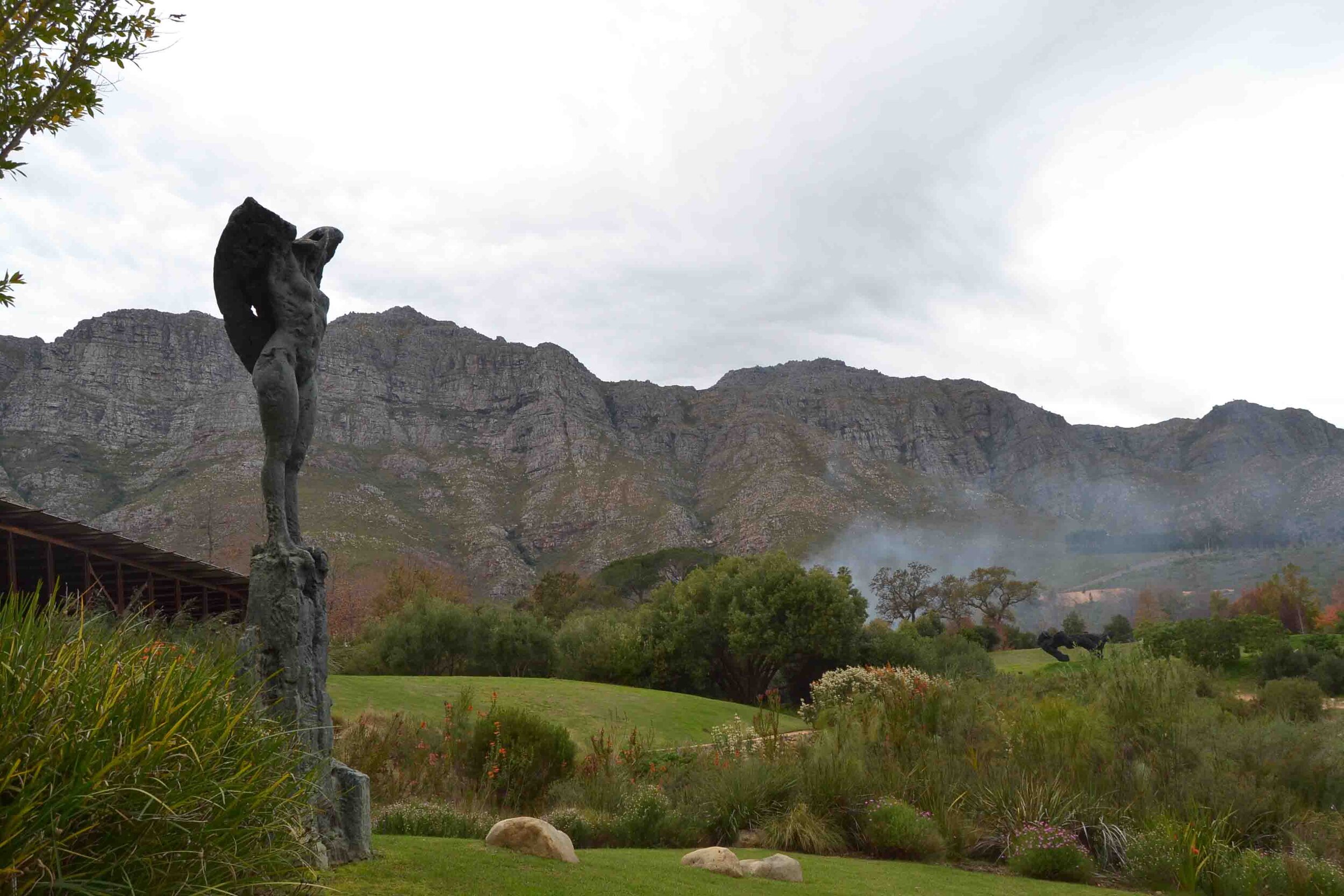
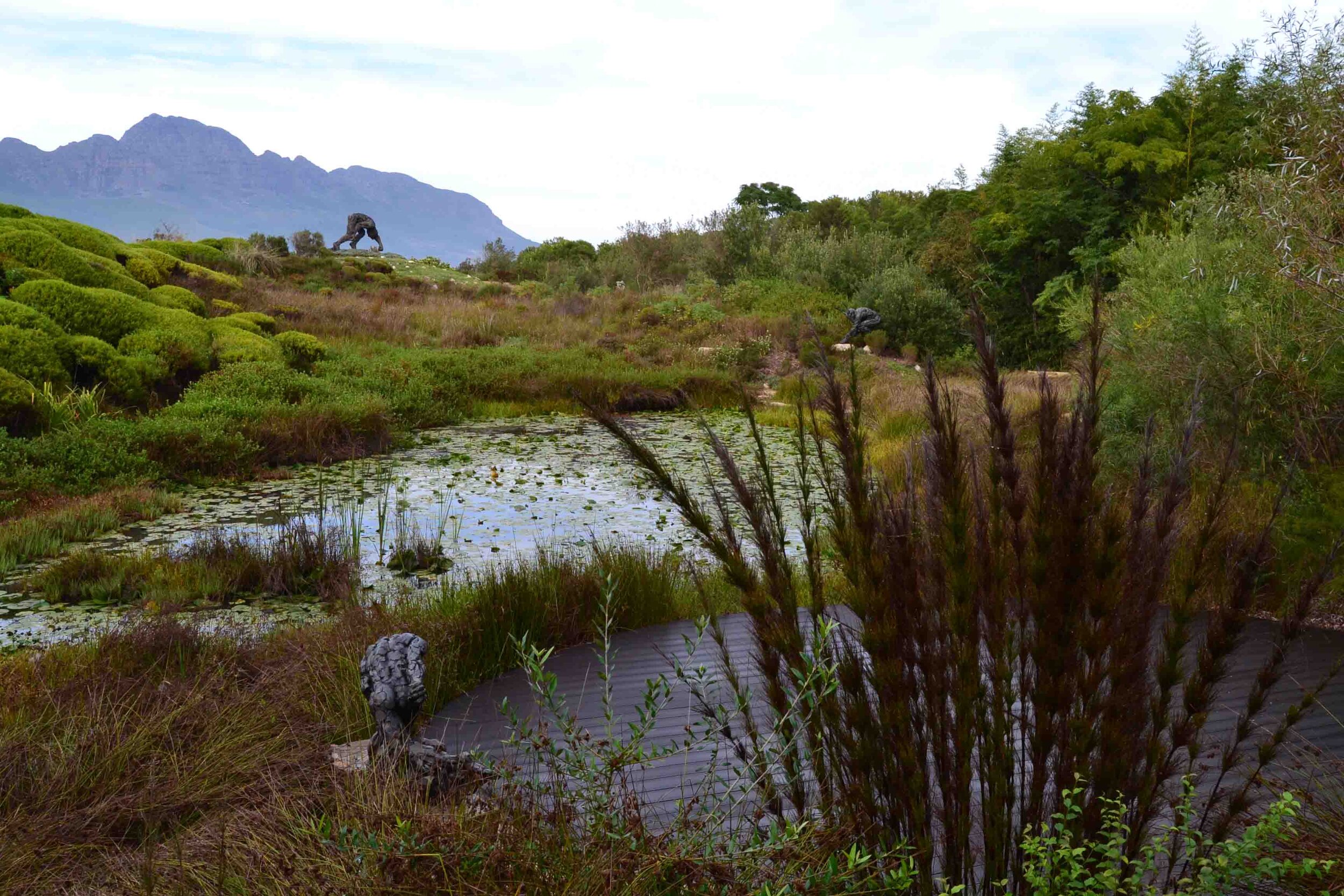
The Dylan Lewis Sculpture Park is situated outside Stellenbosch in the Cape and is a remarkable display of artistic genius. The artist uses the landscape to compliment the artworks and create an immersive experience for the visitor. Visits to the Sculpture Park are by appointment only (see contact details below).

279.JPG

About the Artist

Dylan Lewis is an internationally acclaimed South African sculptor, best known for his metal sculptures of large cats. His international career spans two decades and includes exhibitions in Paris, Sydney, Toronto, Houston and San Francisco, as well as numerous one-man exhibitions in London, where he is among the few living artists to have held solo auctions at Christie’s London.The leopard was his primary subject and he spent much time studying them, even dissecting them to further study their anatomy. The sculpture garden displays both his big cat and animal sculptures as well as his more recent work depicting human form and more abstract representations.

246.JPG

About the Garden

Mulberry farm had been Dylan’s studio since 1993 it was in 2009 that is started taking shape into the sculpture garden it is today. He hired an excavator to create a level play area for his children and began shaping the land much like he would begin creating a sculpture. For two years the earth was shaped with earth-moving equipment to create the ponds, hills and depressions that characterize the space. In March 2017 the Dylan Lewis Sculpture Park was officially opened.

DSC_0048.JPG

The garden is filled with spaces that are each unique and have their own character and mood. Certain spots are intimate and secluded, others expansive. The garden has been intuitively designed to create a sensory experience and every element, from sculpture to boulder, has been placed with great care. The paths were laid out over many years with great attention to detail and every bend, contour and viewpoint has been taken into consideration. The artist has recommended a specific route for visitors to walk (indicated on the map you receive on arrival) in order to pass sculptures in a way that enhances their movement and presents certain views in the sequence he has envisioned.

Planting

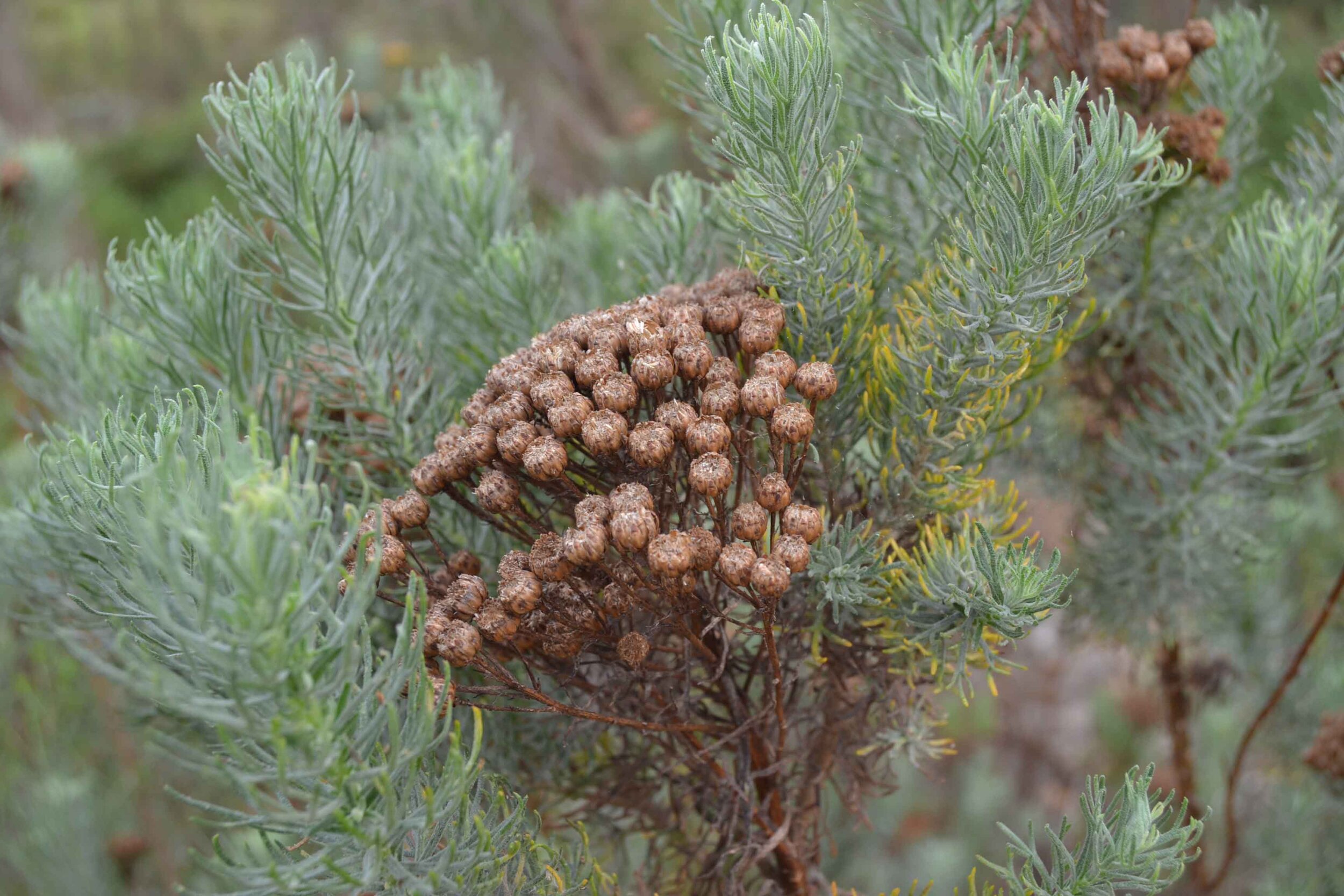
The planting is an artwork in itself and the plant palette is used in a way to add beauty to the spaces and define the different areas. Vegetation is predominantly fynbos which is local to the Cape and several species were sourced from Kirstenbosch Botanical Gardens. Retios dominate where the earth has been shaped to create dams and waterways while other areas are covered with area specific planting. An impressive total of 32 Erica species are listed on the plant list while 15 Pelargonium species have also been used. (See Plant List Below)

Fiona Powrie, an indigenous plant consultant oversees the garden botanically has ensured that an almost completely indigenous plant palette is used. The exotic species on site are reminders of a layer of historical planting.

The beauty of this sculpture park is that in every season there will be interest provided, not only by the variety of different indigenous flowering species, but from shape, form, texture, composition, experience, and the impressive backdrop of the mountains and their reflection in the water.

271.JPG

Water

The garden’s four sources of water are a natural perennial spring, a seasonal mountain river, a borehole and agricultural water. These provide water to the different ponds and wetlands as well as the large lake in the centre of the garden. The stepping stones over water are symbolic of the passage into mythical space.

DSC_0079.JPG

An incredibly beautiful space to visit with nature as the canvas for this artist’s creations.

Contact Details

https://dylanlewis.com/

Dylan Lewis Sculpture Garden: reservations@dylanart.co.za

Tel: +27 (0)21 880 0054
Fax: +27 (0)21 880 0588

Dylan Lewis Studio and Sculpture Garden, Mulberry Farm, Paradyskloof Road, Stellenbosch, 7600, South Africa

20210601_193336.jpg
Plant Checklist can be obtained from the Sculpture Park

Plant Checklist can be obtained from the Sculpture Park

Gariep Nursery, Pretoria

20210206_141152.jpg

This small nursery can be found tucked away in the suburb of Faerie Glen, Pretoria. It specializes in succulent plants and claims to be one of the first nurseries in the country to make the rare Pachypodium namaquanum (the so-called Halfmens) more readily available. Other rare plants that they can supply include the Spiral Aloe from Lesotho, Aloe polyphylla, many Madagascan Pachypodium species, and Madagascan and Arabian Aloe species.

20210206_141408.jpg

I visited the nursery a few weeks back on a Sunday afternoon after following them on Instagram. I wanted to buy a specific plant - Haemanthus humilis spp. hirsutus - but it was unfortunately unavailable. (note to self - call ahead to book plants you want to specifically buy)

20210206_142605.jpg

I enjoyed visiting and exploring the garden which is filled with succulents and a wide range of indigenous plants, including species of Eucomis, Haemanthus, Hypoxis, Ledebouria, Scilla and Scadoxus. The gardens have great potential to be a beautiful destination where one can sit and enjoy the surrounding plants and birdlife.

​I am sure that the best time to visit is in the winter months when most of the aloe species and are in flower, I’ll definitely come back to see them!


Address: 309 Cliffendale Drive, Faerie Glen

Some text taken from Website: https://www.gariepplants.com/

Instagram: @gariepplants

8 Indigenous Trees for Screening

Trees for Screening

Many landscapes require screening between the edges of a property for privacy or the addition of height for softening of buildings. Mostly you would be looking for evergreen trees with attractive foliage and non-aggressive roots. When designing a tree screen I like to use a combination of tree heights and foliage texture. Here are some lovely indigenous screening trees to consider:

1. Olea europaea subsp. africana (Olive Tree)

Olea europaea subsp. africana is a neatly shaped, hardy, evergreen tree with a dense spreading crown (9 x 12 m) of glossy grey-green to dark-green foliage. Leaves are grey-green to dark-green above and greyish below. The rough, grey bark sometimes peels off in strips. Sprays of tiny, lightly scented white to greenish flowers (October to February) are followed (March to July) by small, spherical, thinly fleshy fruits (either sweet or sour) which ripen purple-black. The Latin name for olive is oleaeuropaea = from Europe, and africana = from Africa. Don't plant it too close to walls, patios or swimming pools, the root system can sometimes be aggressive. (http://pza.sanbi.org/olea-europaea-subsp-africana)

Olea africana (Image from SunTrees Nursery)

Olea africana (Image from SunTrees Nursery)

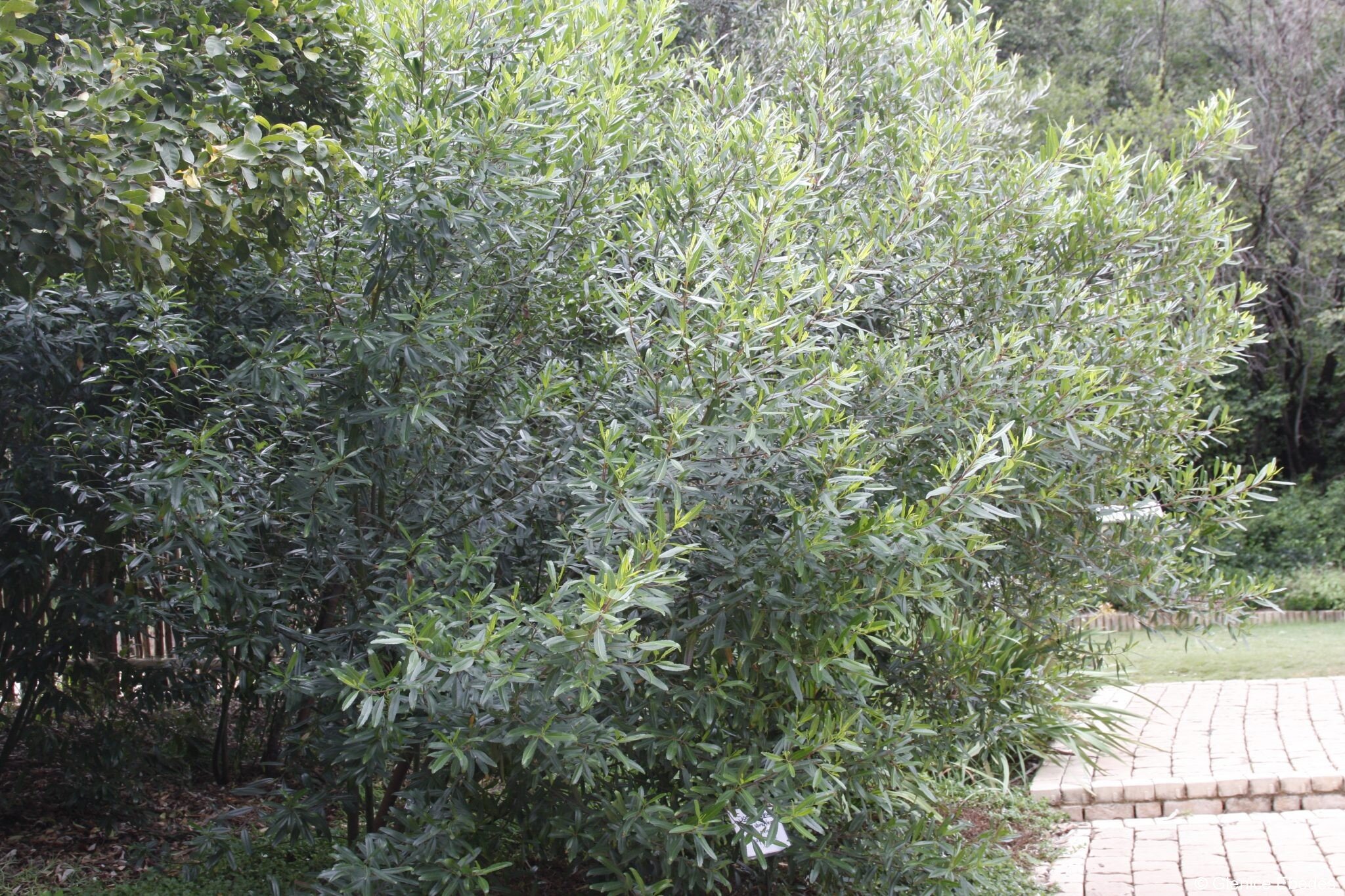
2. Buddleja saligna (False Olive)

Buddleja saligna is a medium sized tree usually 4 to 5 metres in Highveld areas. This fast growing tree is an excellent, quick screen plant. It grows up to 800mm per year. Use it as a pioneer tree for your forest garden. It also makes a very good clipped hedge. It is evergreen, frost hardy and drought resistant and the masses of flowers make a lovely spring and summer show. It will grow in most soils but added compost will improve performance. It may need cutting back after flowering to keep tidy. The false olive does not have an aggressive root system. The flowers attract insects (especially moths) and therefore insect feeding birds such as Robins and Apalises to the garden. (http://pza.sanbi.org/buddleja-saligna)

Buddleja saligna (Image from CJM Nursery)

Buddleja saligna (Image from CJM Nursery)

3. Ilex mitis (Cape Holly)

Ilex mitis is a hardy, small to medium sized, evergreen tree with almost white bark. It has a graceful rounded crown of glossy, dark green leaves that are purplish-red when they first flush.

Massed clusters of small, sweetly scented, white flowers are borne from October to February. (Male and female flowers on separate trees, therefore only female plants bear fruit). These are followed by tightly packed decorative red berries that attract flocks of fruit eating birds. It grows better in moist conditions near water but can withstand dry conditions. With its beautiful shape it makes a good avenue tree. Although this beautiful rounded tree can grow to huge proportions in forest conditions, it is normally a small to medium sized tree. The leaves are used as a soap substitute. Size 3 to 8m (Information from Random Harvest Website)

Ilex mitis (Cape Holly) Image from Just Trees Nursery

Ilex mitis (Cape Holly) Image from Just Trees Nursery

4. Vepris lanceolata (Ironwood)

Vepris lanceolata is a hardy, evergreen, very attractive tree with apple green foliage. It blooms with a myriad of small, white flowers from December to January, which give the tree a lacy look. The black berries ripen throughout the autumn and winter and are an important source of food for the birds. The tree is host to the Citrus Swallowtail Butterflies. A beautifully shaped tree and a very good garden subject that can be used as a screen or container plant for outdoors or indoors. The non-aggressive root system makes it ideal for smaller gardens. The timber is even-grained and white. It has many medicinal uses. Size 5 to 10m (Information from Random Harvest Website)

Vepris lanceolata (Ironwood) photographed in Random Harvest Nursery

Vepris lanceolata (Ironwood) photographed in Random Harvest Nursery

5. Rapanea melanophloes (Cape Beech)

Rapanea melanophloes is a hardy, small to medium sized, evergreen tree with dark leaves that have a purplish cast to them. It also has really attractive bark. The small greenish-white flowers from May to July attract insects and bees. These are followed by small purple fruits that are borne in profusion close to the stems which attract fruit eating birds. A good garden subject and a useful addition to screen planting with its unusual colour foliage. The wood is used for making furniture and violins and has many magical and medicinal uses. Size 4 to 10m (information from Random Harvest Website)

Rapanea melanophloes.jpg

6. Noltea africana

Noltea africana is a very hardy, evergreen, very fast growing, small to medium sized tree. The glossy leaves are darker above and paler underneath, and have purple petioles. The branchlets are also purplish-red. The flowers are pretty, small, white sprays borne in the axils of the leaves from August to September. The black seeds are encased in a three-lobed, brown woody capsule that splits to release them when ripe. A decorative tree that is ideal for the smaller garden but should be kept as a single stem. Grows well in sun and semi-shade. A good tree to plant for a quick screen. When twigs and leaves are rubbed in water it becomes soapy. Size 2 to 6m (Information from Random Harvest Website)

Noltea africana (Soapwood) plantbook.co.za

Noltea africana (Soapwood) plantbook.co.za

7. Loxostylis alata (Tarwood)

A small, well-shaped tree with glossy foliage tinged with red when young and masses of white flowers in early summer, and if the tree is a female it has showy pinkish red fruits. Tarwoods are evergreen, ornamental trees which will grow in a wide range of ecological habitats. This tree closely resembles the Brazilian pepper tree, Schinus terebinthifolius of the same family, which does not have the characteristic red sepals. This is a very attractive small tree or large shrub for gardens. It is also useful for screening and boundary plantings. It grows to 6 m or higher in favorable conditions, but can form a large, dense shrub. Other recommended trees in this family are the red currant (Rhus chirindensis), wild-plum (Harpephyllum caffrum) and the marula (Sclerocarya birrea). (http://pza.sanbi.org/loxostylis-alata)

Loxostylis alata (Tarwood) from SANBI Website

Loxostylis alata (Tarwood) from SANBI Website

8. Cryptocarya traansvaalensis (Mountain Wild Quince)

Cryptocarya transvaalensis is a hardy, evergreen large tree with beautiful glossy dark green foliage. The leaves are blue-green below. The inconspicuous flowers are borne in the axils of the leaves from December to February. These are followed by glossy red to purple berries that are decorative and attract fruit eating birds to the garden. This species is declining as the bark is used for medicinal purposes. It makes a beautiful container plant and if you have the space a magnificent specimen tree. It stays smaller when grown in full sun. Size up to 12m (Information from Random Harvest Website)

20181211_091015.jpg

There are many many other screening trees that can be used so don’t let this list limit you!


Why Planting Indigenous Plants will make you Happier

Red Hot Poker - Crane Flower - Yellow Honeysuckle

Red Hot Poker - Crane Flower - Yellow Honeysuckle

Many gardens today are still strongly influenced by the European style of clipped hedges and formal layouts, but the South African garden is emerging as a strong aesthetic. Indigenous gardening is becoming increasingly popular due to the environmental benefits, growing awareness of sustainable practices and the rising knowledge of locally indigenous plants.

Here are five reasons why you should plant indigenous plants, not only for yourself but for the benefit of the environment:

1.       Indigenous plants are adapted

They are suited to the prevailing conditions of the area in which they are found which means that they often have low water requirements and can withstand the temperature fluctuations and seasonal changes of that particular region. This also means that once established they should be self-sustaining, hardier and able to withstand general disturbances.


2.       Indigenous plants support indigenous animal life

Indigenous plants provide food and shelter to local animal life such as birds, insects, frogs and reptiles. The plants support local insects, which in turn support local birds and ultimately a life-supporting harmonious cycle is created. Interestingly butterflies will only lay their eggs on specific host plants, almost always indigenous species, so in order to attract these beauties into your garden you need to plant their host plant.


3.       Indigenous gardens allow for habitat creation and connection

Large areas of natural habitat is destroyed daily to make way for urban development. Fragmentation of vegetation and animal populations puts these healthy systems in jeopardy. If your garden can replace some of this lost vegetation it can create corridors for the local insect and bird life to move along.

4.       Planting indigenous is environmentally responsible

Planting indigenous plants is beneficial to the environment and the ecology which we would like to conserve for future generations. Knowing that your actions today preserve future interactions with local plants and animals for future humans is deeply encouraging.

5.       We have an amazing selection of plants!

South African plants are cultivated all over the world although many South Africans do not realise the variety and diversity of indigenous plants available to them (some 23,000-plus species). There are so many plants to choose from and an exciting journey of discovery awaits.

Now is always a good time to start. Why not visit some local indigenous nurseries to be inspired and learn more about the beautiful plants locally suited to your area.

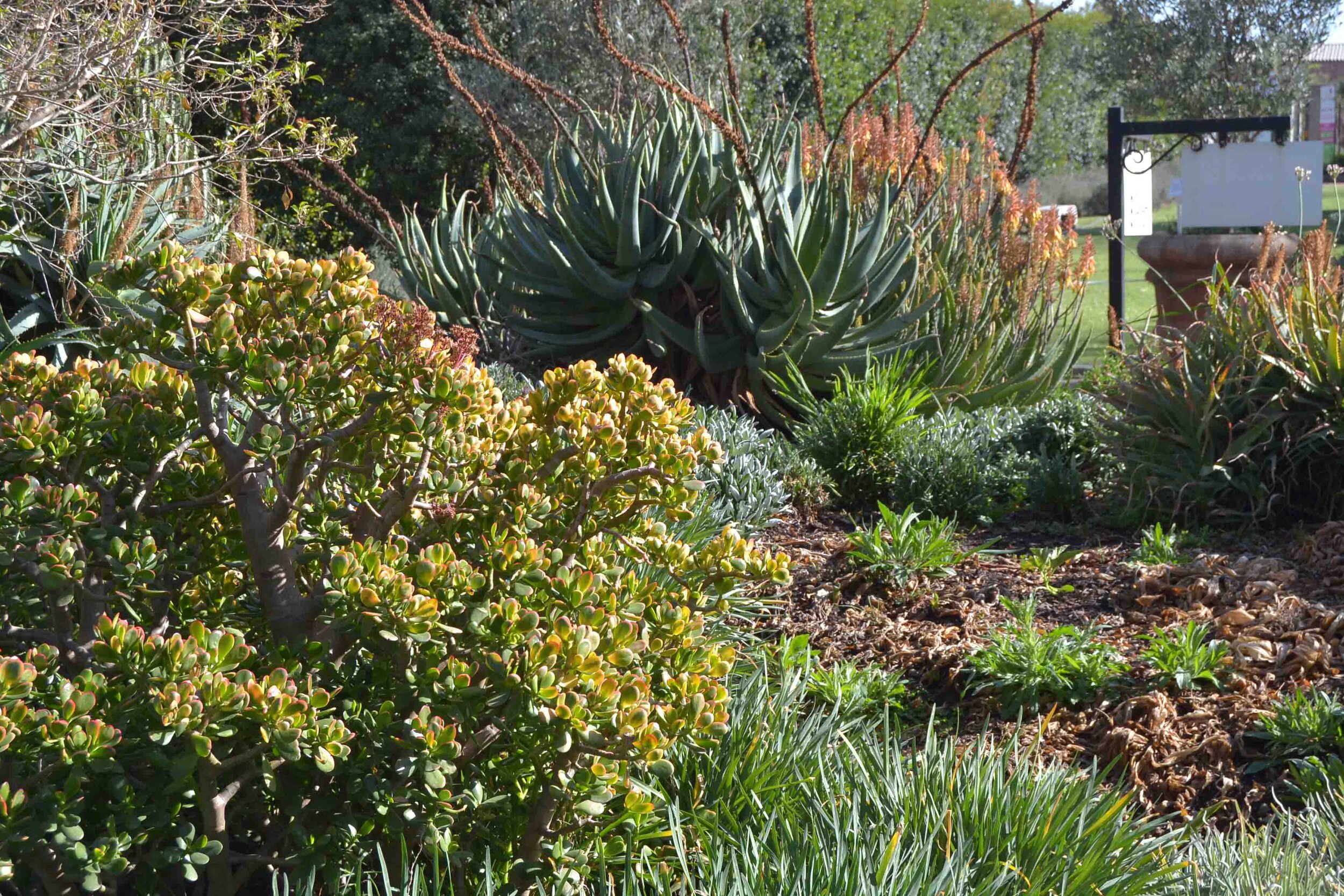
Crassula ovata - Aloe arborescens - Tulbaghia violacea

Crassula ovata - Aloe arborescens - Tulbaghia violacea

Zantedeschia aethiopica - Agapanthus praecox

Zantedeschia aethiopica - Agapanthus praecox

5 South African Medicinal Trees that should be used more in Garden Landscaping

1. Clausena anisata (Horsewood)

Clausena anisata (Size 3 to 10m) is a very hardy, evergreen, shrub or small tree that is spindly when young but matures to a lovely rounded shape.  It bears sprays of attractive creamy-white flowers from May to August. These are followed by black berries that attract birds to the garden. The attractive compound, glossy leaves droop gracefully. When crushed they emit a strong smell and can be used as a substitute for curry leaves. It is the host plant of several Swallowtail butterflies.  Plant in sun or semi shade. It makes an ideal specimen tree for a small garden.  It has many medicinal and magical.  (Information from Random Harvest) Some of these uses include

Clausena anisata (Image from KumbalaNursery.co.za)

Clausena anisata (Image from KumbalaNursery.co.za)

2. Moringa oleifera (Moringa)

The small fast-growing and hardy Moringa oleifera tree is also known as the drumstick tree, horseradish, been oil tree or ‘peperwortelboom’ in Afrikaans. Growing between 5 and 12 m tall, it has a straight trunk and and umbrella-shaped crown of feathery green leaves. Flowers are up to 25 cm long and produce thin and long reddish brown seed pods. Although native to India, Pakistan and Nepal, Moringa oleifera grows in the Limpopo, Free State, Mpumalanga, KwaZulu-Natal and Gauteng provinces of South Africa.

According to traditional African and Indian (Ayurvedic) medicine moringa has almost 540 compounds that can treat or prevent about 300 health issues. Used for centuries in Eastern countries for diseases such as diabetes, heart disease, anemia, arthritis, liver disease, as well as respiratory, skin and digestive disorders, it is now considered a ‘super-food’. The powdered leaves, roots, bark and immature pods are used for its nutritional, anti-inflammatory, antioxidant and tissue-protective benefits.

Moringa is a source of vitamins, minerals, as well as all the essential amino acids, making it a complete protein. It contains significant amounts of vitamin C, E, potassium (K), iron (Fe) and zinc (Zn). In addition moringa leaves are an excellent calcium (Ca) source and contain 10 times more vitamin A (beta carotene) than carrots. moringa powder can be used as a substitute for iron tablets, hence as a treatment for anemia. Beef has only 2 mg of iron while moringa leaf powder has 28 mg of iron.

In India, moringa leaves are used stimulate breast milk production in new mothers and usually added to lentil soups during the cold and flu season to increase disease resistance. The leaves, gums, roots, flowers as well as kernels have been utilized for managing tissue tenderness, cardiovascular and liver maladies, normalize blood glucose and cholesterol. It has also profound antimicrobial and anti-TB activities.

In developing countries, the moringa leaf powder is commonly used as a medicinal herb, rather than food as in Asian populations. It is often taken as a supplement by HIV-infected people to enhance immunity and manage opportunistic infections. The fact that moringa is easily cultivable makes it a sustainable remedy for malnutrition - countries like Senegal and Benin treat children with moringa. Moringa products range from leaf extract, powder and tablets to protein shakes, seed oils, teas and probiotic drinks. Leaves can be harvested by cutting the top of the plant off when the plant has grown to 1 m, leaving about 30 cm. It is easily propagated by seeds, but needs nitrogen for good yields. It prefers daily temperatures of 25 to 30 °C and neutral, well-drained soils, but can grow well in clay soils. (http://southafrica.co.za/moringa-miracle-medicine.html)

Moringa Tree (Image from https://www.seedsforafrica.co.za/products/moringa-oleifera-tree-medicinal-seeds)

Moringa Tree (Image from https://www.seedsforafrica.co.za/products/moringa-oleifera-tree-medicinal-seeds)

3. Tarchonanthus camphoratus (Camphor Bush)

Tarchonanthus camphoratus is a hardy, large, decorative, evergreen shrub or small tree with attractive silver foliage that smells of camphor when crushed. Sprays of white, thistle like flowers covered in white woolly hairs are borne from March to November. All parts of the plant are aromatic and smell strongly of camphor. This useful plant makes an excellent screen and windbreak. It has a fibrous root system and can be used for binding the soil. It also makes a lovely shade tree for a small garden. This drought resistant shrub is heavily browsed on by game. Used extensively as a medicinal plant.The wood is beautiful and among other things has been used to make musical instruments. Grows Up to 5m (Information from Random Harvest)

The camphor bush is used for medicinal purposes. Problems such as blocked sinuses and headache can be healed by inhaling the smoke from the burning green leaves. Drinking boiled mixture of leaves and water can help to treat coughing, toothache, abdominal pain and bronchitis. Leaves can also be used for massaging body stiffness and also as a perfume. The cotton wool-like seedheads were used to stuff cushions. (http://pza.sanbi.org/tarchonanthus-camphoratus)

Camphor Bush (

Camphor Bush (Image from http://pza.sanbi.org/tarchonanthus-camphoratus)

4. Warburgia salutaris (PepperBark Tree)

The endangered pepper-bark tree of southeastern Africa, Warburgia salutarus, grows in South Africa, Swaziland, Mozambique and Zimbabwe. The name ‘salutaris’ means health giving, alluding to the pepper-bark’s medicinal uses. A related species, known as ‘Karambaki’, has been used medicinally by Arab traders, East African residents since ancient times. Pepper-bark is extremely rare to find in the wild and is listed as a Red Data Book threatened species. Heavy harvested by traditional healers for its much sought-after bark used in traditional medicine, considerable effort is made to encourage propagation of this tree.

It grows easily from cuttings or root suckers in well-drained soil rich in organic matter and makes an attractive landscaping plant. A tropical tree, the slender evergreen pepper-bark grows 5-10m tall and fixes nitrogen in the soil while its leaves makes an nitrogen-rich mulch. Small yellow-green flowers form 30 mm round berries that ripen to a purple colour. Leaves, fruit and inner bark have a strong peppery taste and harvesting is severely impeded by the fruit’s popularity with fruit flies and monkeys. The trees are slow to mature and can only be harvested at around 10 years old, but takes 20 years to reach full maturity.

The bark and leaves of the pepper-bark contain various compounds with antibacterial, anti-fungicidal (particularly against Candida yeast infections), anti-ulcer and diuretic properties. The plant material is dried, then crushed into a powder and used as infusions and decoctions to treat vaginal thrush, chest infections, venereal diseases, body aches, stomach problems (diarrhoea, aches) and malaria. Used as a snuff, it clears nasal passages and when the bark is chewed or the smoke inhaled, it remedies chest complaints, relieves constipation, fevers and body pains. An infusion of the leaves helps against rheumatism and skin diseases, while boiled roots are added to soup to cure diarrhoea. Both stems and root bark are remedies for malaria and when ground up and mixed with water, it can cure mouth sores. In Kenya, the leaves are added to flavour curries. (http://southafrica.co.za/pepperbark-tree-endangered-medicine-plant.html)

Image from http://pza.sanbi.org/warburgia-salutaris

Image from http://pza.sanbi.org/warburgia-salutaris

5. Lannea discolor (Live Long)

Lannea discolor is a small to medium-sized deciduous tree with a neat round crown occurring in bushveld. It is often found on rocky granite ridges. The tree grape is a medium-sized deciduous tree that grows up to 15 m in height with a neat rounded crown. Lannea discolor is generally used as traditional medicine to treat fevers and constipation in children. Its fruits are edible and are utilized by animals, birds and humans. The wood is soft and used to make fences. Fencing poles made out of the wood will easily take root and flourish again, which has earned it its common name Live long. (http://pza.sanbi.org/lannea-discolor)

Lannea discolor (http://pza.sanbi.org/lannea-discolor)

Lannea discolor (http://pza.sanbi.org/lannea-discolor)

5 Unusual Red Flowering Indigenous Plants

  1. Sutherlandia frutescens (Cancer Bush)

Sutherlandia frutescens is a very hardy, evergreen, fast growing, sun-loving shrub with lovely silver-grey foliage. The striking, large, luminous orange pea-like flowers are borne from September to December. They attract Sunbirds and insects to the garden. These are followed by inflated green to pink, papery pods that are so light they are dispersed by wind. The pods and flowers are decorative in a vase. It is an important medicinal plant and has traditional uses as well. This beautiful slender shrub is a must for any garden. Plant several together for effect and use as a textural plant. It makes a beautiful container plant. It is both wind and drought resistant. This is a short-lived plant but it seeds itself freely.

Prune regularly to encourage it to bush out. This unfussy plant tolerates many different soil types and tolerates dry conditions but thrives with sufficient water (do not overwater). Plant in full sun. Size: to 50cm to 1m (https://www.randomharvest.co.za/South-African-Indigenous-Plants/Show-Plant/PlantId/695?Plant=Sutherlandia%20frutescens)

Sutherlandia frutescens

2. Ruspolia hypocrateriformis (Red Ruspolia)

Ruspolia hypocrateriformis is a fairly hardy, evergreen, scrambling woody shrub with bright green foliage. The spikes of showy pink to red flowers with darker spots on their lower petals are borne at the tips of new growth throughout summer and into autumn. Butterflies are attracted to the garden by the large amount of nectar that these flowers produce. The flowers are followed by a dry capsule which splits with a loud crack to release the seed within. Makes an interesting garden subject as a shrub and is said to make a good hedge.  It is not readily available in nurseries. Plant in full sun or semi-shade, in fertile, well-drained, loamy soil. Size: 1m but can climb to about 4m (https://www.randomharvest.co.za/en-us/South-African-Indigenous-Plants/Show-Plant/PlantId/510/Plant/Ruspolia-hypocrateriformis)

20200128_103448.jpg

3. Erythrina acanthocarpa (Tambookie Thorn)

The tambookie thorn is a much branched, deciduous, thorny shrub reaching up to 2m in height. The striking flowers are scarlet with the upper petal edged with green and are held in heads up to 10cm long and about 12cm wide. This is a very attractive shrub when in flower and makes an excellent garden specimen. Care should be taken not to plant it alongside paving as the large underground rootstock may cause the paving to lift. It performs best in a full sun position planted in well drained soil. Do not overwater and keep relatively dry in winter. It is frost hardy. (http://pza.sanbi.org/erythrina-acanthocarpa)

(Image from Wildflower Nursery)

(Image from Wildflower Nursery)

4. Crossandra greenstockii (Bushveld Crossandra)

Crossandra greenstockii is a beautiful little perennial that sprouts annually from a woody rootstock and looks stunning on a rockery. It flowers for quite a long time in summer. Flowers can either be orange or red. It grows in well-drained acid soil amongst grasses. The flower stalks emerge erectly from basal rosettes of broad green, unevenly lobed leaves.

Interplant Crossandra greenstockii with grasses in full sun. It responds well to a fertile, well-drained soil. (https://wildflowernursery.co.za/indigenous-plant-database/crossandra-greenstockii/)

crossandra

5. Gloriosa superba (Flame Lily)

Gloriosa superba is a striking climber with unusual and beautiful, red and yellow, flame-like flowers in summer; it is suitable for shade or sun, and is easy to grow. The slender stems are produced annually and are upright to scrambling and can grow up to 4 m long. Tubers sprout in spring, and a tuber sends up 1 to 6 stems. The leaves are shiny, bright green and are tipped in a tendril, which will cling to anything it touches. The stems die back in late summer and the tubers are dormant during winter. PLEASE NOTE: that all parts of this plant, both above and below ground, but particularly the tubers, are extremely poisonous, and ingestion could be fatal. The plants contain the alkaloid colchicine. It is a widely used and effective medicinal plant, but incorrect dosage has caused human deaths. Use with extreme caution and only under guidance of a qualified practitioner. Keep the tubers and the seed capsules away from pets and children and do not let the sap come into contact with your mouth or eyes while working with them, as it can cause skin irritation. The tubers are poisonous to grazing stock. (http://pza.sanbi.org/gloriosa-superba)

gloriosa superba


While most people prefer to have a landscape filled with the tried and tested plants it can also be exciting to experiment with unusual plants that can bring an element of surprise and interest to your garden.

Which Unusual Indigneous Plant is your favourite?

Plectranthus - the perfect plant for Shade

Plectranthus is the largest South African genus in the mint family (Lamiaceae), with 44 species natural to our region, most of which occur on the eastern side of the country. Plectranthus are noted for their aromatic leaves when crushed and provide a mass display of colour in late summer and autumn. Colour selections range between pink, purple and white and many shades in-between. (http://pza.sanbi.org/plectranthus accessed on 02-03-2020)

I love using Plectranthus in garden designs as their broad soft leaves can create a lovely atmosphere in a garden. They are quite versatile and do well in semi-shade below trees where often other plants do not easily grow. They are a bit frost tender and can take a knock in winter, but if you prune them to about a third of their height (at the end of winter) they will quickly send new growth. You can also grow new plants from cuttings and this is a great way to fill up a garden with bare spots.

There are so many species and varieties of Plectranthus, here are only a few:

Plectranthus oertendahlii

Plectranthus oertendahlii

Plectranthus hadiensis

Plectranthus hadiensis

Plectranthus lucidus

Plectranthus lucidus

Plectranthus ciliatus

Plectranthus ciliatus

Plectranthus 'Mona Lavender'

Plectranthus 'Mona Lavender'

Plectranthus zuluensis

Plectranthus zuluensis

Plectranthus ciliatus ‘Richard’

Plectranthus ciliatus ‘Richard’

Plectranthus ciliatus ‘Aureated’

Plectranthus ciliatus ‘Aureated’

Plectranthus saccatus ‘Purple’

Plectranthus saccatus ‘Purple’

Plectranthus ecklonii

Plectranthus ecklonii

There are so many beautiful types of Plectranthus one can use in a garden! Let me know which one is your favourite?