8 Beautiful Indigenous Trees for a Small Garden

Every garden needs beautiful trees to create spaces within the garden and to provide screening, shade and habitat for birds and animals. Trees add foliage, colour and interest to the garden as well as add character and atmosphere. There are so many beautiful indigenous trees to choose from! Here is a list of some of my favourite ones that can be used in a small to medium sized garden:

Information for Trees sourced from Random Harvest Indigneous Nursery

  1. Heteropyxis natalensis (Lavender Tree)

Heteropyxis natalensis is a hardy, slender, upright, narrow, semi-deciduous tree with truly beautiful, pale creamy bark that, with age, develops beautiful apricot coloured patches on it. The leaves are pale green, shiny and waxy and when crushed smell strongly of lavender. In autumn they turn red or purple and depending on how cold it is, hold onto them for winter and drop them a few weeks before the new tender green leaves appear. It bears small clusters of yellowish, sweetly scented flowers, from September to March, which attract butterflies and other insects. Ideal tree for small gardens. It is particularly beautiful planted in groves and also makes a good container plant. The leaves can be used for herbal tea and potpourri and most parts of the tree are used medicinally.

Size 4 to 8m

Size: Small to MediumGrowth Rate: Fast GrowingEvergreen or Deciduous: Semi-DeciduousFrost Hardiness: Fairly Hardy Position: Full SunSoil: Loamy SoilShape: ColumnarMedicinal: Medicinal Drought Hardiness: Drought Resistant

Heteropyxis natalensis (Lavender Tree)

Heteropyxis natalensis (Lavender Tree)

2. Dais cotinifolia (Pompon Tree)

Dais cotinifolia is a very hardy, fast growing, deciduous, small tree with attractive slightly blue green leaves. In spring it has scattered pink leaves in the crown adding to the interest. It bears masses of very showy, fragrant pink, pom-pom like flowers that attract a whole host of birds and insects from November to February. It begins flowering whilst still young. Popular garden subject for sun or semi-shade. Ideal for small gardens and containers. Size 2 to 7m

Size: Small to MediumGrowth Rate: Fast GrowingEvergreen or Deciduous: Deciduous Frost Hardiness: Frost HardyPosition: Full SunPosition: Semi-shadeSoil: Loamy SoilSoil: Well-drainedShape: OvalGarden Uses: Small GardensGarden Uses: Specimen,  Drought Hardiness: Drought Hardy

Dais cotinifolia (Pompon Tree)

Dais cotinifolia (Pompon Tree)

3. Dombeya rotundifolia (Wild Pear)

Dombeya rotundifolia is a very hardy, deciduous, drought and fire resistant, upright tree. It has round, leathery, rough leaves, and attractive, rough, fissured bark which is utilized by Woodpeckers. This is one of the first trees to bloom in spring where it stands out on the bare hillsides in snowy white patches. Showy clusters of sweetly scented white flowers start blooming in profusion on the bare branches in July and continue well into September before the leaves appear. The flowers dry beautifully and can be used for pot potpourri. It is a good bird, insect and butterfly tree. It has a non-aggressive root system which makes it an ideal tree for a small garden. It is quite fast growing and can be planted in sun or semi-shade as a specimen tree or as an element of a wildlife garden. Used medicinally. Size 3 to 5m.

Size: Small to MediumGrowth Rate: Fast GrowingEvergreen or Deciduous: Deciduous Frost Hardiness: Frost Hardy,  Position: Full SunPosition: Semi-shadeSoil: Loamy SoilSoil: Well-drainedMedicinal: MedicinalGarden Uses: Small GardensGarden Uses: SpecimenDrought Hardiness: Drought Hardy

Dombeya rotundifolia (Wild Pear)

Dombeya rotundifolia (Wild Pear)

4. Nuxia floribunda (Forest Elder)

Nuxia floribunda is a hardy, evergreen, fast-growing, neat and attractive tree that is quite small in drier conditions, but if its roots find water it can get quite big. Pale grey, smooth bark contrasts beautifully with the glossy, dark-green leaves that turn quite purple in winter. Its huge heads of showy, sweetly-scented, white flowers cover the tree from May to September. The flowers attract a whole host of small pollinating insects, moths and butterflies that in turn attract birds. It has many magical and medicinal uses. It grows well in a container, and is also a lovely tree with which to create a small forested area in the garden. Plant in either full sun or semi-shade and water regularly. Size: 3 to 10m

Growth Rate: Fast GrowingEvergreen or Deciduous: EvergreenFrost Hardiness: Frost HardyPosition: Full Sunor Semi-shadeSoil: Loamy Soil Well-drainedMedicinal: MedicinalGarden Uses: Container PlantGarden Uses: Form PlantGarden Uses: Small GardensGarden Uses: Specimen,  Drought Hardiness: Needs Watering

Nuxia floribunda (Forest Wild Elder)

Nuxia floribunda (Forest Wild Elder)

5. Mundelea sericea (Cork Bush)

Mundulea serica is a very hardy, semi-deciduous, decorative, large shrub that always stands out in its natural habitat of grassland and rock. The fissured corky bark is a protection against fires which are frequent in its habitat. It has blue-grey leaves that are covered in silvery hairs giving the whole shrub a silvery look. It has gorgeous, dense pendulous bunches of deep mauve, pea-shaped flowers from October to February that attract masses of birds coming to sip on the nectar as well as a myriad of insects. With its robust, neat shape and corky bark, it makes a good accent plant but needs well-drained soil. It is host plant to two butterfly species. Traditionally used as a fish poison. The bark and roots have medicinal and magical qualities and crushed leaves are used to bleach hair. Lovely tree with non-aggressive roots for a small, sunny garden.

Growth Rate: Slow GrowingFrost Hardiness: Frost HardyPlant Type: ShrubPlant Type: TreeSoil: Sandy SoilPoisonous: Poisonous

Mundelea sericea (Cork Bush)

Mundelea sericea (Cork Bush)

6. Tabernaemontana elegans (Toad Tree)

Tabernaemontana elegans is a hardy, deciduous, upright small tree that has beautiful, large, shiny, dark green leaves and a lovely rounded shape. The clusters of beautiful white flowers are sweetly scented and borne from October to February and attract bees to the garden. These are followed by interesting, large, paired fruits with raised, corky dots like the skin of a toad, hence the common name. These lovely fruits split to reveal seeds covered with bright orange pulp. The fruits are edible. The thick, brown corky bark protects the tree from fire. An ideal tree for a container or small garden, planted in sun or semi-shade. Used medicinally. Size 3 to 5m

Size: SmallGrowth Rate: Fast GrowingEvergreen or Deciduous: Deciduous Frost Hardiness: Frost Hardy Position: Full SunPosition: Semi-shadeSoil: Loamy SoilEdible: EdibleGarden Uses: Container PlantGarden Uses: Small GardensGarden Uses: Specimen,  Drought Hardiness: Drought Resistant

Tabernaemontana elegans (Toad Tree)

Tabernaemontana elegans (Toad Tree)

7. Apodytes dimidiata (White Pear)

Apodytes dimidiata is a hardy, evergreen, beautifully shaped, fairly fast growing tree with dense, glossy, dark green foliage. Densely clustered spikes of strongly scented, snow-white flowers that are borne from September to April, especially after good rains. The flowers attract many pollinating insects to the garden. The bees visit the flowers early in the morning when the scent is strongest. When there is a breeze the tiny petals are like confetti blowing around the garden. They are followed by very decorative bunches of black berries with a fleshy red ‘cap’ that attract birds to the garden. The trunk is white and, in older specimens, becomes patched with lichen. This tree makes a wonderful garden subject. Can be used as a small avenue tree, as a specimen in a small garden or create a forest effect by planting close together. Its wood is a beautiful pale pinky-brown. It also has many traditional uses. Size 5 to 10m

Size: Small to MediumGrowth Rate: Fast GrowingEvergreen or Deciduous: EvergreenFrost Hardiness: Frost HardyPlant Type: TreePosition: Full SunPosition: Semi-shadePosition: ShadeSoil: Loamy SoilShape: RoundGarden Uses: Avenue PlantGarden Uses: Screen PlantGarden Uses: Specimen

Apodytes dimidiata (White Pear)

Apodytes dimidiata (White Pear)

8. Bersama luscens (Glossy White Ash)

Bersama lucens is a fairly hardy, evergreen, small, compact tree with a well-developed crown and beautiful blotchy, wrinkled, grey bark. The young leaves are a brilliant glossy russet brown, turning dark green when mature. The small greenish white flowers, in long narrow heads, appear from September to June and are followed by green capsules that split to reveal scarlet seeds that attract birds. The bark is sought after in traditional medicine and this species is becoming increasingly rare.

It is a beautiful, decorative tree for a shady to semi-shady part of the garden. Protect from frost especially when young. Size 2 to 5m

Size: Small to MediumFrost Hardiness: Protect when youngPlant Type: TreePosition: Semi-shadePosition: ShadeSoil: Loamy SoilShape: CanopyConservation Status: EndangeredConservation Status: ProtectedMedicinal: MedicinalGarden Uses: ShadeGarden Uses: Small GardensGarden Uses: Specimen

Bersma luscens (Cape Glossy Ash)

Bersma luscens (Cape Glossy Ash)

Do you have any of these in your garden? Which are your favourite indigneous trees?

BristleCone Wholesale Nursery

Sheep grazing in the meadows create picturesque views of Farm-life

Sheep grazing in the meadows create picturesque views of Farm-life

It is always a treat to escape the hustle of Johannesburg and spend time in nature so it was with great delight that, along with a few fellow landscape architects, I visited Leon Scholtz on his farm in the Skeerpoort, Hartbeeshoek area. While walking through the magnificent garden and growing tunnels of BristleCone Leon chatted to us about the nursery’s history and where the landscaping industry is moving towards.

After obtaining a degree in Horticulture Leon Scholtz bought a piece of land in 1974 and together with his wife Elize they started the nursery called BristleCone. The name BristleCone refers to a species of Pine that is the oldest living plant on the planet and is also highly resilient to harsh weather and poor soils. Bristlecone pines grow at high altitudes in arid regions of the Western United States. Bristlecones, along with all related species in the class Pinopsida, are cone-bearing seed plants (commonly known as conifers) and the name is derived from the prickles on the female cones. (https://en.wikipedia.org/wiki/Bristlecone_pine)

The Garden

The Garden

BristleCone Nursery

At the inception BristleCone was only growing and selling Conifers as there was a high demand for those plants. They branched out into succulents and expanded their range to include Aloes, however, in 1976 these were hit by severe frost and all of them died. Temperatures on the farm can drop to -4 degrees Celsius so all plants that are grown need to be frost hardy. Frost is not the only challenge that farm life holds. Every South African will know some of the challenges that face farmers on a daily basis include: hail storms, veld fires, crime threats, and labour relations.

BristleCone grows a large variety of ornamental grasses - this display garden shows the combinations of colour and texture and mature height of species

BristleCone grows a large variety of ornamental grasses - this display garden shows the combinations of colour and texture and mature height of species

BristleCone Grasses

In the 1980s Leon started growing Grasses but nearly got rid of them all before the market caught on to the value of Grasses in landscaping and stock started moving. This was certainly ahead of the curve as landscaping with grasses is still very popular. They also grow fruit trees, also a very important trend in landscaping, although they have reduced their range to smaller bag sizes.

BristleCone Nursery
BristleCone Nursery

Currently 50% of the plants that BristleCone is growing are Indigenous. They also grow a wide variety of colour plants such as Osteospermum, Geraniums, Plumbago and 25 vareties of Agapanthus (looking so stunning at the moment I must add). They have a wide range of interesting ornamental grasses, certain specialist species and unique form plants-many from Mexico. Leon’s son Dewald is currently in charge of Production and has won SANA Young Grower of the Year Award.

Leon walking us through his nursery

Leon walking us through his nursery

Leon has traveled extensively and his plant knowledge is incredible. The passion he displays for the plants and his business is tangible and can be seen through his active Instagram account @bristle_cone_nursery

BristleCone Nursery

Snippet taken from BristleCone’s Website “We source our plants and plant selections from all over the world. Our aim is to grow plants suitable for our environment. Trails for new or improved selections are grown on the farm and selected for production if suitable.

We specialize in plants in general with the emphasis on trendy plants for landscapers, indigenous plants for rehabilitation and indigenous projects and connoisseur plants for collectors and the Niche Market.

The main aim with new plant selections is to find plants that are more disease resistant, more water wise and more compact and tidy to reduce clipping or cutting back too often. We recommend mulching of all plants after planting to reduce loss of water and weed growth.”

BristleCone Nursery is known for its family values, warm hospitality and most importantly, its outstanding plant quality and continues to be a front-runner in the growing and landscaping industry.

BristleCone Nursery

Gardens of St Christopher Spring Open Day 2019

Garden of St Christopher

What could be more enjoyable than spending a Sunday afternoon exploring a magnificent garden while sipping a glass of champagne? The Gardens of St Christopher (https://www.gardenofstchristopher.com/) held their Spring Open Garden on Sunday 20 October this year. The gardens are open to public only once a year for a charity fundraising event, although group tours can be arranged by appointment.

Steel Arch

The Garden is located at 82 9th Road Hyde Park and has evolved and been extended over time. The owners acquired the adjoining property to expand the garden and full implementation of the garden extension was completed in 2012. I find it remarkable that the owners are willing to share this beautiful space with strangers and admire their generosity since all drinks and eats are sponsored and all proceeds go to the South African Guide-Dogs Association.

South Africa Guide Dog Association
Labrador Guide Dog in Garden of St Christopher

This is an interview taken from Alain Elkann Interviews which asks the Landscaper Debby Tenquist who designed the Garden:

You and your partner created the St Christopher Garden, a beautiful enclave in the Hyde Park of Johannesburg. Can you describe it? 

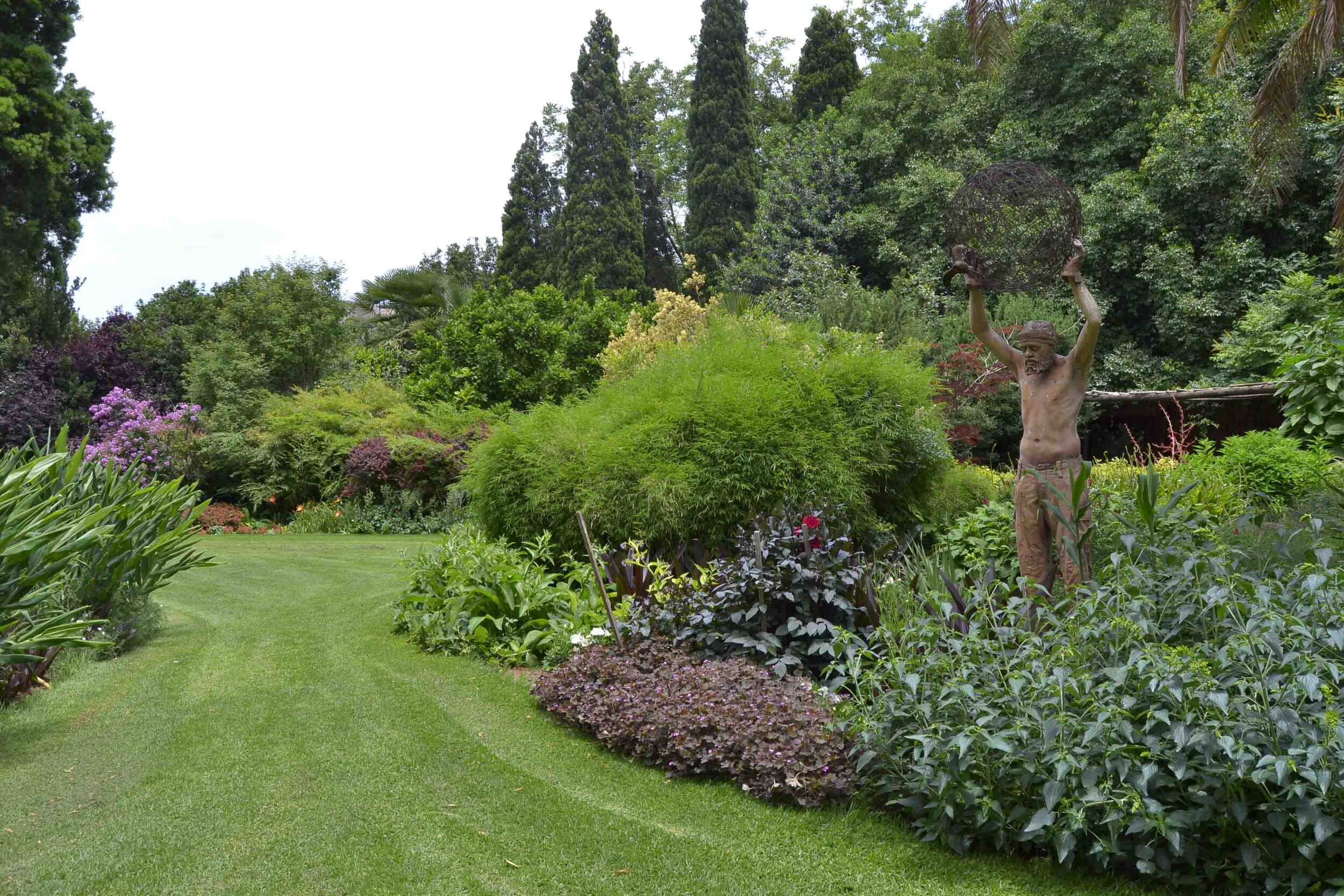
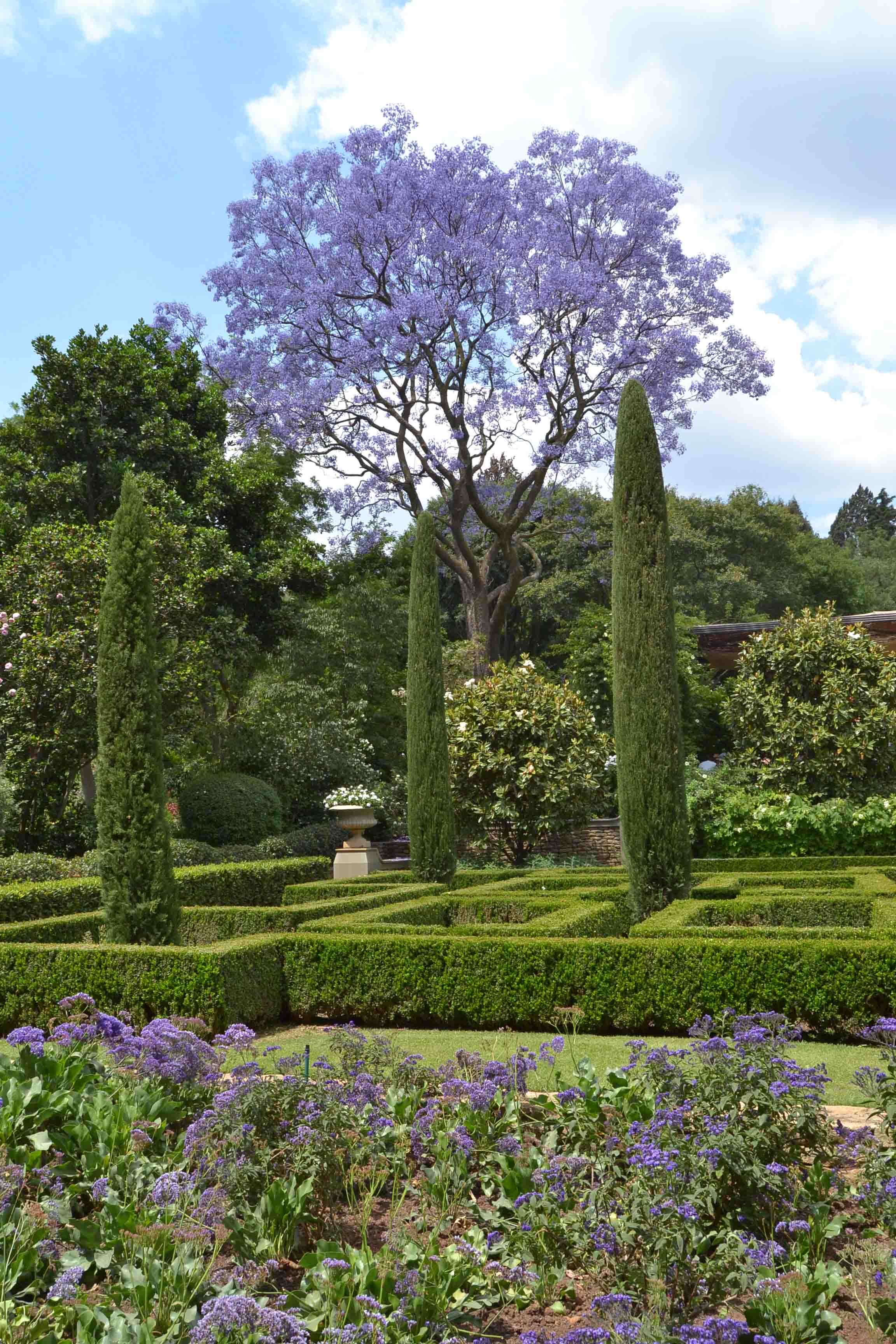
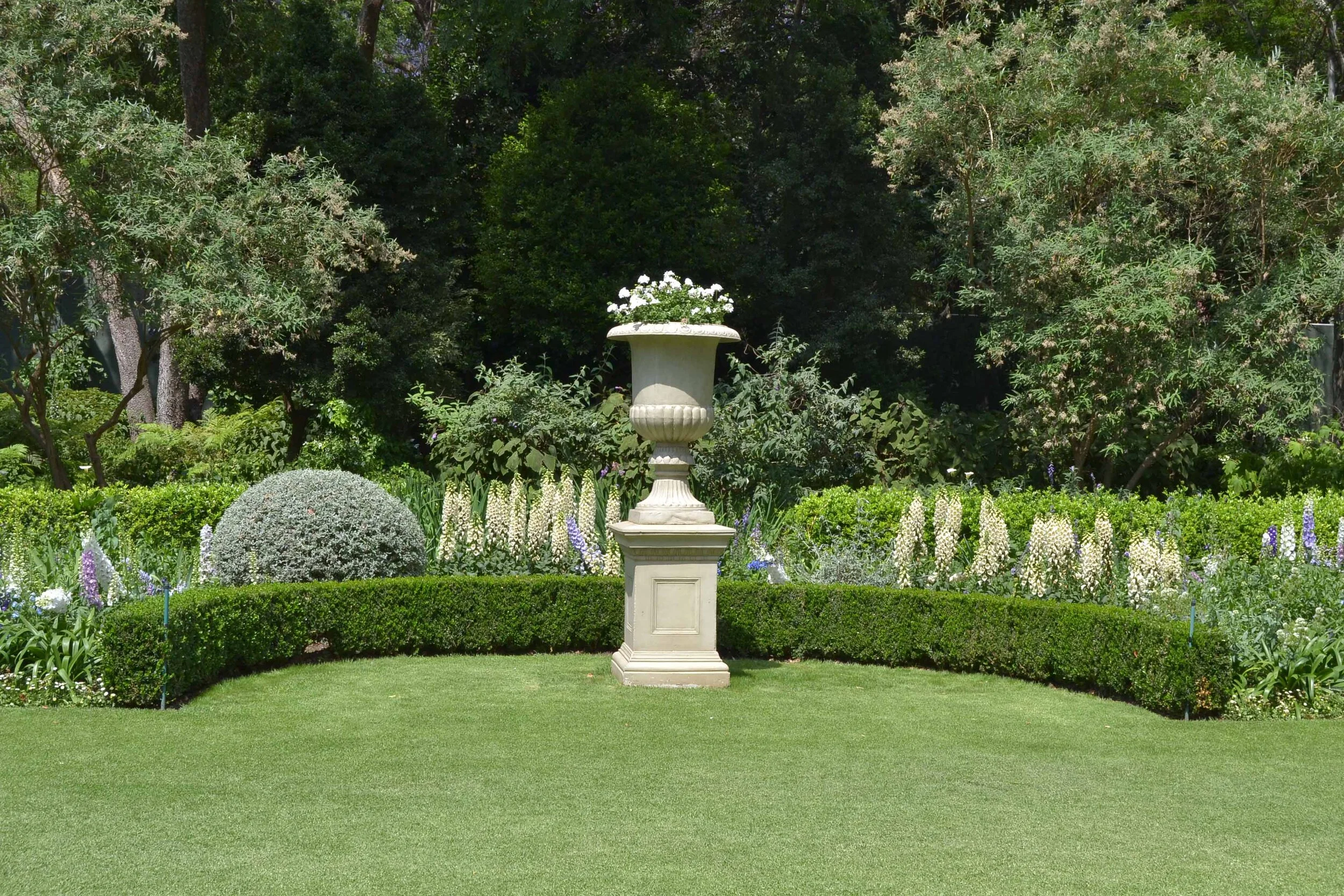
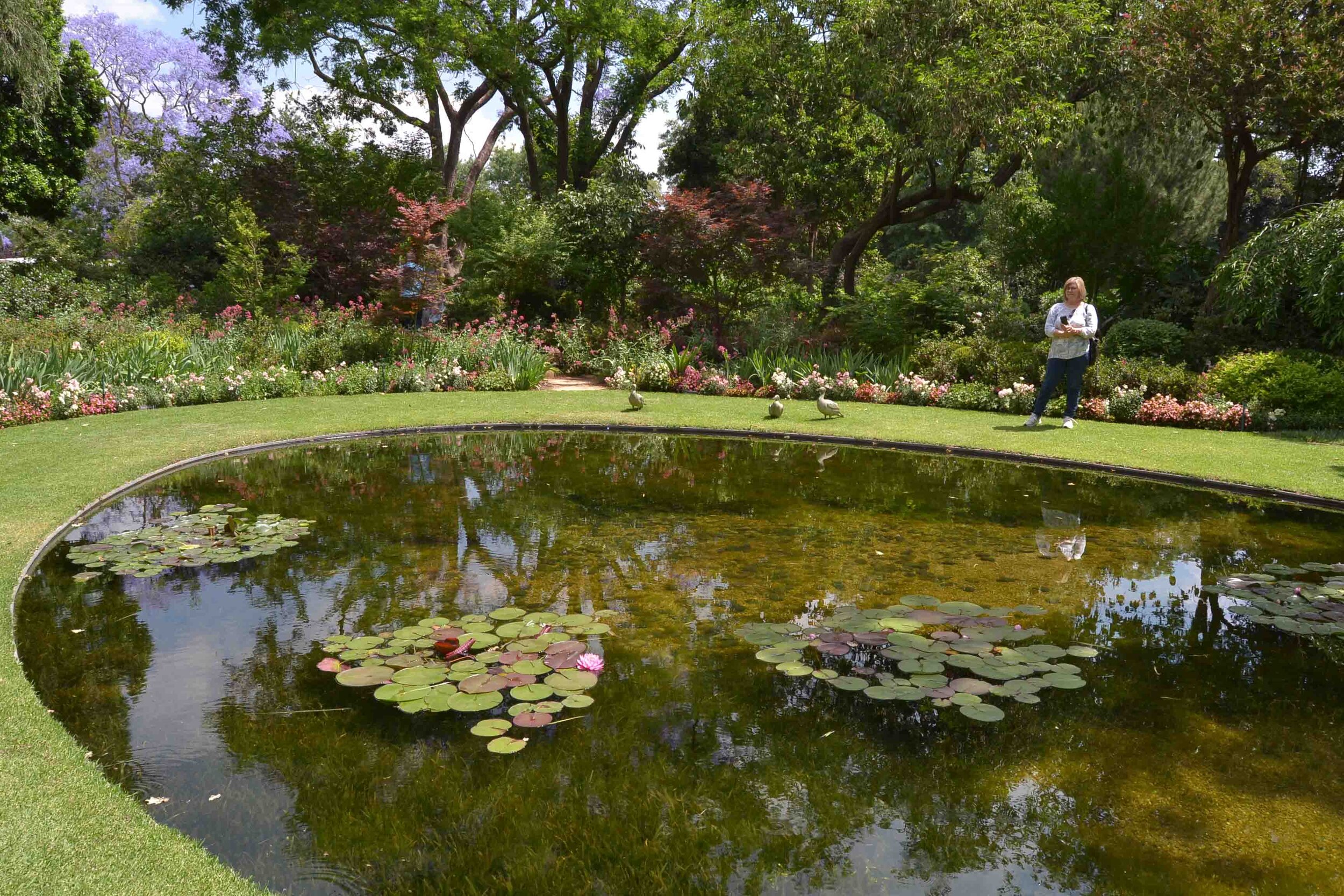
Designing the seven acre Garden of St Christopher was a privilege and an opportunity to build a large garden with the ultimate luxury of time. Detailed research was undertaken and interesting ornamental plant collections were amassed. The architecture of the house and the Italian ancestry of the owner prompted an Italianate style garden design with English overtones.  An environmentally sensitive approach was employed during the project. We used the stumps of trees we had to remove for a Highgrove-inspired stumpery. This area included a fernery and an unusual collection of large mineral specimens including verdite, sodalite and amethyst which added a tangible energy to that part of the garden. The wood from the felled trees was used for rustic paths in the “Bosco” part of the garden which included the oval reflection pond. The pond was inspired by a similar one by Russell Page designed for Babe Paley at Kiluna Farm on Long Island that sadly no longer exists. The pond is encircled by a bowl of azaleas, acers, dogwoods and flowering cherries that is breath-taking in both spring and autumn. The pond is part of a closed system of three water features that are gravity fed and naturally cleaned by a bog garden in the stumpery.  A bird garden and a butterfly-bee garden are aimed at increasing the population of natural wild life. A Neo Renaissance buxus parterre is viewed at a height from a stone clad classical pergola. In front of the house is a 80 meter long tapis vert alongside a 40 meter long and 25 meter deep herbaceous border of blue and white perennials planted in broad drifts anchored by curved buxus hedges that reaches its peak in mid-summer. The garden is home to a wide variety of exotic and indigenous trees including a collection of magnolias, crab apples, flowering cherries, acers and a curated collection of over 200 camellias. The most relaxed part of the garden is a meadow of long grasses with mown pathways that is bisected by a meandering river of Louisiana irises that is traversed by Japanese style bridges.

Curved Buxus Hedges with Urns as Focal Points along Main Lawn Area

Curved Buxus Hedges with Urns as Focal Points along Main Lawn Area

The Garden consists of several “Rooms” with each one evoking unique emotions and highlighting different angles and plant material. Large established trees are complimented by foliage from shrubs and an abundance of flowering groundcovers (I have never seen so many Foxgloves!). I thoroughly enjoyed exploring and experiencing the Garden and would find it difficult to choose my favourite part of it.

Stunning Display of Foxgloves and other Flowering Plants

Stunning Display of Foxgloves and other Flowering Plants

Formal Design

Formal Design

Beautiful Flowers fill this Garden to the Brim

Beautiful Flowers fill this Garden to the Brim

The Highlights of the Garden include the following spaces: Gem Walk and Stumpery, Pergola & Parterre, Tigers Eye Cascade, Reflection Pond and Azalea Bowl, Meadow, Camellia Walk, Bird Garden and Butterfly and Bee Garden.

Gem Walk and Stumpery with Ferns

Gem Walk and Stumpery with Ferns

Gem Walk and Stumpery

Gem Walk and Stumpery

Pergola

Pergola

Tigers Eye Cascade with Otter Sculptures

Tigers Eye Cascade with Otter Sculptures

Oval Reflection Pond and Azalea Bowl

Oval Reflection Pond and Azalea Bowl

Meadow with Crane Sculpture

Meadow with Crane Sculpture

Meadow

Meadow

Butterfly & Bee Garden

Butterfly & Bee Garden

A few more images showing the foliage, texture and colour combinations of plants within this beautiful garden:

185.JPG
162.JPG
Foliage Garden of St Christopher
194.JPG

Indigenous Plants for a Shady Garden

Scadoxus ‘Katherinae’ (Paint Brush Lily)

Scadoxus ‘Katherinae’ (Paint Brush Lily)

Designing for shady areas is always tricky, especially when the area gets sun for some time of the day and shade for another part of the day. Areas of deep shade are also problematic and it is not always easy to know which plant species will do well in those conditions. Most plants can tolerate shade for part of the day but if the area is below a dense canopy of trees or on the south side of a building where it receives little sun throughout the day it is best to plant Shade Plants.

Shade gardens can often be dominated by large leafed plants all the same dark green colour so it is a good idea to try add contrast with different coloured greens, leaf textures and variegated foliage where possible.

Plectranthus madagascariensis

Plectranthus madagascariensis

The skeleton or framework of the garden should consist of trees and larger shrubs - giving height, structure and backdrop of foliage. Examples of larger shrubs that do well in shade conditions include Mackaya bella (River Bells), Duvernoia adhatodoides (Pistol Bush), Burchellia bubalina (Wild Pomegranate), Diospyros whyteana (Bladder Nut), Plumbago auriculata (Leadwort) and Orthosiphon labiatus (Shellbush).

Middle range sized plants include Plectranthus (so many wonderful species that I will write a separate Blog showcasing some examples), Dietes, Carissa bispinosa and macrocarpa (NumNum), Hypoestes aristata (Ribbon Bush) and Ferns.

Lower growing groundcovers include Chlorophytum spp., Asparagus spp., Agapanthus spp., Crassula multicava ‘Ruby’, Zantedeschia aethiopica (Arum Lily) and Clivia miniata (Bush Lily). I often try to encourage clients to make use of Seasonal Bulbs to add colour and interest and the added delight of discovering them grow when you forgot they were there. Examples of Bulbs that do well in Shade include Scadoxus ‘Katherinae’, Veltheimia bracteata, Crosocmia aurea, Haemanthus albiflos, and Crinum moorei.

Clivia miniata (Bush Lily)

Clivia miniata (Bush Lily)

Crassula multicava 'Ruby'

Crassula multicava 'Ruby'

Focal plants are great for making a statement or highlighting a certain area in the garden and can include Dracaeana aletriformis (Large Leaved Dragon Tree), Dombeya tiliacea (Forest Wild Pear), Gardenia thunbergia (Forest Gardenia) and Strelitzia reginae (Crane Flower).

Draceana aletriformis (Dragon Plant)

Draceana aletriformis (Dragon Plant)

Since lawn is problematic is shade conditions you can use pavers, gravel, bark chip or a combination of these floor coverings and create pathways through the beds with areas for resting such as a bench or secluded spot. Focal points such as water features and sculptures also add interest and entice people to come into the garden to explore.

Crinum moorei (Moore’s Lily)

Crinum moorei (Moore’s Lily)

Crocosmia aurea (Falling Stars)

Crocosmia aurea (Falling Stars)

What Would Your Garden Look Like Around The World?

Garden design is more than just maintenance, it’s about self-expression and protecting cultural traditions. Around the world, different flowers and plants have different symbolic meanings. In some countries, the arrangement of a garden might also be symbolic or it might be for practical reasons such as the weather. Because of the varying climates across the world, different species of flower, plant and tree will grow and provide communities with different resources including food and styles of furniture. All these different features of a garden provide an insight into another lifestyle and culture. 

The team at 4 Everdeck have created the following infographic with information and images of the gardening habits and traditions followed by different countries around the world. The infographic provides insight into different cultures and might also give you some unique ideas for your own garden at home!

By Katherine Myers

What-would-your-garden-look-like-around-the-world.png

Sprout Conference 2019

Hello Cape Town!

Hello Cape Town!

In the first week of June Carien Momsen from Pureline Interior Design joined me for the #SproutConference2019 to Cape Town. It was a lightning trip packed to the brim with experiences that included art, culture, beautiful landscapes, delicious food and even time with good friends.

Our Itinerary

Our Itinerary

Our first site visit was the breathtaking Dylan Lewis Sculpture garden in Stellenbosch. A truly memorable experience that really showcases how the landscape can be a sculptural element in itself. Dylan Lewis laid the paths out over many years with great attention to detail and the recommended visitors walk allows one to appreciate the sculptures in a dynamic way from many perfectly planned angles. The planting is focused on indigenous plants, particularly fynbos, of which a large selection of unusual varieties have been sourced from Kirstenbosch. The landscape and amazing planting combinations really were a highlight of this trip!

Sculptures, water, mountains - a language of beauty and nature

Sculptures, water, mountains - a language of beauty and nature

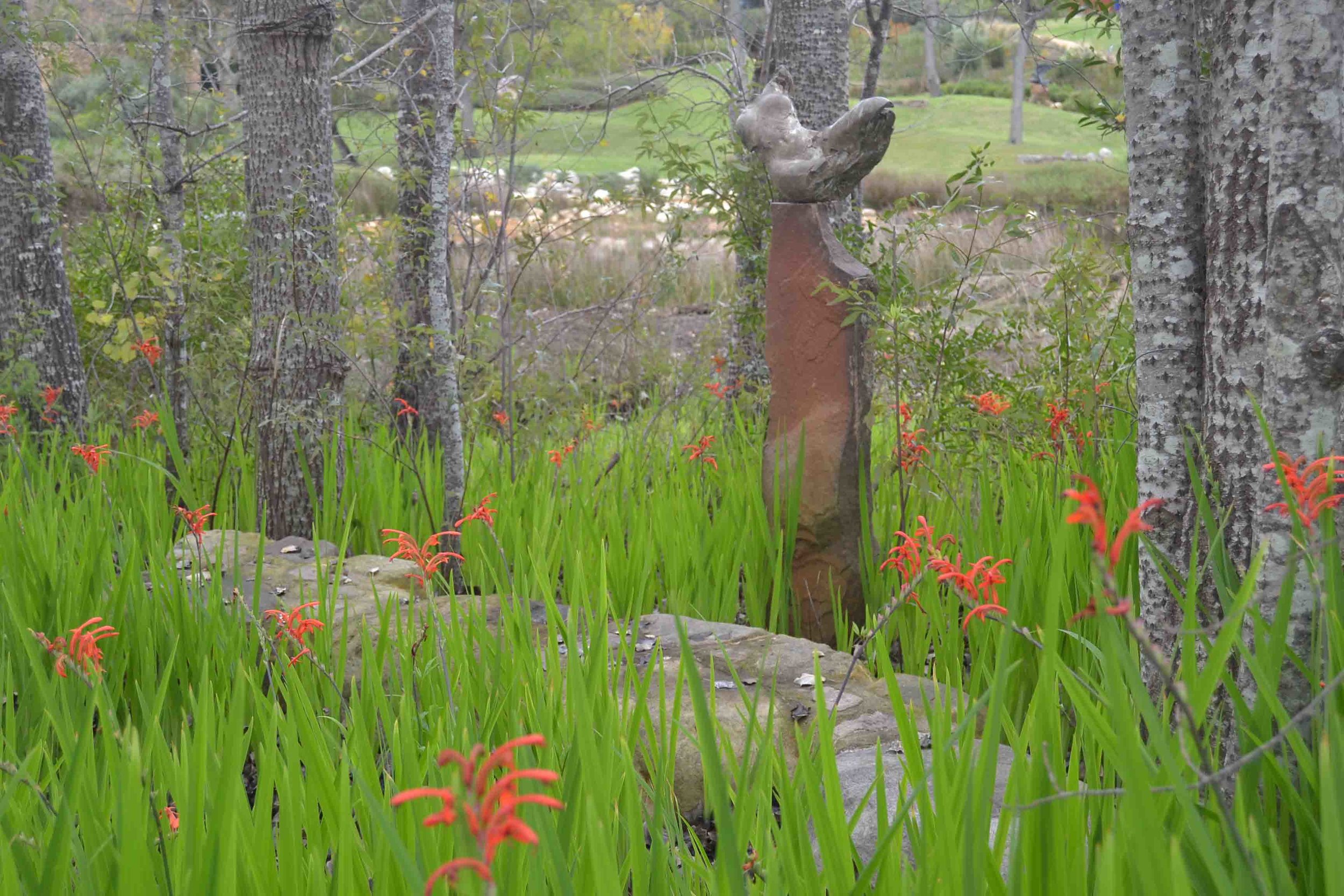
Loved the lime green and striking red colours of these Chasmanthe

Loved the lime green and striking red colours of these Chasmanthe

Our celebratory lunch was held at Tokara’s restaurant where wine and fine dining was a feast for the senses. We also enjoyed the Art on display including the enormous and intricately woven tapestry (two sections, each 2.2 high x 3.5m wide) by Sayed Mahmoud from Egypt. A different type of tapestry was the woven pathways of the gardens at Babylonstoren which we explored even though it started to rain!

Fine Dining

Fine Dining

Tapestry at Tokara

Tapestry at Tokara

Our second day of exploration and inspiration started with a visit to Truth Roastery and 117Kloof for coffee and croissants as well as the Company Gardens - always a treat to visit. I love watching how people interact with this space and the different activities that take place here. The entrance to the Gardens is dominated by a massive timber Arch installed as part of the Design Indaba 2018 to honour Archbishop Emeritus Desmond Tutu.

Company Gardens

Our next stop was the impressive urban precinct known at the Silos at the V&A Waterfront, particularly the Zeitz MOCAA (Museum of Modern Contemporary Art) Art Gallery. The building feels like an artwork and has been crafted out of forty-two concrete columns, each 33 metres tall with a diameter of 5.5 metres. It was designed by London’s Heatherwick Studios and the central atrium space, polished concrete surfaces and layout of the building generates an awe-inspiring reaction.

Following our experience of the museum we had a quick delicious lunch at the restaurant on the top floor with a beautiful view over the harbour and then spent some time exploring the V&A Waterfront.

Zeitz MOCAA
Exploring the Waterfront

Exploring the Waterfront

Our final site visit was the Norval Foundation in Tokai where we again saw beautiful artwork inside and outside the building. The sculpture park has beautiful indigenous planting combinations and although it was raining at this stage we still enjoyed our time here. We had a quick coffee break at Skotnes Restaurant before heading to the airport for our flight back to Johannesburg.

A huge thank you again to my amazing, incredible Executive PA for arranging this conference! It was a wonderful experience that filled us with inspiration for the year, hopefully until #SproutConference2020 :)

View of the Wetland running adjacent the Norval Foundation

View of the Wetland running adjacent the Norval Foundation

Indigenous Planting

Indigenous Planting

Emmarentia - Johannesburg Botanical Gardens

Beautiful Autumn Colours at Emmarentia Dam

Beautiful Autumn Colours at Emmarentia Dam

Most people know the Johannesburg Botanical Gardens as ‘Emmarentia’ and think of it more as a Park than a Botanical Gardens. I certainly was not aware of the behind the scenes operations of this green space – there are greenhouses, a herbarium, administration offices, and a compost site all hidden from view to the average user.

Recreation

 Emmarentia is a beautiful, well loved park in the heart of Johannesburg. You will find people of every age and culture enjoying this green space  – runners, cyclists, families with kids riding bikes or feeding the ducks (actually Egyptian Geese but most people call them ducks), young adults picnicking, yoga on boards on the dam, people searching for Pokemon, bridal parties taking photos in the rose gardens, dog walkers, Frisbee or volleyball players, market goers (The Linden Market is held here once a quarter), and music lovers (the park is also a venue for several concerts including Joburg Day).

Egyptian Geese on Emmarentia Dam

Egyptian Geese on Emmarentia Dam

Maintenance 

Lindelani Nwedo from Johannesburg City Parks, in charge of operations and maintenance at the Johannesburg Botanical Gardens, explained that the Park has 14 full time employees (I thought it would have been much more!) but makes use of co-operatives such as Jozi at Work together with EPWP for additional manpower to tackle the enormous task of maintaining the 81 hectare park. There are six shed houses that contain mother plants so that all plants in the Gardens can be replaced should they be lost due to fire, flood or drought. The nurserymen who grow the plants in the sheds have green fingers and although the plants are not for sale to the public they are often donated to schools or used for environmental education. Rare or special plants are also exhibited at certain show days such as the Succulent, Horticultural or Bonsai Societies Shows.

Alien invasive control is an important part of the Park’s maintenance programme although the task is often too great for the maintenance team. The Emmarentia Residents Association provides assistance where possible and on 20 October 2018 almost 100 people were involved in removing poisoned invasive alien plants, clearing a clogged dam and cleaning up litter.

Succulents housed in Greenhouses - viewing by prior arrangement with JHB City Parks

Succulents housed in Greenhouses - viewing by prior arrangement with JHB City Parks

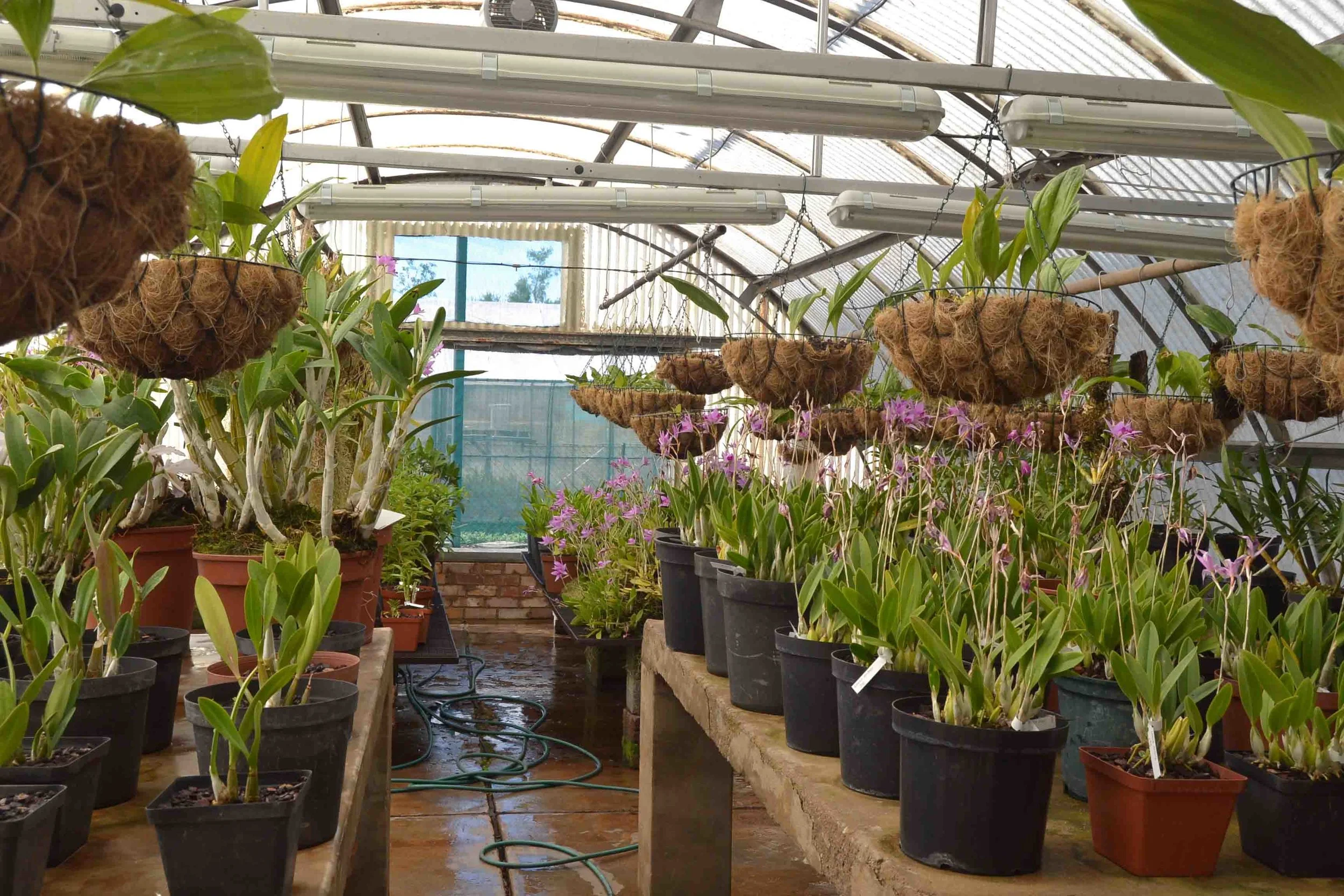
Orchids in Greenhouse

Orchids in Greenhouse

History

I was interested to learn more about the Park and its surrounding suburb’s history from a book written by Lucille Davie called “A Journey through Johannesburg’s Parks, Cemeteries and Zoo”, published by Johannesburg City Parks and Zoo. Here are some insights from the book: “The botanical garden was originally part of the large farm, Braamfontein, named after the Spruit running through the area. The farm belonged to Gerrit Bezuidenhout, one of the first Boer farmers in the area, who received the title deeds in 1858. The farm was sub-divided several times and the Eastern part bought for £4500 by Lourens Geldenhuys in 1886, the year the main gold reef was discovered in Johannesburg. Lourens had three sons, namely Frans, Dirk and Louw. Frans and Louw divided the farm in two, the division running along the present day Orange Road. The each built themselves a farmhouse, both of which still exist, while Dirk went farming at Ermelo. Frans married Judith Grobbelaar and built what is now Marks Park Sports Clubhouse. She gives her name to Judith Road in Emmarentia, while Louw’s wife, Emmarentia Botha, gave her name to the suburb. Over the years Louw sold portions of his farm, which became the suburbs of Melville, Richmond, Braamfontein, Parkview, Forest Town, Westdene, Parkhurst and Parktown. Louw gave to the community in several ways: he founded the Langlaagte Kindertehuis for Boer War orphans in 1902 (now the Abraham Kriel Maria Kloppers Kinderhuis), founded the Braamfontein Government School (present day Louw Geldenhuys School) allowed Boers returning from the was to settle on his land paying some of their profits to him in exchange for land, and he was also actively involved in politics.

The Dabulamanzi Canoe Club is situated on the opposite side of Emmarentia Dam. The clubhouse was built in 2004 and has an active membership from recreational paddlers to world champions. The club has a development programme in the form of the Soweto Canoe Recreation Club which is beautifully captured in the film “Beyond the River”.

Sunset over Emmarentia Dam

Sunset over Emmarentia Dam

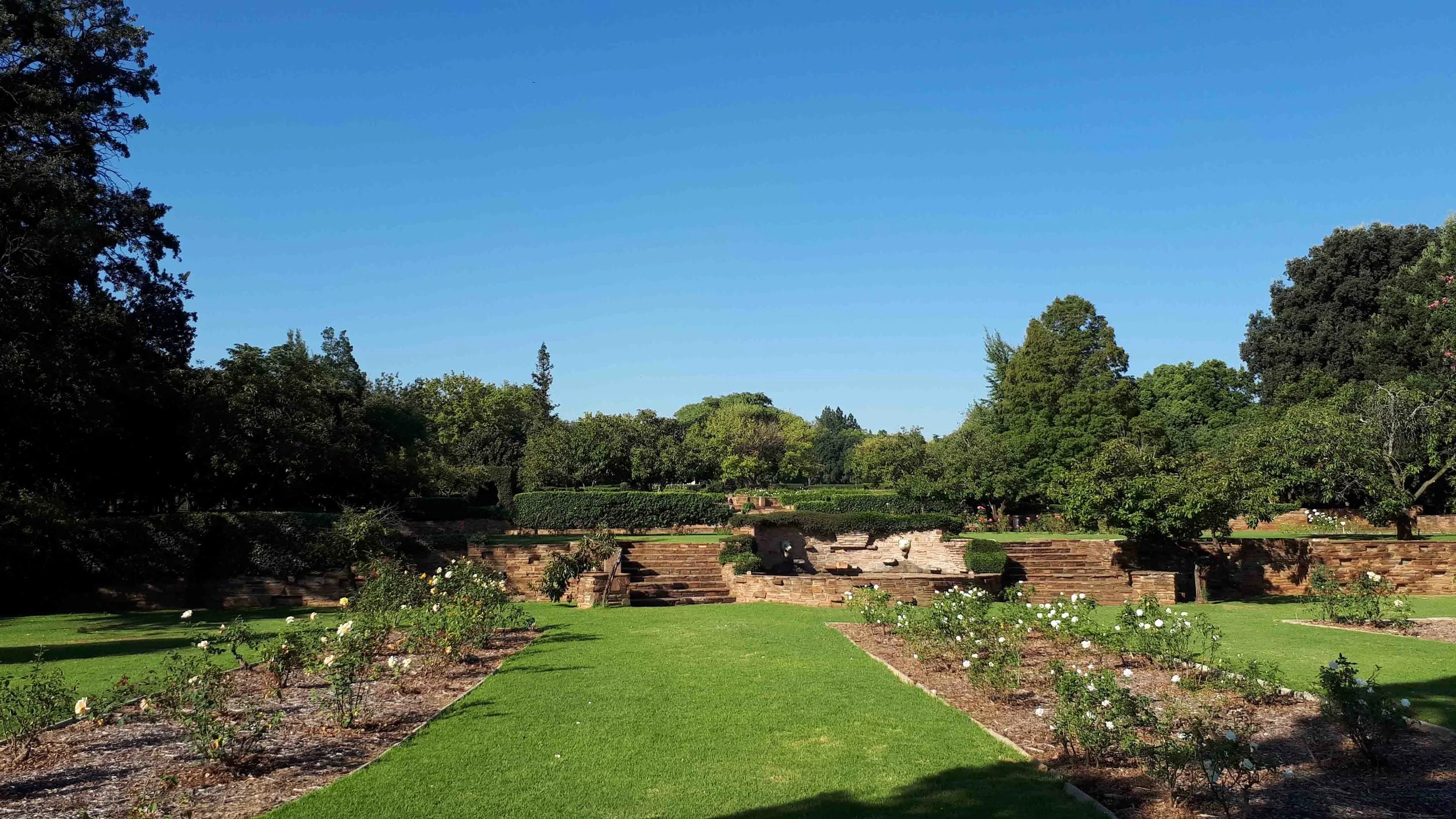
 The Park consists of some 8000 trees, large lawn areas and a network of pathways that connect the various themed spaces. There is a Shakespeare Garden containing herbs referred to by Shakespeare in his plays; the Chapel Garden where bridal couples can take their vows; the Western Walk; the Herb Garden filled with traditional culinary  herbs as well as African medicinal herbs; the Succulent Garden that was established in 2006 and contains Aloes, Cactuses and Pelargoniums; and the firm favourite by hundreds of visitors every weekend - the Rose Garden - laid out in 1964 and planted with over 3000 roses in several terraces.

Large Lawn Areas at Emmarentia

Large Lawn Areas at Emmarentia

Terraced Rose Garden

Terraced Rose Garden

Certainly this Park has so much to offer and gives one a break from busy city life and is dearly loved by all those that frequent it. I know my daughters particularly love the soft serve that can be bought at the kiosk and enjoyed in the children’s play area.


More Information:

Davie, L. (2014) “A Journey through Johannesburg’s Parks, Cemeteries and Zoo”, published by Johannesburg City Parks and Zoo

 JHB City Parks Link - http://www.jhbcityparks.com/index.php/2015-04-29-12-30-27/find-a-park-contents-64?task=view&id=123

 Emmarentia Residents Association - http://era.org.za/

Dabulamanzi Canoe Club - http://dabulamanzi.co.za/

The Linden Market - https://thelindenmarket.com/

Joburg Day - http://www.947.co.za/joburgday/

Lowveld Botanical Gardens

Water Lilies on a Pond at the Lowveld Botanical Gardens

Water Lilies on a Pond at the Lowveld Botanical Gardens

The Lowveld Botanical Gardens, located at the confluence of the Nel and Crocodile Rivers in Mbombela (previously Nelspruit) Mpumalanga, has a special place in my heart. I grew up in Nelspruit and the indigenous trees and shrubs of the bushveld evokes a comforting nostalgia. When I think of the Lowveld images of Paperbarks, Euphorbias, Aloes, Kiaat and Lowveld Chestnut trees (to name a few) come to mind. My love for nature and indigenous plants has grown as a direct result of the influence of growing up surrounded by the natural beauty the Lowveld. I guess this was one of the reasons I chose to have my wedding photographs taken in the Botanical Gardens and fondly remember walking along the draw bridge to the restaurant where the reception was held.

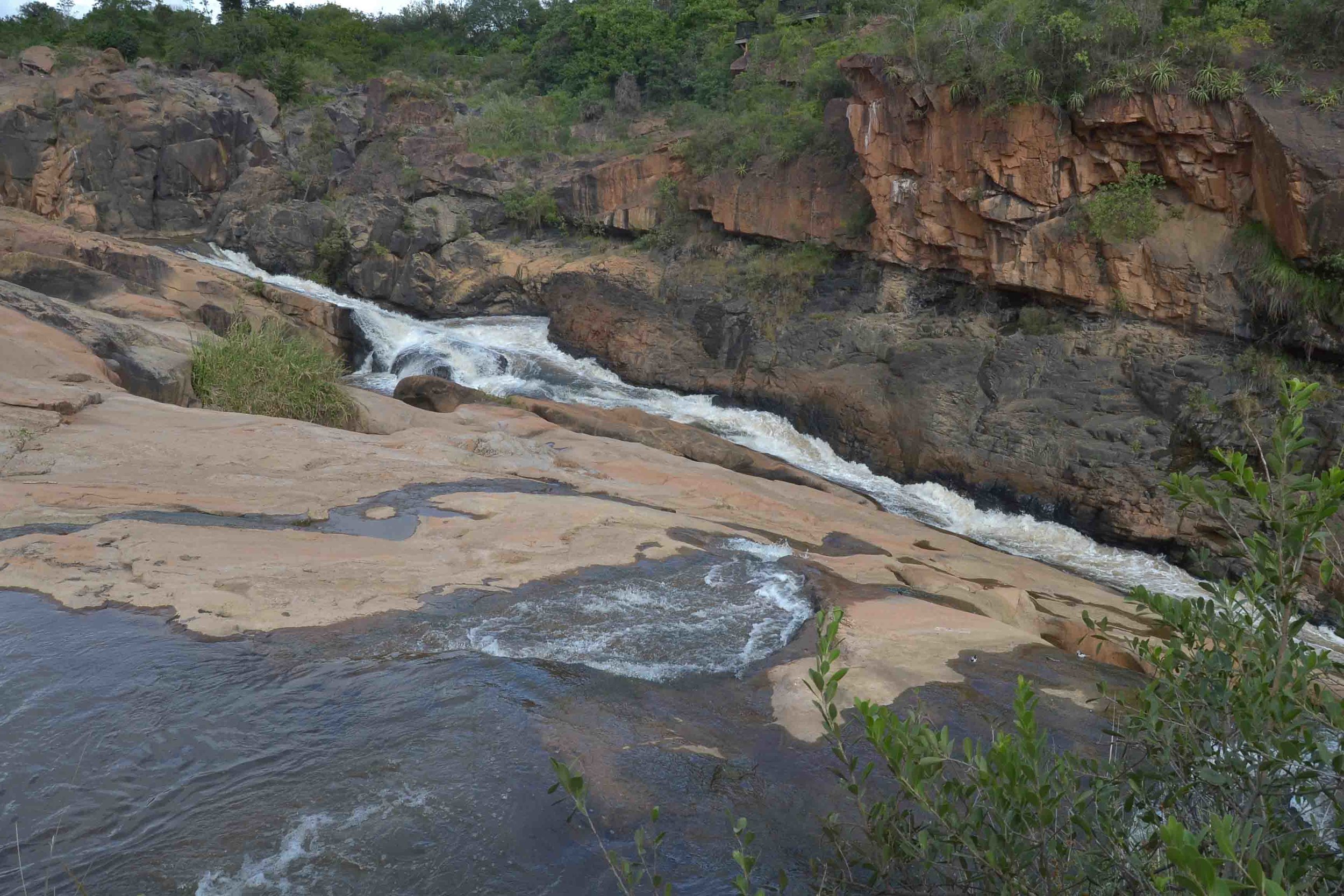
Nelspruit Waterfall / Cascades

Nelspruit Waterfall / Cascades

Nelspruit Cascades
Nelspruit Cascades

The Lowveld Botanical Gardens boasts a beautiful display of inviting green spaces, impressive trees and amazing cycads. The Garden hosts concerts, wild flower shows, art shows, and plant sales while weddings, baby showers and other events can be celebrated at the Red Leaf Fig Tea Garden. A children’s playground provides opportunities for families to relax and the kids to have fun with an added educational element.

Playground at the Lowveld Botanical Gardens, near the Tea Garden

Playground at the Lowveld Botanical Gardens, near the Tea Garden

Red Leaf Fig Tea Garden

Red Leaf Fig Tea Garden

The Garden is home to the largest man-made African Rainforest in an area of approximately 5 hectares along the Crocodile River. It is said to have the largest collection of South African cycads (and fig trees), more than 700 tree species and more than 3000 plant species in cultivation.

Large areas of Lawn with Cycads and Trees

Large areas of Lawn with Cycads and Trees

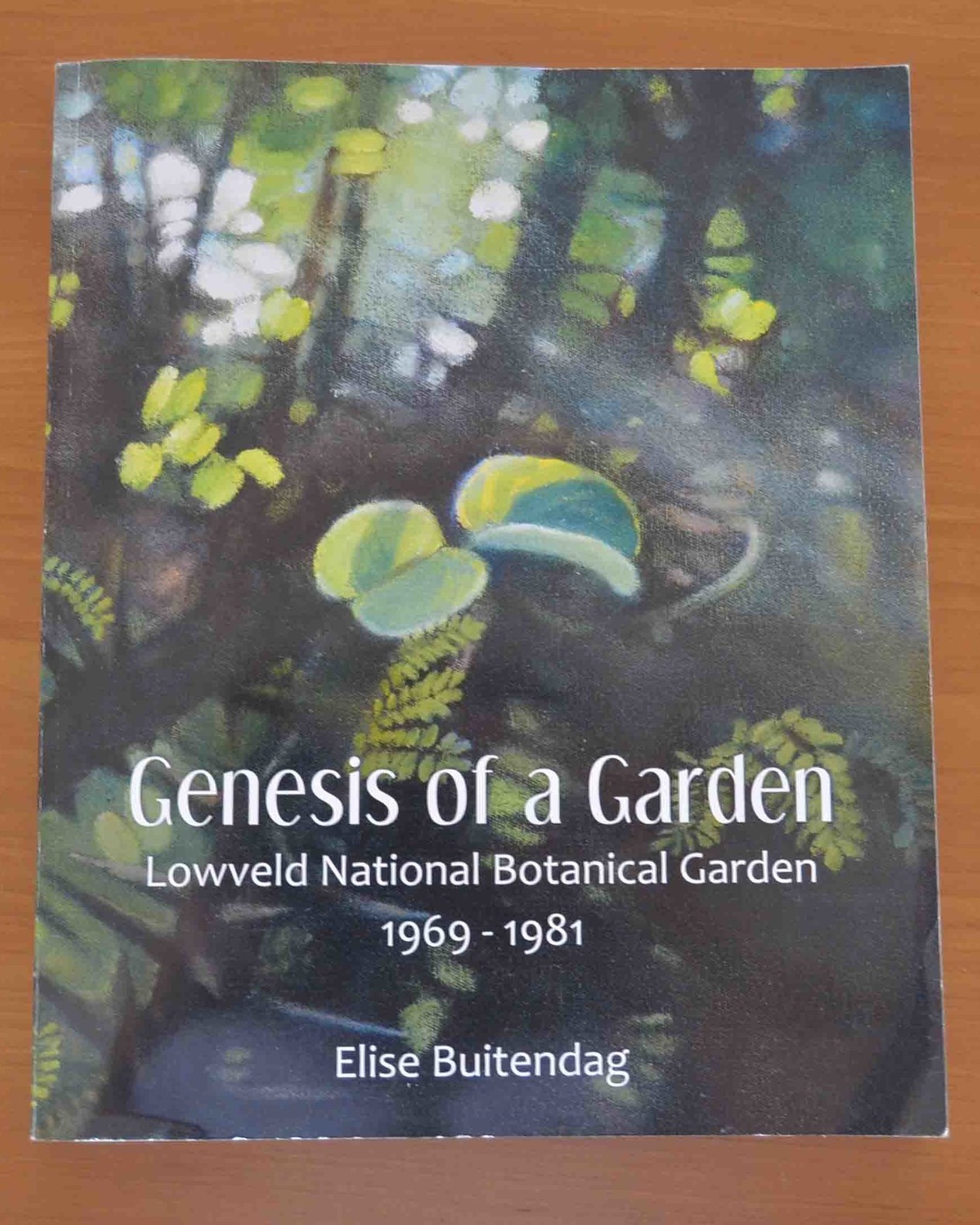
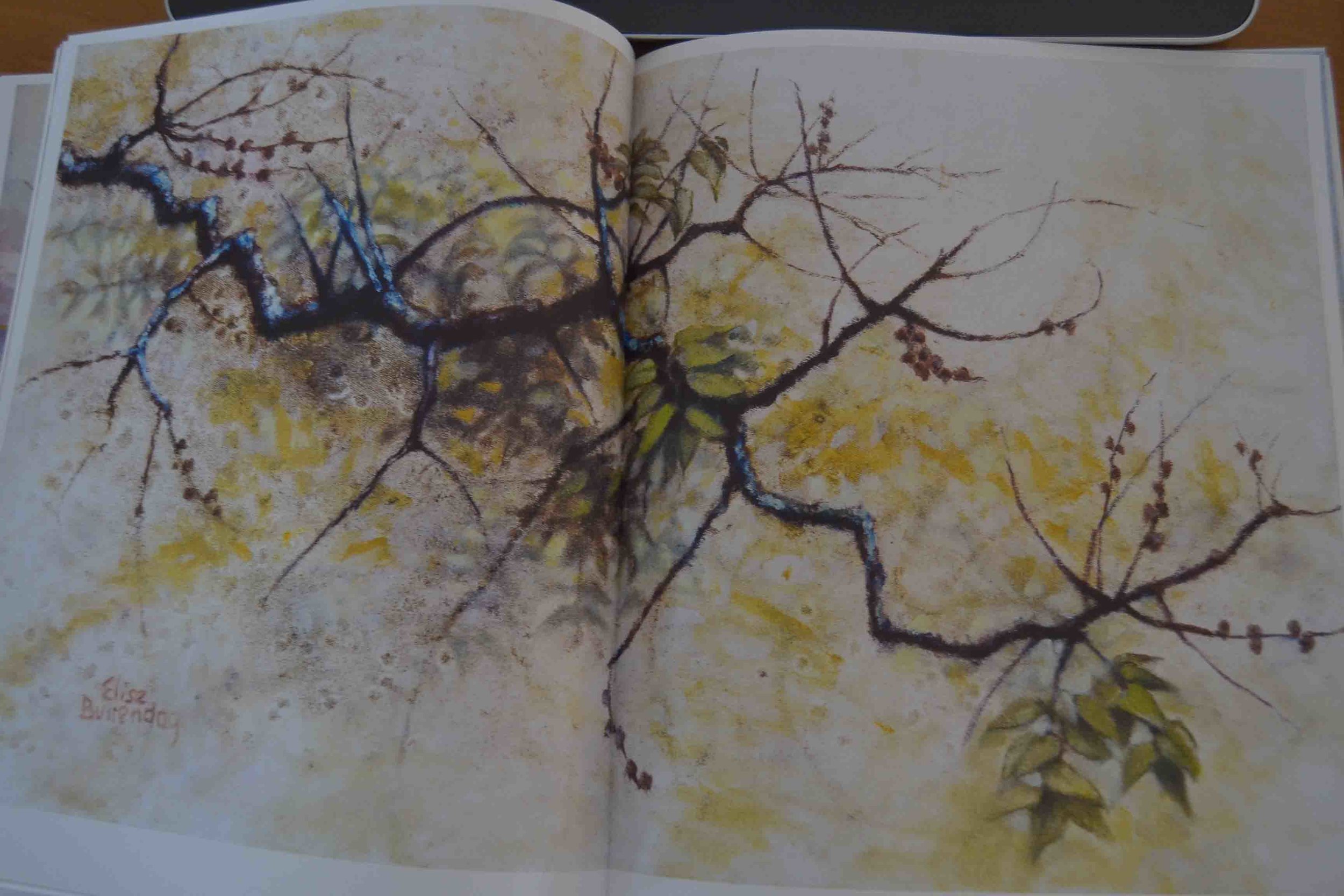
 “Genesis of a Garden, Lowveld Botanical Garden 1969-1981” is a book written by Elise Buitendag who was involved from the inception of the gardens and worked there during it’s first twelve years of establishment. The beautiful coffee table book includes historical information, photographs, personal memoirs and stunning botanical artworks by the author.

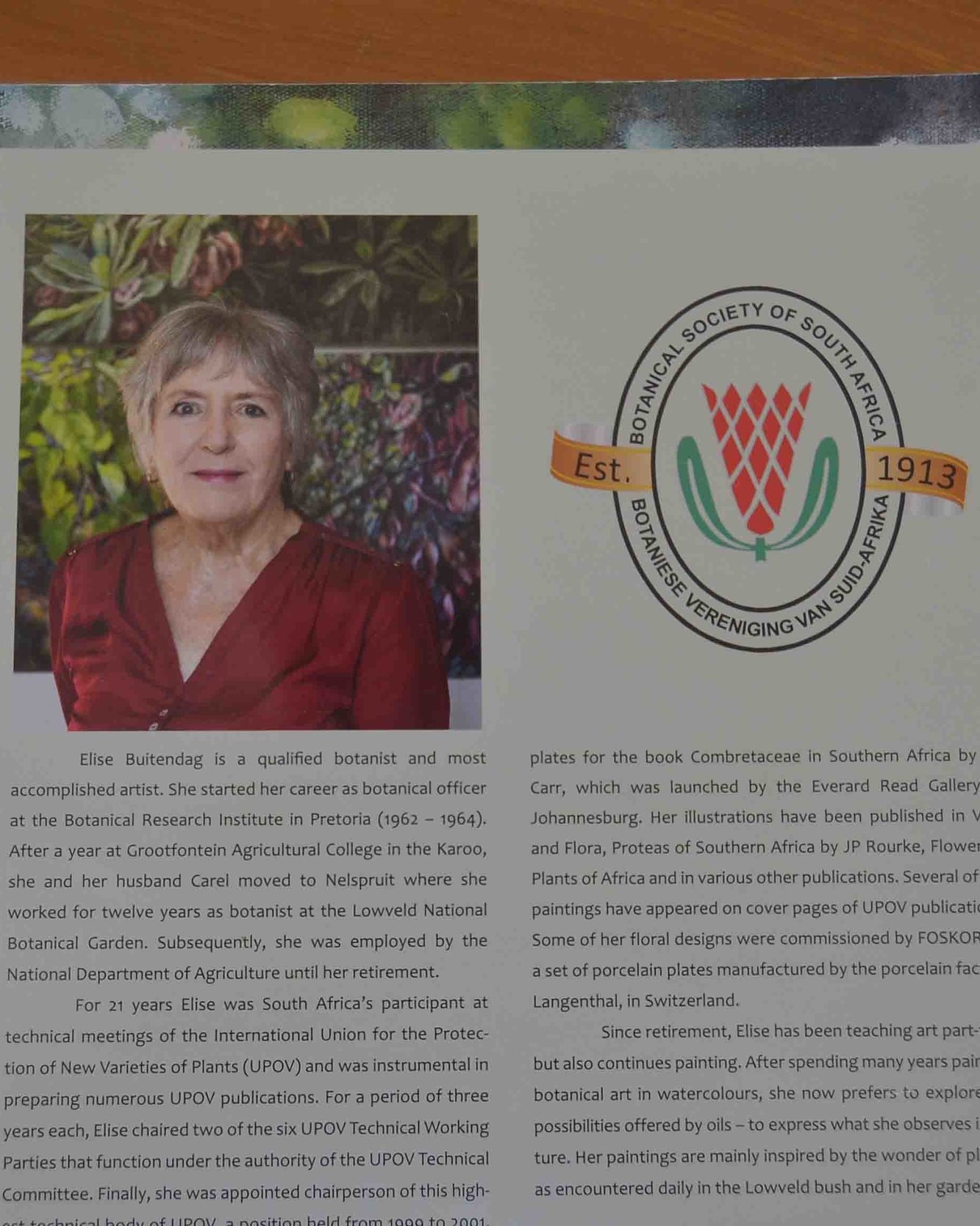
Elise Buitendag is a qualified botanist and acknowledged as one of South Africa’s professional botanical artists having authored and illustrated several publications. Her paintings are mainly inspired by the wonder of plants, as encountered daily in the Lowveld bush and in her garden.

“The area donated by both the town council and HL Hall & Sons had a dramatic beauty, with its roaring cascades and rugged landscape, but was considered by many as unsuitable, primarily because of the Y-shaped junction of the Crocodile and Nels River which would divide the garden into three distinct sections. To create a garden in such a diverse and fragmented terrain seemed a very ambitious undertaking.” (Page 9)

“Another tree, the huge fever-tree at the lapa has gained monumental stature and has become an icon in the garden. This tree was grown from seed sown in 1973. I remember how the lanky little seedling grew so rapidly that it couldn’t support itself and had to be tied to a pole to keep it upright. Today everyone who loves the Garden takes pleasure in this beautiful lemon-yellow to lime-green giant.” (Page 161)

Fever Tree

Buitendag’s book is a wonderful depiction of the Garden’s history and looks at the Place, the Plants and the People. The beautiful artworks create a visual experience for the reader that strongly evokes the sense of place that this special garden holds.

Elise Buitendag Artwork in her Book “Genesis of a Garden”

Elise Buitendag Artwork in her Book “Genesis of a Garden”

For more information please visit: https://www.sanbi.org/gardens/lowveld/

Bordeaux South Park

Entrances are highlighted by Arches and Aloes, welcoming you into the Park

Entrances are highlighted by Arches and Aloes, welcoming you into the Park

Tucked away in the boomed off suburb of Bordeaux South (the suburb is roughly located between Hurlingham and Blairgowrie in Randburg) in Johannesburg, lies a beautiful community park. The Park is well maintained and cared for through the efforts of the active residents association (BSRA- http://www.bsra.co.za/) who have invested a fair amount of money into upgrading the Park and this has really made such a difference.

A quote from the Bordeaux South Residents Association website:

“I am of the opinion that my life belongs to the community, and as long as I live it is my privilege to do for it whatever I can.” George Bernard Shaw

Clear Pathways, Seating, Litter Bins all contribute to making this an enjoyable park

Clear Pathways, Seating, Litter Bins all contribute to making this an enjoyable park

Bike Track with Traffic Lights for Kids

Bike Track with Traffic Lights for Kids

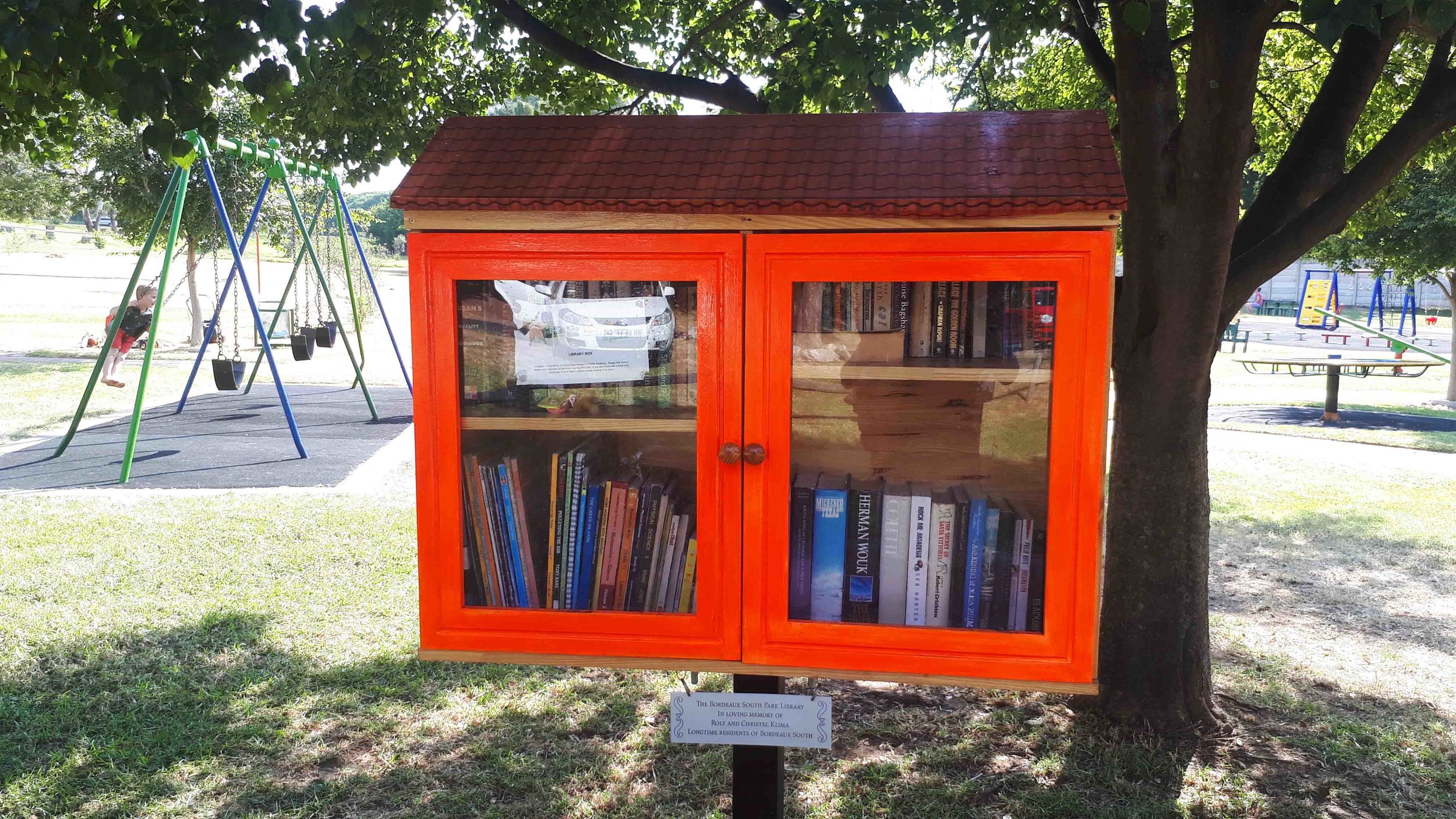
The Park is well used by families because of the extensive play equipment making this an amazing playground for kids of all ages. There are shady spots for picnics, several seating options, a volleyball court, a bike track with miniature traffic lights, and even a small free community library that residents donate books to.

Free Community Library

Free Community Library

New jungle gyms for smaller tots have recently been installed with rubber matting surfaces.

New jungle gyms for smaller tots have recently been installed with rubber matting surfaces.

Signage indicates the appropriate ages for the play equipment

Signage indicates the appropriate ages for the play equipment

Water Bowls for Dogs visiting the Park

Water Bowls for Dogs visiting the Park

The Bordeaux South Residents Association is making a difference at improving their suburb

The Bordeaux South Residents Association is making a difference at improving their suburb

Such a lovely park to visit if you have kids. Take Note that there are no ablution facilities at the Park.

What is ILASA?

ILASA logo

 If you are working in the green industry in South Africa you will most likely have heard of ILASA (Institute for Landscape Architecture in South Africa). ILASA  is a voluntary organisation that is mandated to grow and promote the profession and concept of landscape architecture in the South African environment.

 Goals of ILASA (taken from their website)

·         Advance dignity and competence of the profession

·         Uplift previously disadvantaged societies

·         Advancement of professional competence through education

·         Support sustainable ecological planning and management

·         Support of public involvement in planning and design process

·         Promotion of excellence through peer review recognition

·         Increase visibility of the profession to government and society

·         Promotion of the landscape architecture profession

ILASA shares information to its members that is relevant to the landscape architecture profession as well as highlighting national and regional events that are of interest. There is also a page on their website where companies post job vacancies so if you are looking for employment as a landscape architect this would be a good place to start.

I love ILASA because it is a means of holding the landscape architecture community together. It provides opportunities to acquire CPD points through various events which are educational and enjoyable. Events are often an opportunity for old friends and ex-colleagues to see each other and catch up. All the events are arranged by the regional organizing committees (Gauteng, KZN and Cape) and this includes the conference and awards function.

I volunteered on the Gauteng committee for a number of years and really enjoyed the interaction with other landscape architects as well as growing relationships with the other committee members. I encourage other landscape architects to become involved and volunteer their time towards the ILASA committee so the load can be shared and the benefits can be enjoyed by all.

ILASA provides valuable opportunities for networking, business connections and experiences that are enriching and educational and it is worthwhile to be a member.

 Visit https://www.ilasa.co.za/ for further information.