Discovering The Wilds, a Historical Park in Johannesburg

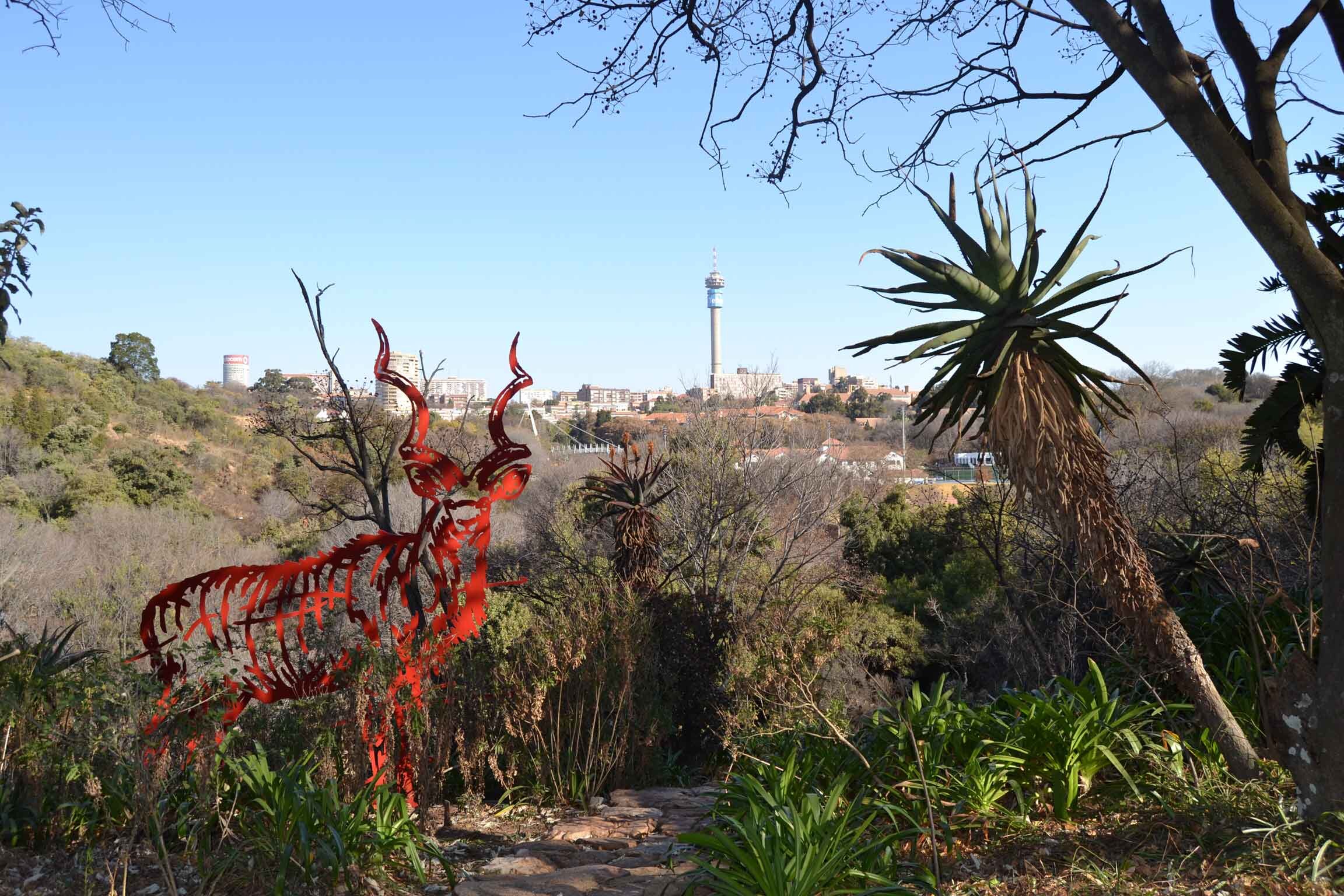
Kudu Sculpture with View of Telkom Tower from The Wilds

Kudu Sculpture with View of Telkom Tower from The Wilds

I had heard rumours about a beautiful outdoor space in Johannesburg called The Wilds but it was shrouded in mystery and even the name made me imagine an overgrown and slightly dangerous place to visit, naturally making me a bit apprehensive to go there. When I eventually did visit I was completely taken aback by the beauty and history of this Park. I was captivated by the winding stone paths, the incredible views, the amazing selection of indigenous plants and the artworks that brought such an element of fun and wonder.
Location

The Wilds is located on Houghton Drive, Houghton and is situated on the Parktown Ridge. It consists of two parts, East and West, and is connected by a bridge over Houghton Drive. The West is more park-like and popular amoung visitors, especially the Giraffe Lawn area while the East is recommended to walk in Groups.
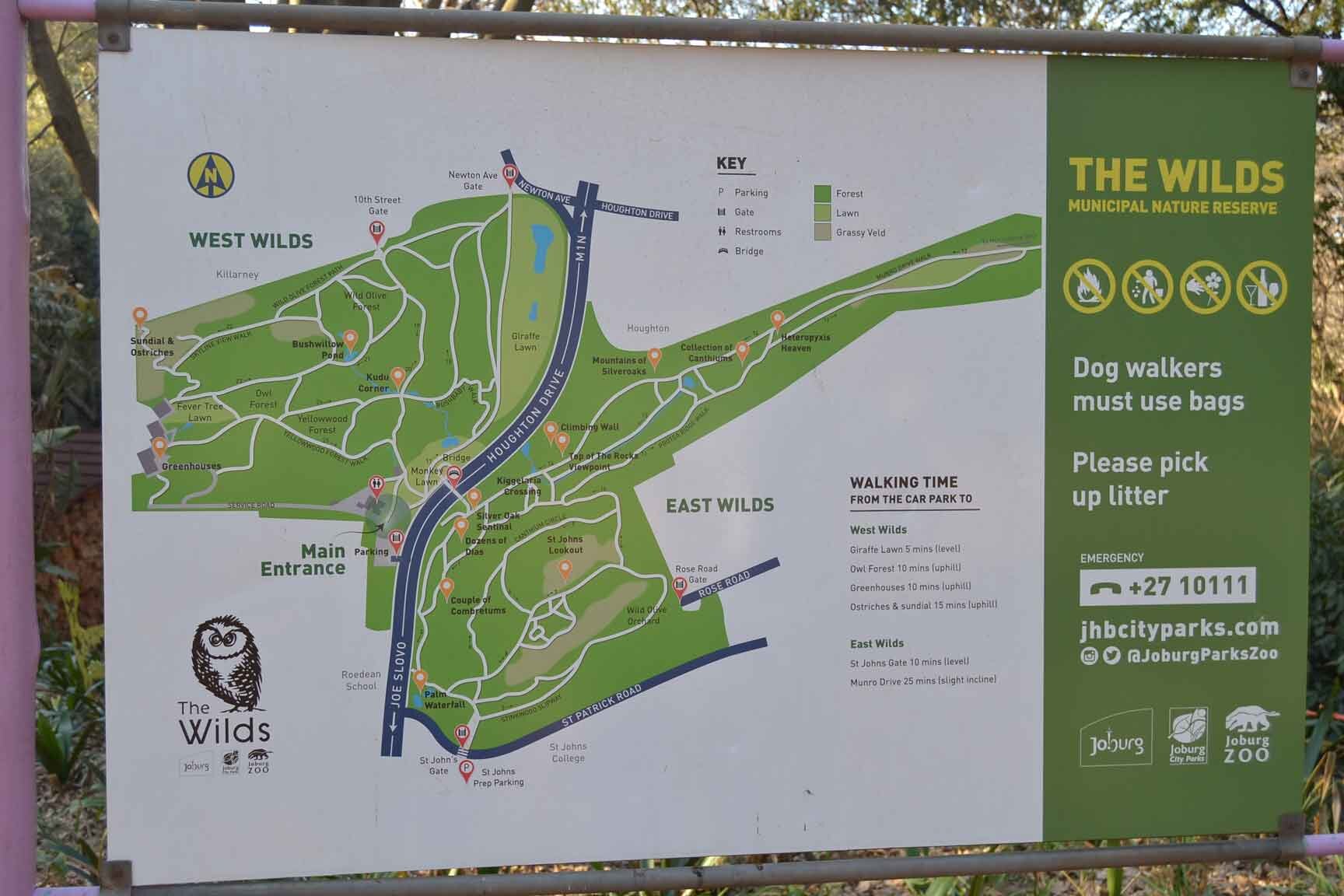
Map of the Park at Main Entrance

Map of the Park at Main Entrance

History

The Park, like Zoo Lake and the Johannesburg Zoo, was a corporate gift to the citizens of Johannesburg. In 1924 the Johannesburg Consolidated Investment Company (JCI) donated the land, on condition that it remained in its natural state and open to the public. Once it was completed in 1938 it was opened to the public. In 1968 the JCI again donated to the park in the form of four greenhouses. It was declared a national monument in 1981.
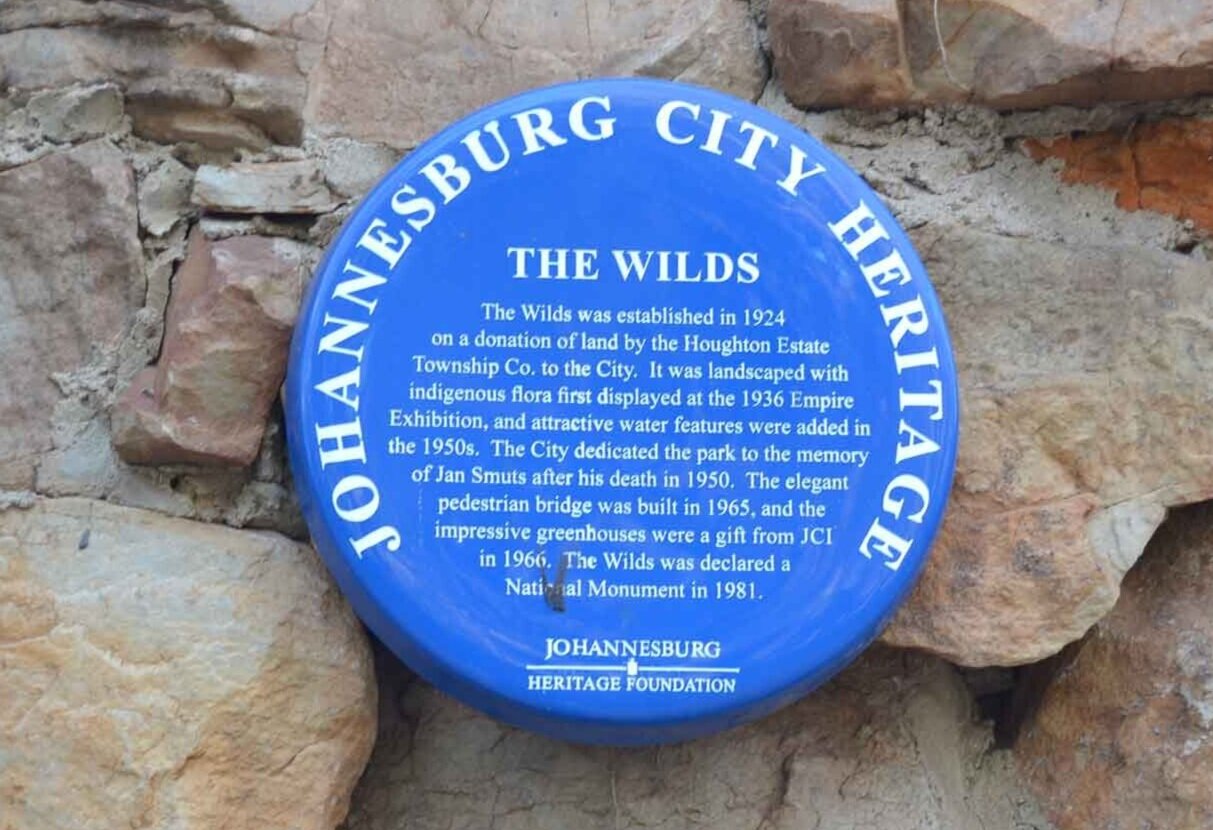
Heritage+Site

In the 1980s and 1990s it was hit by crime and people stopped visiting. The park became forgotten and overgrown. In the early 2000s the park was fenced off and a resident named TJ de Klerk tried to revive it by taking people on guided walks on both sides of the park. See more about the rejuvenation of the Park further below, but let’s first look at its physical features:

Vegetation

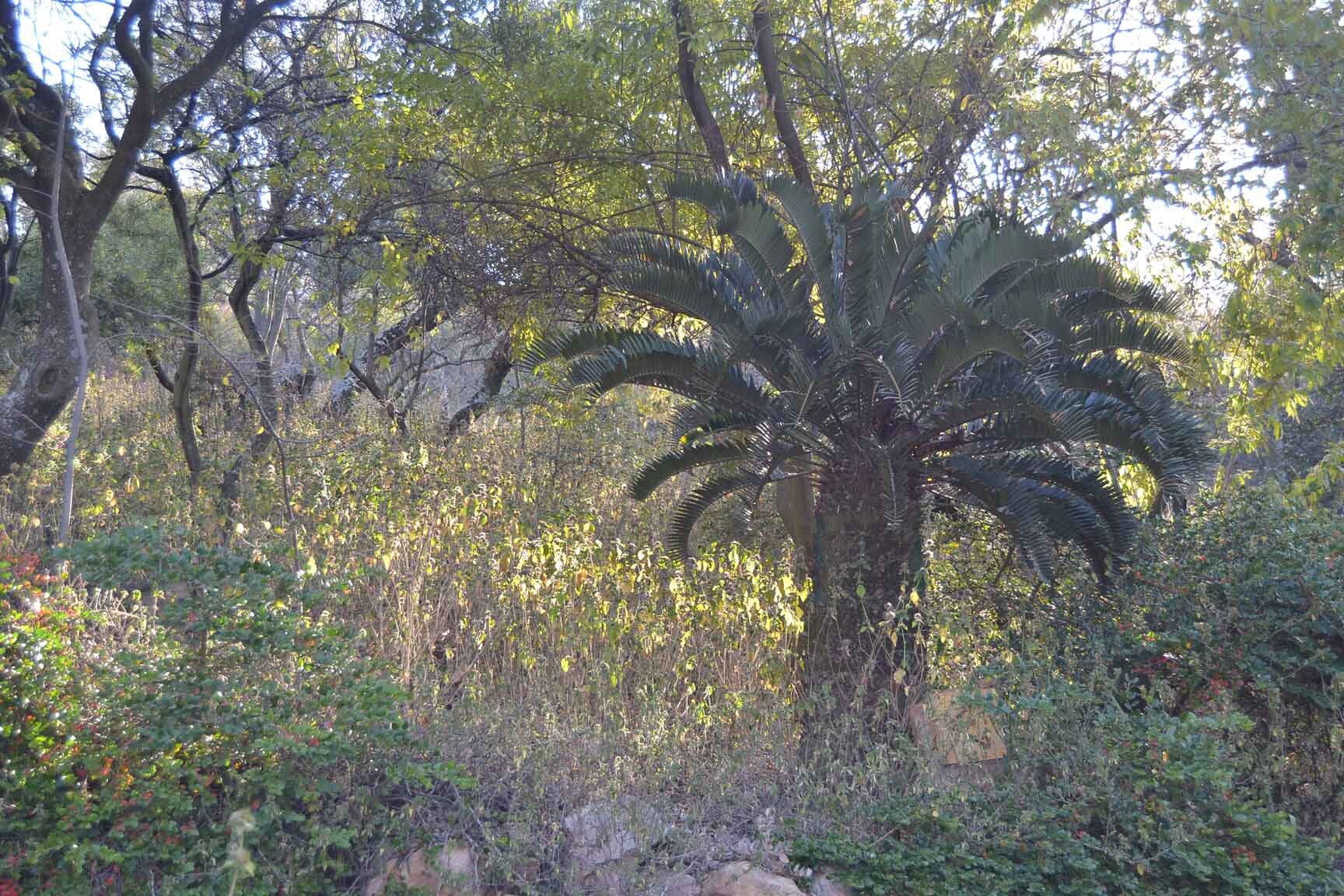
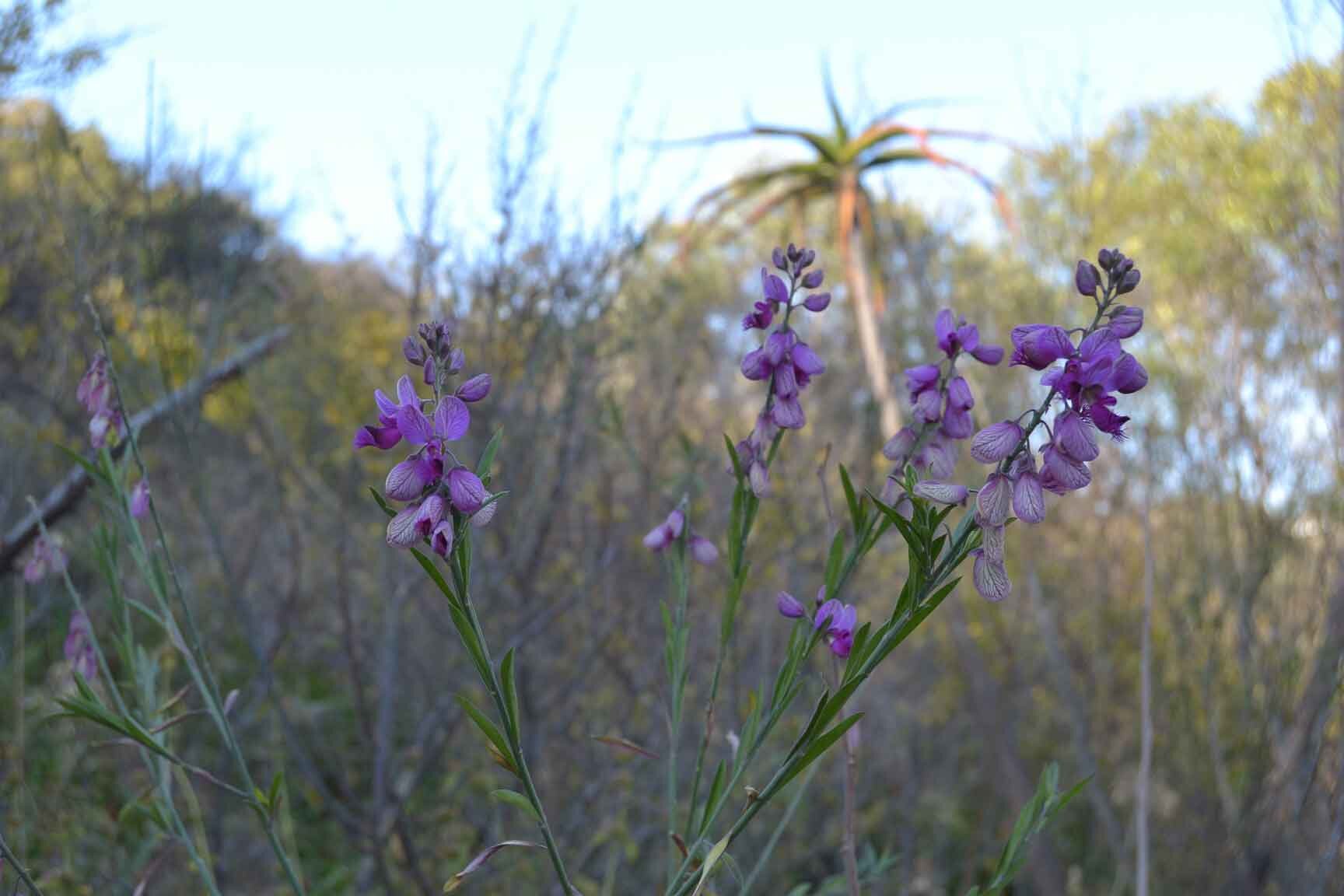
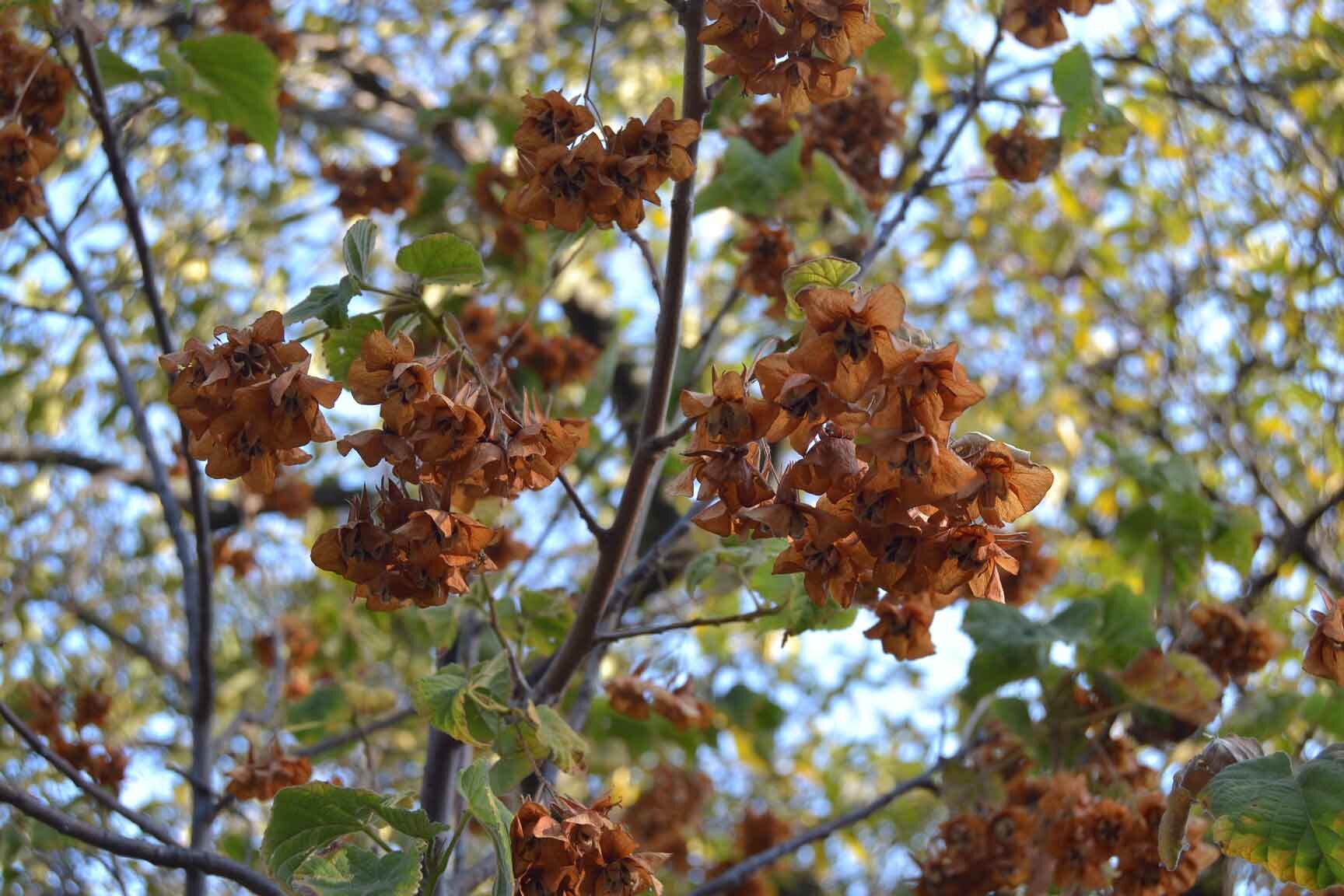
The trees are incredible – massive Yellowwoods, Lavender Trees, Fever Trees, White Stinkwoods, Cabbage Trees, Olive Trees and a stunning assortment of Cycads and Aloes. The beds below the trees are filled with indigenous groundcovers and I saw plants on display that are seldom seen elsewhere (E.g Pycnostachys urticifolia). This collection of plants has developed over the years as supporters have donated plants and a large donation was made after the Empire Exhibition in 1936 when the Golden Jubilee (50th anniversary) of Johannesburg was celebrated.
Pathways

The winding pathways and staircases (over 8km) are made out of natural packed stone and these create a delightful maze to explore and discover. There is good signage that ensures you don’t get lost and also a map at the entrance to orientate yourself when first arriving. We naturally made our way up through the park, following the paths to the highest point of the park where the sundial is located and the views are panoramic.
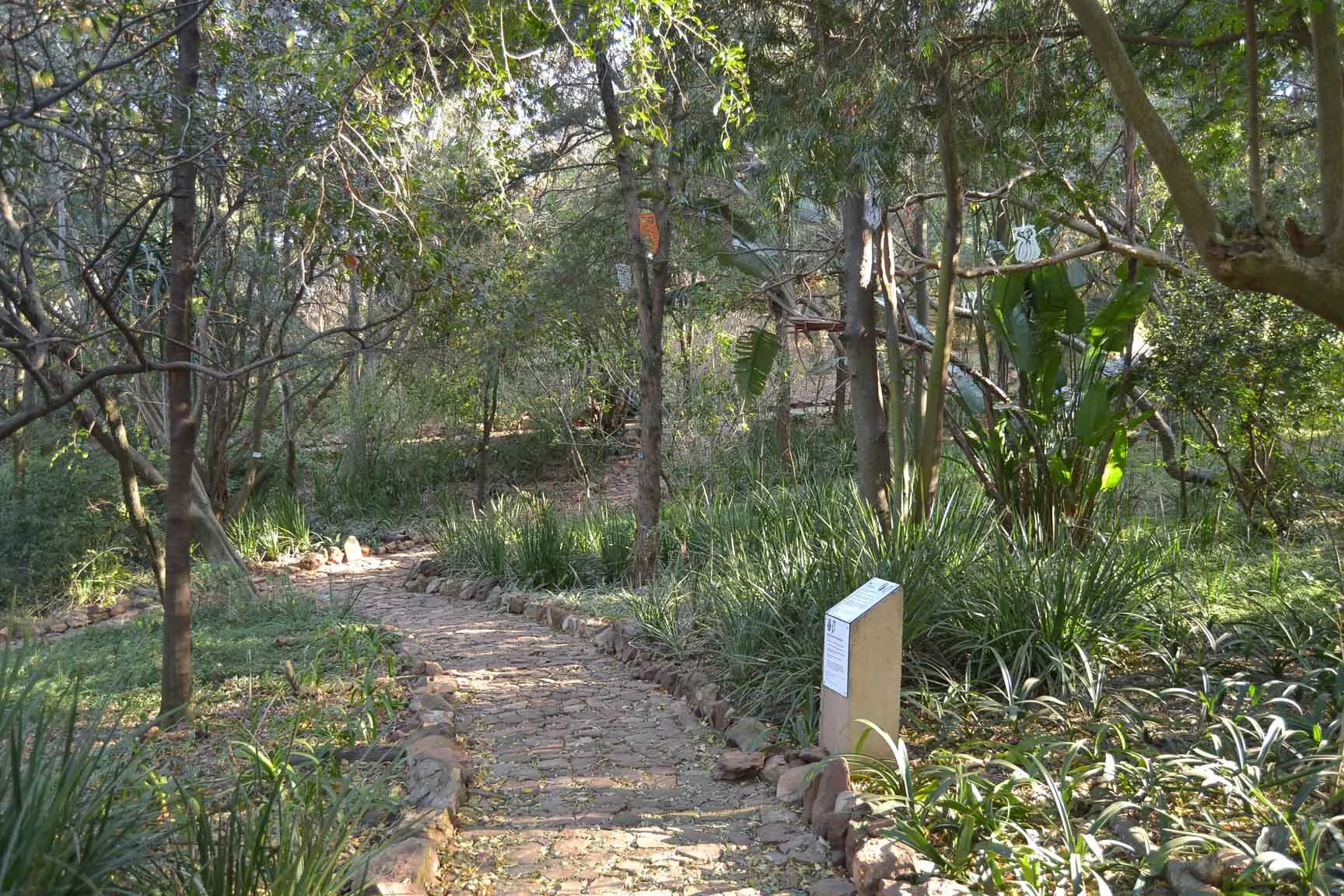
Can you spot the Owls? There are 67

Can you spot the Owls? There are 67

Beautiful Stone Pathways

Beautiful Stone Pathways

Benches for resting and clear Signage

Benches for resting and clear Signage

Sundial

The sundial was created and installed by sundial maker Malcolm Barnfield and stonemason Dave Baguley in 2005 and is inscribed with the words “I only count the sunny hours”. The message around the base of the dial reads “Blessed too is he who learned to know the God of The Wilds” which was previously depicted on a plaque commemorating the words spoken by Jan Smuts. When Smuts died in 1950 The Wilds was dedicated to his memory. (Davie, L. A journey through Johannesburg’s Parks, Cemeteries and Zoo. 2014. JHB City Parks and Zoo)

Sculpture

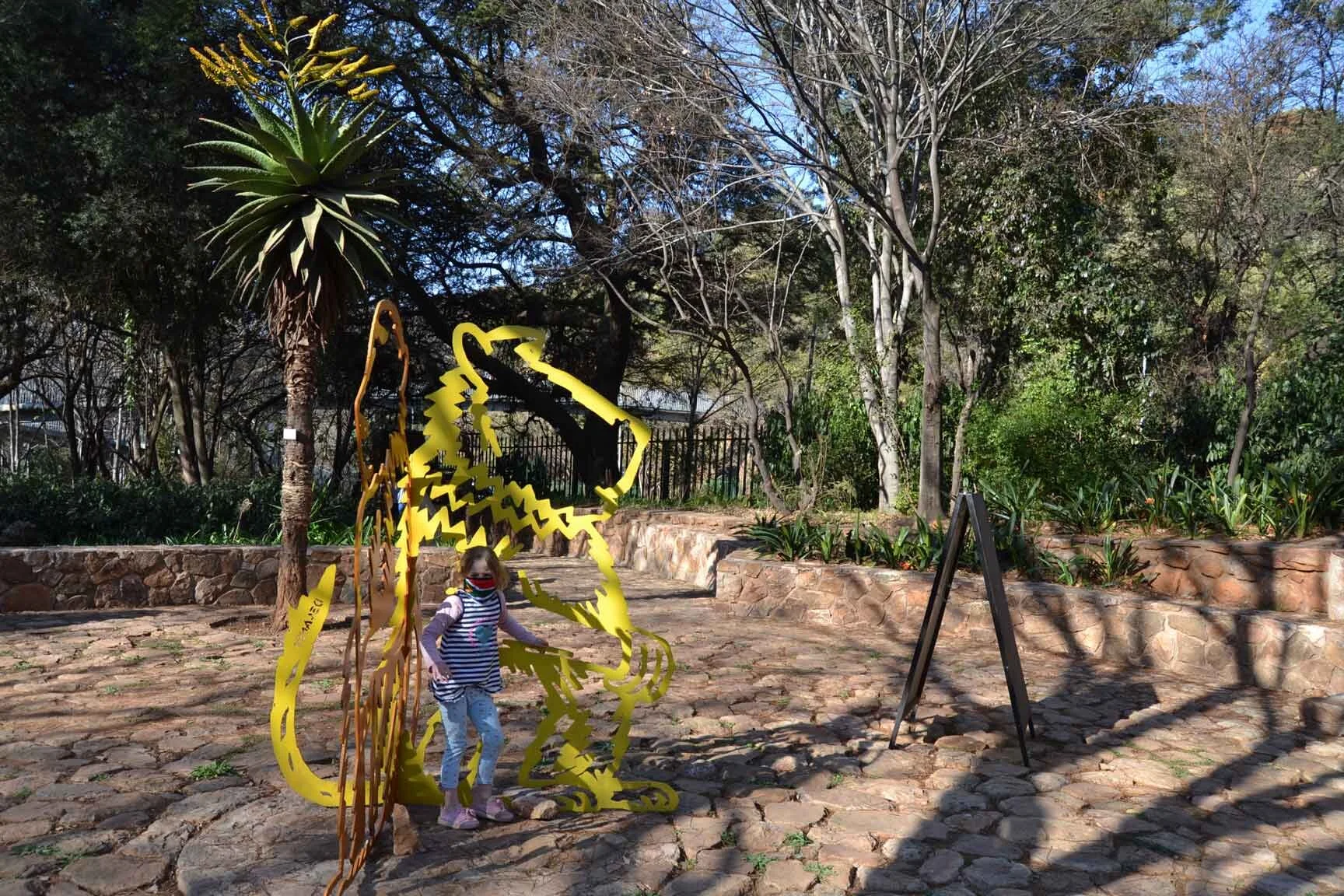
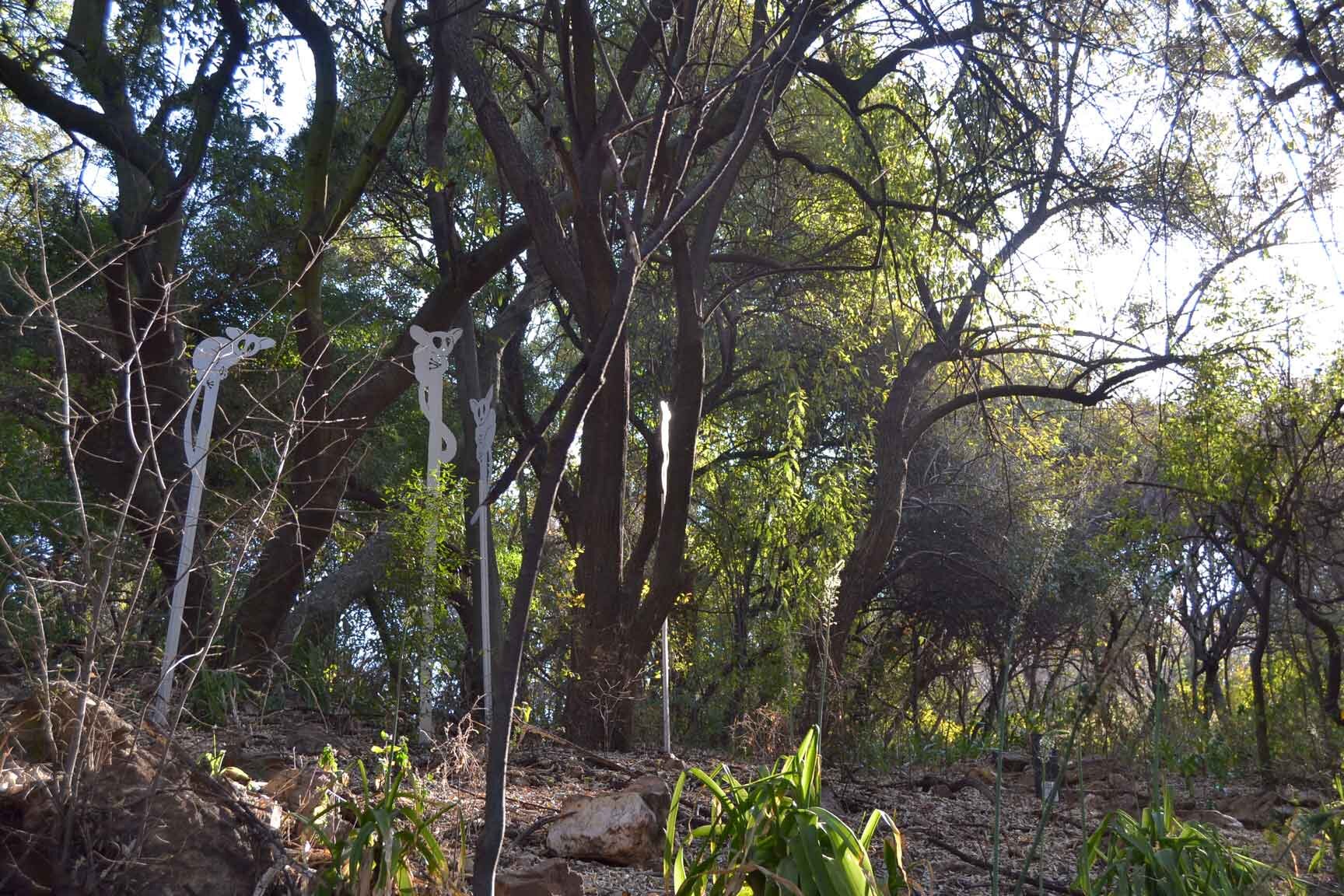
One of the highlights of The Park must certainly be the striking steel sculptures  (mostly animals) made by artist James Delaney who has also been instrumental in transforming and rejuvenating the park (See Rejuvenation below). The first installation took place in 2017 as a means of drawing people’s attention to the park. As it was close to Mandela Day, he chose to design 67 owl sculptures that would hang high in the forest and these are a delight to find for young and old alike.  Delaney explains that the sculptures start as charcoal sketches which are then laser cut from steel and painted or powder coated. The pink and yellow giraffe, located on the large bottom lawn area is life size and visible from the main road running past the park. According to Delaney this was a deliberate intervention to draw people’s attention to this once neglected space. The sculpture installations in the park won an award from BASA (Business Arts South Africa) in 2018. (https://www.delaney.co.za/outdoor-sculpture/)

Giraffe Lawn in the late afternoon with visitors picnicking
Giraffe Lawn in the late afternoon with visitors picnicking

Bush Baby Forest

Bush Baby Forest

Views

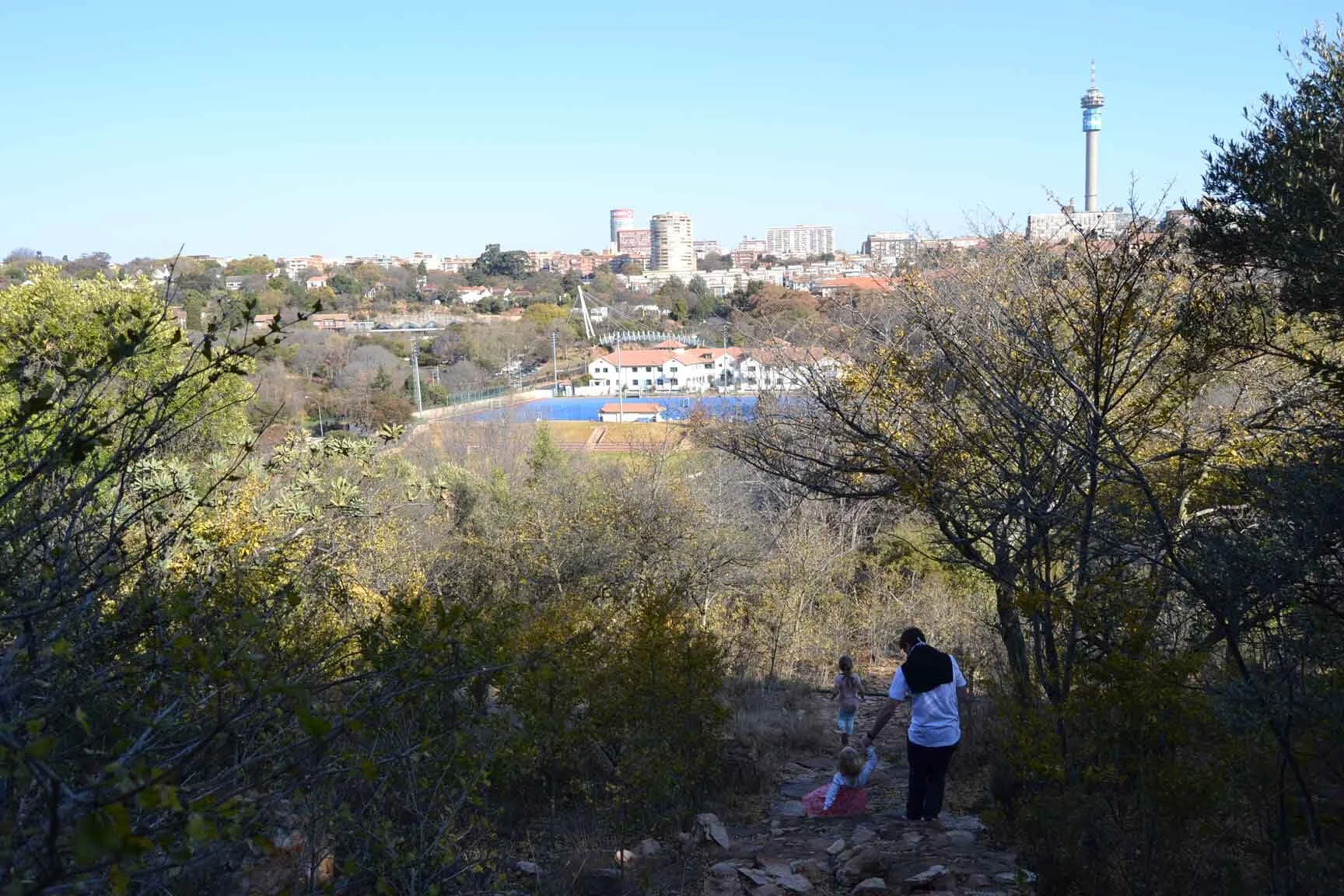
The park offers views of Hillbrow, Berea and the inner city. This includes views of several Johannesburg landmarks, including Ponte City Apartments, The Hillbrow Tower, St. Johns School for Boys, Roedean School for Girls, and many mansions in the suburb of Houghton. (https://en.wikipedia.org/wiki/The_Wilds_Municipal_Nature_Reserve)
403.JPG

Rejuvenation

It has only been in the last few years that the Park has been fully revived and people feel safe enough to return. This has largely been brought about by artist James Delaney who has spent a considerable amount of time and money on generating funding and gaining support for the Park. He received an AfriSam-SAIA Award for his work in raising over R100 000 but this is just one of the many interventions he has championed. It is inspiring to read his story and how he became involved.

Here is an excerpt taken directly from his website where he details the history of his involvement and the progress made: (taken from https://www.delaney.co.za/installations/my-story-of-the-wilds/)

“Here are some highlights of the work that’s been achieved with my team, with volunteers and with the City Parks Wilds staff on the ground;

  • Restoration of 80 park benches, repainting them in bold colours on volunteer days, with donated paint and tools.

  • A mini library was donated for the entrance, from which people borrow or take books. It’s become really well used, especially by kids from the inner city.

  • Negotiation with Roedean School to take down their stone wall, which had become unstable, and replaced with a fence, and the stone donated to The Wilds.

  • Construction of the circular entrance area with seating, designed by Martine de la Harpe and built by JJ with the Roedean stone. This used to an eroded slope of dirt, a depressing welcome to the park. This was sponsored by Hollard, whose Villa Arcadia head office shares the same ridge as The Wilds, and they have done considerable indigenous planting to restore their landscape.

  • Sealing the ponds and the installation of a pump which draws water discarded by Gautrain (they pump millions of litres out of their tunnels into the underground river). This water now flows beautifully though the lower ponds, and back into the river. This system was developed and installed by YPO, and opened by the Mayor. (YPO also got the upper ponds and waterfalls working for a while, but we’re waiting for City Parks to install a new pump for that system.)

  • Mulching of flowerbeds. City Parks always used to take leaves to the dump, but I eventually convinced them to layer them on flowerbeds to protect the soil. They still won’t allow us to make compost.

  • Design and installation of 100 items of signage throughout the park, thanks again to Hollard – directional, rules, information and welcome signage. Because City Parks has dated and unfriendly signage design, I redesigned a whole signage template for them. Most of the new signs are mounted onto a recycled plastic product.

  • Huge weeding, every summer, which has broken the seed cycle of blackjacks and khakibos in most of the West Wilds (we have a long way to go in the East Wilds).

  • Restoration of the hillside where the sundial is, including replanting indigenous grasses and aloes and removing all the nasty rusted wire fencing.

  • Resurfacing of the carpark and internal road, and painting the pedestrian bridge (done by JRA, but I lobbied for it).

  • Repairs to broken and missing pieces of fence, especially on the East Wilds (which is an ongoing job).

  • Installation of fencing along Munro Drive, to complete the fencing of the entire perimeter of the park.

  • A friend of The Wilds replaced the decrepit security hut, with a new structure which was warmer and nicer for the guards.

  • Regular “Walk n Talk” sessions where visitors are led around the park in conversation with interesting people.

  • Several weekly exercise classes on the lawns, run by various people who love outdoor training.

  • Corporate events, weddings, small events and school tours have become a regular occurrence, providing an income stream to the city (unfortunately this doesn’t directly benefit The Wilds). They must be booked via City Parks, but when organisers approach me, I always ask them to add an element of giving back to the park, usually through volunteer work.

  • Moving large aloes from locations where they are in too much shade (they start rotting) into the sun.

  • Collecting cuttings for the nursery, which now has several thousand plants, particularly succulents. This has been an ongoing job benefiting from dozens of volunteer hands.

  • Restoration of the abandoned compost area with the Rosebank Scouts.

  • Large new flowerbeds around Giraffe Lawn, and repairing the little bridge, now adorned with crocheted flowers by local artist Curious Sleuth.

  • Other artists are making their mark too; there was a land art project, and Gordon Froud’s sculpture installation, made from orange beacons, stands on the East Wilds.

  • Planting indigenous trees. Volunteers have started labeling them too. We now also plant along the streets surrounding the park, to extend the forest canopy.

  • Clean-up of the climbing wall, which is now regularly used.

  • Clearing of invasive alien trees on the edges of both the East and West Wilds.

  • Lining several kilometres of pathways with stones, to prevent damage to the plants on the edges.

  • Restoration of 4 drinking fountains, broken for decades. Local mosaic artists are making beautiful detailing.

  • The Munro Centenary Gates, which I drew using aloes as a motif which now stand on the Munro Drive side. Look carefully for the owls and mouse…

As the sculptures became popular, I used them to open up sections of the park that people weren’t visiting – they became destinations within the park, allowing people to walk further and spend more time exploring. There are now 100 sculptures – monkeys, a pangolin, ostriches, the red kudu family, klipspringers, duiker and more.

The largest is a 5 metre high pink and yellow giraffe, on what is now known as Giraffe Lawn. This was an important landmark piece as it is visible from the road, drawing the attention of passers-by. I crowdfunded to pay for the materials, which were considerable – it’s so heavy it had to be installed using a crane, and we had to bring a concrete mixer down narrow stone paths to lay the large block of concrete below ground to support it.” Read more on his website

How can you make a difference

Every person can make a difference in this life. We are all uniquely situated with unique talents and abilities. If we look back over the history of this park we see demonstrations of generosity where people have given land, time, money, plants, energy and love. The Wilds is a Park layered with history, memory and natural beauty. Fortunately for the citizens of Johannesburg James Delaney got a dog and needed a place to walk him and through his efforts over these recent years we can again experience this remarkable space. Where can you make a contribution to a park, an organisation or initiative to make a difference in your community?


Blog Archive

What makes George Hay Park a Successful Community Park?

024.JPG

As a landscape architect I am always analyzing outdoor spaces and trying to pinpoint what makes them attractive, enjoyable and successful. What changes a ‘space’ into a ‘place’? Why are people drawn to a place and what makes them come back again? What attributes does a public space need to become an integral part of a community and how does one achieve this?

george hay park map

George Hay Park is located in the heart of Parkview, Johannesburg and at first sight it can seem to be an ordinary rectangular open area of lawn with some trees that is not very different to many other parks in Johannesburg. However, on closer inspection you will find that this Park is a place loved by the community and where many residents spend regular time with friends, walk their dogs, share special celebrations and enjoy time together with their children on the playground.

Here are several reasons that contribute to the success of George Hay Park:

  1. Location

    Situated in the centre of a residential suburb with grid-like layout the park is within easy walking distance and far enough from busy roads to be secluded but accessible. There is also a road all around the Park which makes for increased visibility (frequented by private security companies patrolling the neighbourhood) adding to a feeling of safety. Cars can park along the street next to where they will be spending time in the Park. Parkview itself has a strong sense of place and rich history which adds to the overall atmosphere of the park.


    2. Terrain and Layout

    The physical characteristics of the site can be described as rectangular and flat with many large trees providing shade. It is comprised of a large lawn area, dotted with large trees, includes areas with children’s play equipment and has a strip of indigenous planting along three of the edges.

022.JPG

3. Edges

The Park is surrounded by a black metal fence on three sides and this contributes to the feeling of containment and protection that one feels when inside the Park. This is especially important for keeping small children safe as it prevents them from running into the street. The northern most boundary of the park is where the Columbas Church is located and this edge has a gum pole fence that is a more permeable edge and creates a sense of connection between the church and the Park. (http://stcolumbas.org.za/ )

St Columbas

4. Facilities

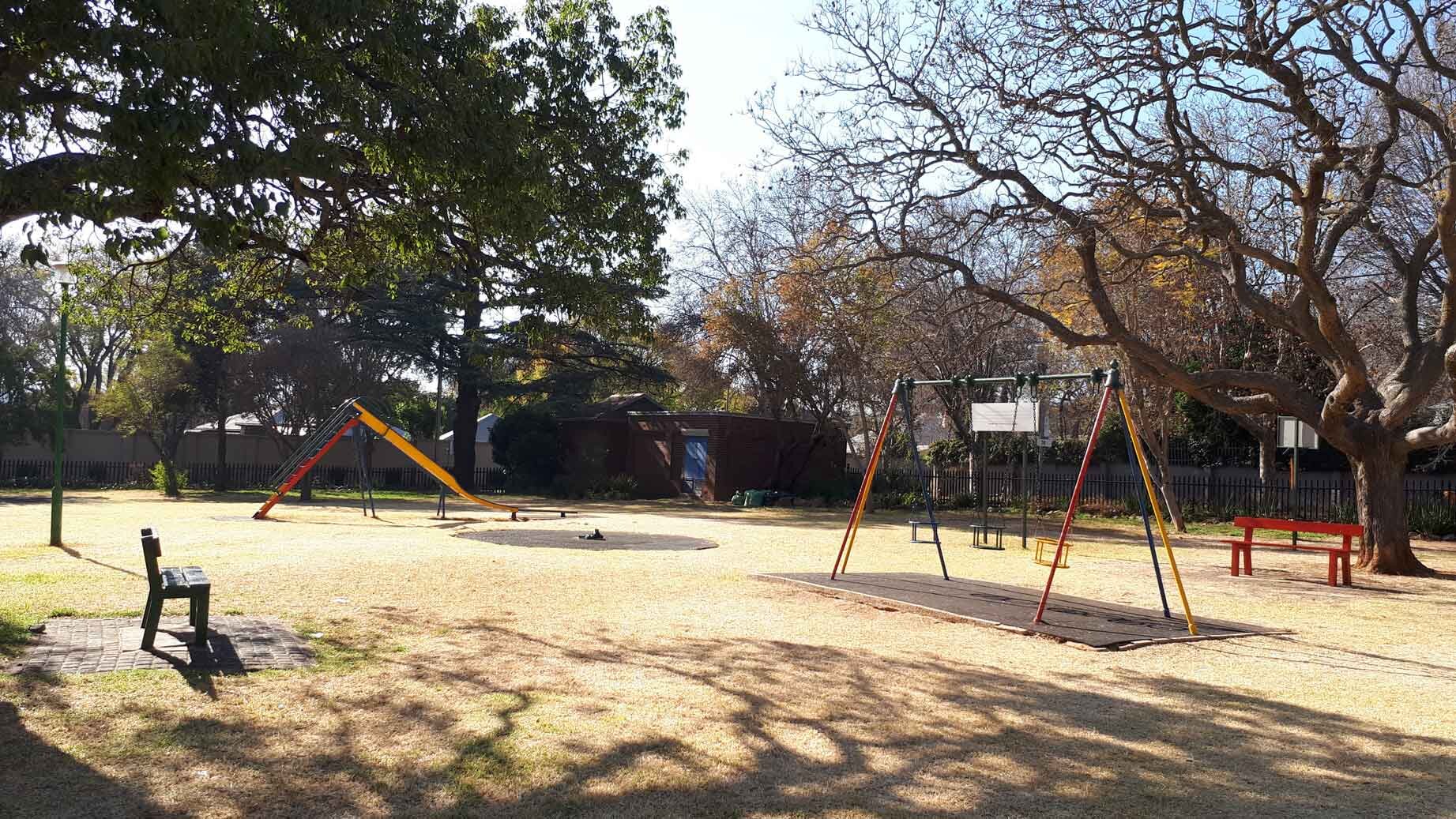
As mentioned the park contains play equipment for children of varying ages. The play equipment for smaller children has baby swings, a small slide, a see-saw and monkey bars while the play equipment for older kids has larger swings, a large slide and a roundabout. There is a small basketball court as well as outdoor gym equipment. A beautiful rustic tree house has been built around a large existing tree creating a wonderful space for children to have imaginative play. There are many benches that one can sit on and water is provided in bowls for visiting dogs.

Organic Tree House Built around Existing Tree

Organic Tree House Built around Existing Tree

George Hay Park

5. Use

The Park is used for a variety of small, personal functions (birthday parties, baby showers) and also provides a space for large scale community gatherings. Several well-supported events take place in the park throughout the year, some of which occur annually, including: Halloween Event, Christmas Market and Potjiekos Competition. These events have the added benefit of strenghtening realtionships within the community and celebrating the neighbourhood. It creates memories that become associations which then contributes to the sense of attachment and belonging that a person has to a place.

2320.jpg
Halloween Community Event in George Hay Park  (photo taken 31 October 2019)

Halloween Community Event in George Hay Park (photo taken 31 October 2019)

6. Community Ownership

This must be one of the most important characteristics that set this park apart. The Parkview Residents Association) PRA is actively involved in the maintenance and running of George Hay Park and without their involvement it is clear that the park would not be what it is today.

“Beginning in 2007, and continuing ever since, many different projects have been undertaken including the renovation and staffing of the toilet block, the repainting of the perimeter fence, the repair of the drinking fountain, the renovation and securing of the storeroom, the installation of benches and tables, annual planting of indigenous trees, often planned around Arbor Week in September and the repair and installation of new playground equipment. In 2008 the need for a permanent but casual parkkeeper was recognised as a way to keep the park clean and safe on a daily basis. Funds were raised by asking those residents who live on the perimeter of the park (and any others willing to do so) to commit to a monthly contribution. Daily duties include making sure the bins are cleared (and any recyclables removed and the dog poo removed. Other duties include watering the trees and keeping their bases free of grass, feeding the trees, weeding the pavements and pruning bushes and trees where necessary, watering the grass in early summer and raking and piling leaves in winter.” Reference: (http://www.parkview.org.za/content/george-hay-park)

It is evident that a successful park needs many components in order to provide a place for its users to find enjoyment, to feel safe and to take ownership of a place so that they keep returning. When many people use a park it feels safer as there are always other users and it’s presence becomes well embedded in their minds and hearts.

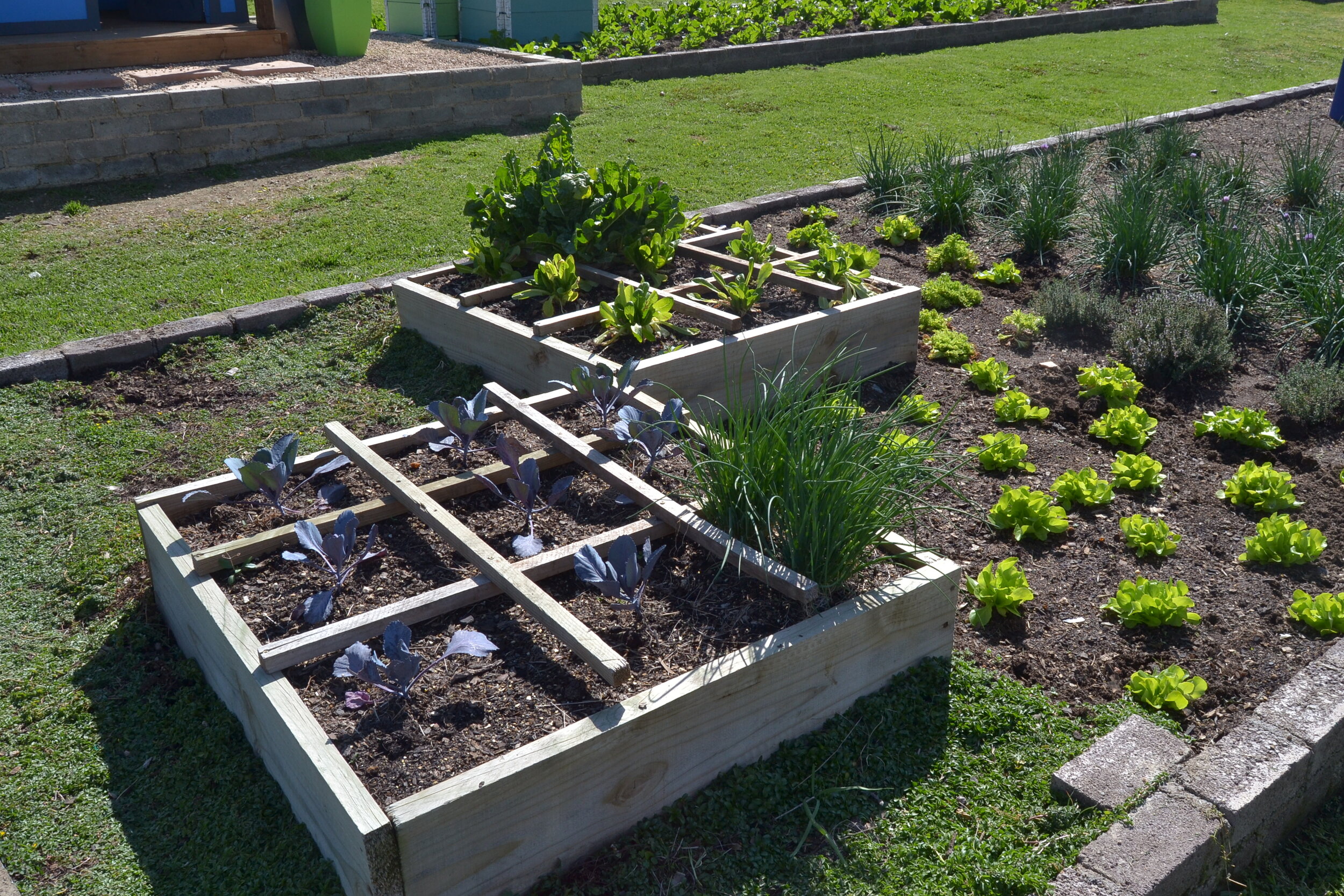
Vegetable Garden Initiative

Vegetable Garden Initiative

Indigenous planting along edges - pictured here is Anisodontea scabrosa and Aloe spp.

Indigenous planting along edges - pictured here is Anisodontea scabrosa and Aloe spp.

Other blog posts about Parks in Johannesburg:

10 Essential Plants for a Rewarding Vegetable Garden

A Vegetable Garden should be filled with plants that can be harvested for use in the kitchen and home. A wide range of foliage size, colours and textures add interest and variety to planting combinations. I especially love herbs and the beautiful landscapes you can create using them. Here are the top ten plants I recommend every Vegetable Garden should have:

  1. Perennial Basil ‘White’ (Ocimum basilicum)

Large, highly aromatic leaves with spikes of white flowers from early spring to late autumn. Leaves can be used in cooking wherever a basil taste is required. Its cold hardy nature will ensure the availability of basil right through winter. Shrub. Height: 80cm Width: 80cm.

Perennial Basil - Medium sized shrub with beautiful flowers

Perennial Basil - Medium sized shrub with beautiful flowers

2. Cleveland Sage (Salvia clevelandii)

A hardy, small woody shrub with velvety, textured oval green-grey leaves. Sage tolerates most climates however it does not like to be over watered. Requires really good drainage and a slightly alkaline soil. The foliage is used in pot pourii and in natural insecticides. Shrub. H:1.5m W:1m.

Cleveland Sage - large shrub with beautiful foliage

Cleveland Sage - large shrub with beautiful foliage

3. Mint (Mentha spicata spp.)

Most well known of the mints with tasty, highly aromatic mint flavored leaves. The mint is extensively used for salads, sauces and teas. Used medicinally. Useful natural insecticide. Perennial. H:40cm W:spread.

Mint - several varieties to choose from including Chocolate Mint, Ginger Mint and Liquorice Mint

Mint - several varieties to choose from including Chocolate Mint, Ginger Mint and Liquorice Mint

4. Dutch Lavender (Lavandula dentata)

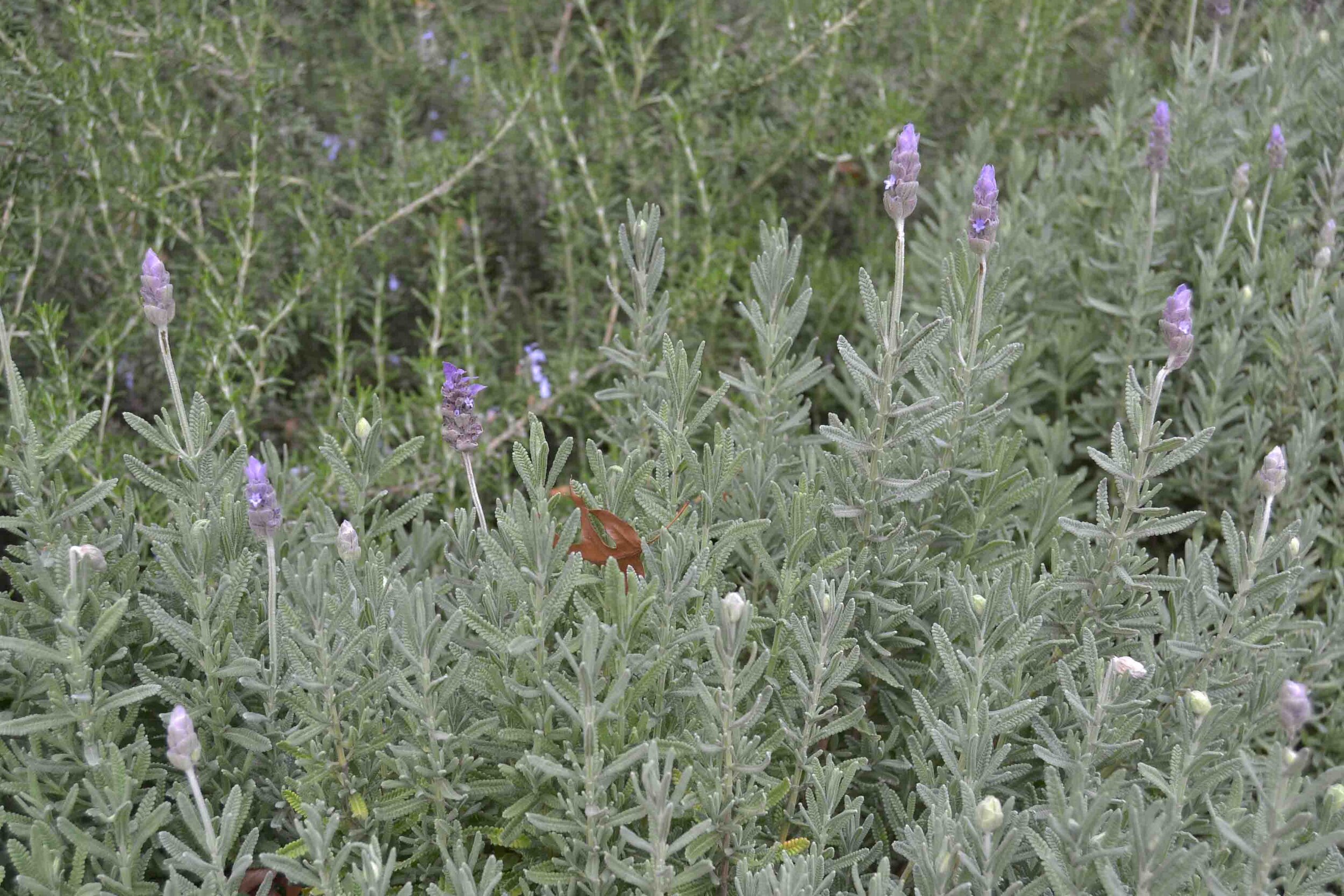
An herbaceous shrub with deeply serrated, highly aromatic green leaves. Large blue flowers are borne on long stems from spring through to autumn. Has medicinal properties. Dried leaves and flowers can be used in pot pourii. Shrub. H:80cm W:60cm

Lavender - grey or green foliage varieties, beautiful aroma and foliage

Lavender - grey or green foliage varieties, beautiful aroma and foliage

5. Common Thyme (Thymus vulgaris)

Mauve flowers in summer with small mid green fragrant leaves. Used in stews, soups, salads and sauces. Medicinally has antifungal and antibacterial properties. Ground cover. H:30cm W:30cm.

Lemon Thyme - Thymus x citriodorus

Lemon Thyme - Thymus x citriodorus

Thyme - ‘Silver Posie’ variety on left and common green thyme on right

Thyme - ‘Silver Posie’ variety on left and common green thyme on right

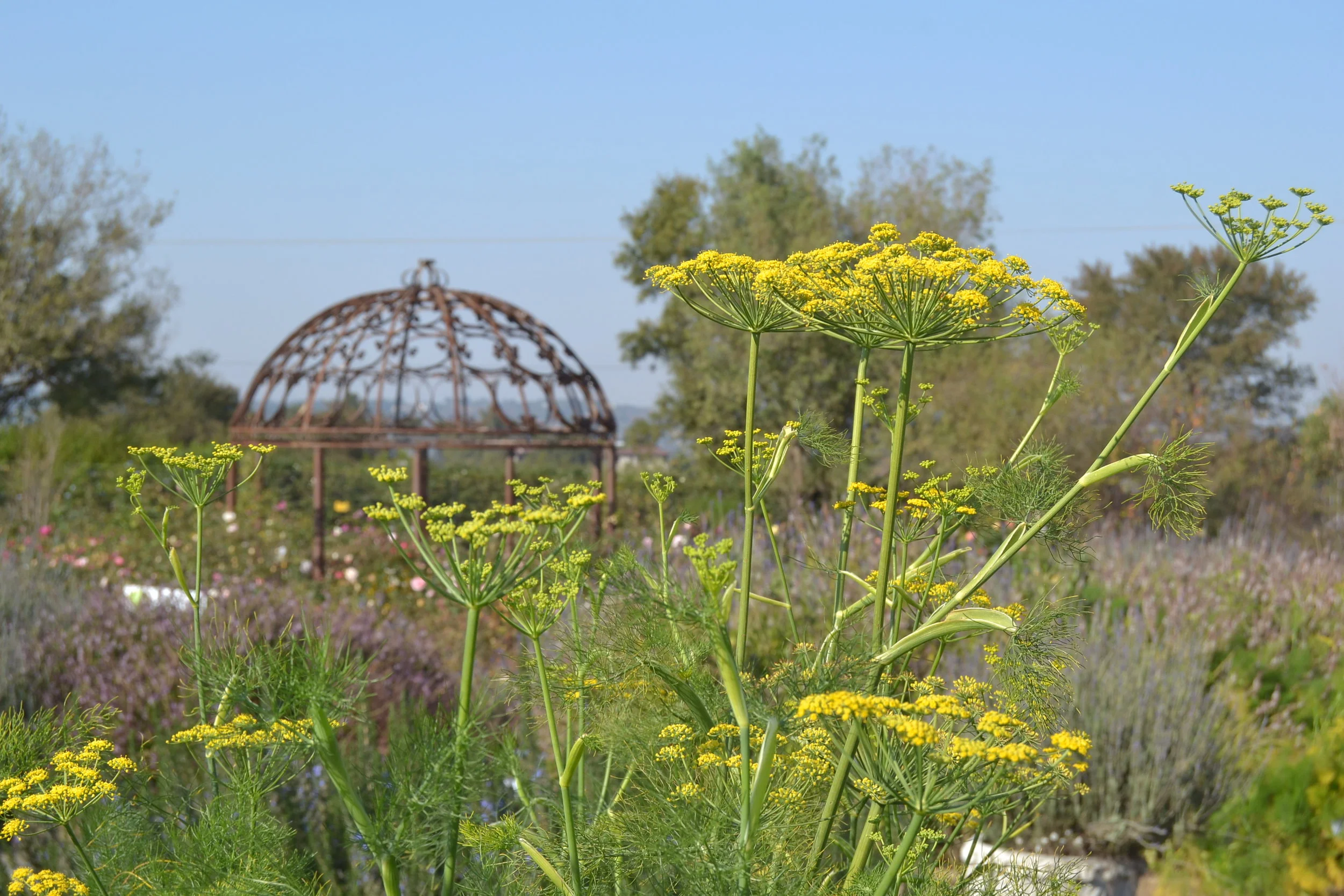
6. Fennel Bronze (Foeniculum vulgare ‘Rubrum’ purpureum)

Very striking, bronze, fine feathery leaves. Umbells of small yellow flowers in summer followed by aromatic edible seeds. Used in pork and fish dishes and a great addition to salads. Medicinal uses. Perennial. H:1m W:0.6m.

Bronze Fennel - adding beautiful and unusual foliage colour and texture

Bronze Fennel - adding beautiful and unusual foliage colour and texture

 7. Blue Rosemary (Rosmarinus officinalis ‘McConnel’s Blue”)

Small aromatic shrub with small spiky dark green leaves and blue flowers. Hardy, prefers chalky well drained soil. The leaves are used in Mediterranean cuisine. Companion plant with Sage. Medicinal. Shrub. H:80cm W:80cm.

Rosemary - not always easy to grow, but a brilliant shrub and culinary herb

Rosemary - not always easy to grow, but a brilliant shrub and culinary herb

8. Golden Upright Oregano (Oreganum spp.)

Striking golden foliage that add interest and colour to the herb garden. Ideal for container gardening or as a contrast plant. Strong Oregano flavor. Ground cover. H:30cm W:30cm

Golden Oregano - contrasting colour to add interest

Golden Oregano - contrasting colour to add interest

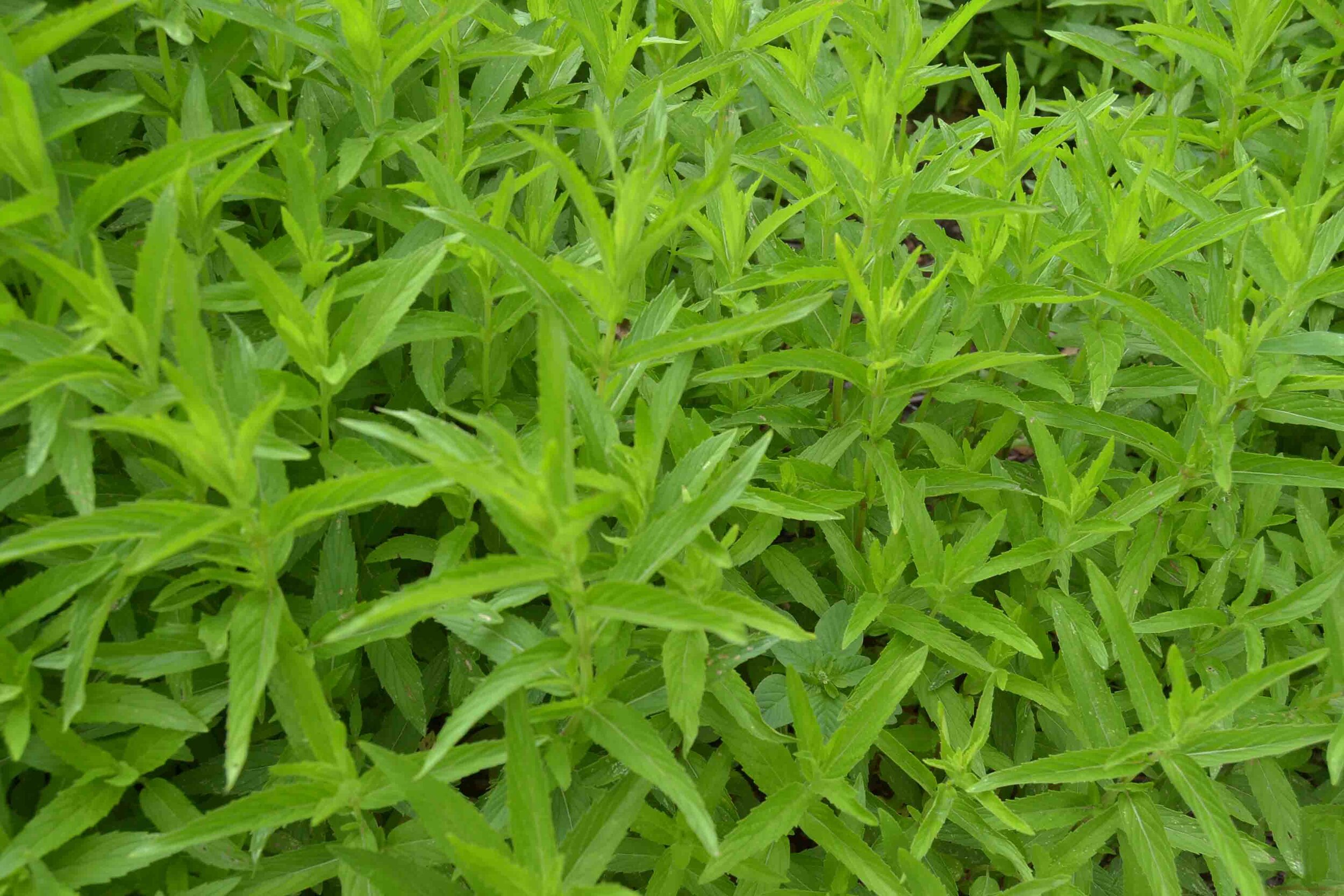
9. Spearmint (Mentha spicata aquatica)

Hardy, deep green, highly aromatic, serrated oval spearmint flavored leaves. Greatly prized for jellies and sauces. Used in confectionary, cosmetics, natural insecticides and medicines. Ground cover. HL25cm W:spread

Spearmint - small bushy shrub with a brilliant green colour

Spearmint - small bushy shrub with a brilliant green colour

10. Lemon Scented Geranium (Pelargonium citronella)

The deeply indented green leaves are pungently aromatic when crushed, releasing lemon scented plant oils that deter even the most determined mosquito. Shrub. H:60cm W:50cm.

Pelargonium citronella - good for repelling insects, especially mosquitoes!

Pelargonium citronella - good for repelling insects, especially mosquitoes!

Plant Descriptions taken from Doonholm Specialist Wholesale Nursery Website (https://doonholm.com/)

Why Planting Indigenous Plants will make you Happier

Red Hot Poker - Crane Flower - Yellow Honeysuckle

Red Hot Poker - Crane Flower - Yellow Honeysuckle

Many gardens today are still strongly influenced by the European style of clipped hedges and formal layouts, but the South African garden is emerging as a strong aesthetic. Indigenous gardening is becoming increasingly popular due to the environmental benefits, growing awareness of sustainable practices and the rising knowledge of locally indigenous plants.

Here are five reasons why you should plant indigenous plants, not only for yourself but for the benefit of the environment:

1.       Indigenous plants are adapted

They are suited to the prevailing conditions of the area in which they are found which means that they often have low water requirements and can withstand the temperature fluctuations and seasonal changes of that particular region. This also means that once established they should be self-sustaining, hardier and able to withstand general disturbances.


2.       Indigenous plants support indigenous animal life

Indigenous plants provide food and shelter to local animal life such as birds, insects, frogs and reptiles. The plants support local insects, which in turn support local birds and ultimately a life-supporting harmonious cycle is created. Interestingly butterflies will only lay their eggs on specific host plants, almost always indigenous species, so in order to attract these beauties into your garden you need to plant their host plant.


3.       Indigenous gardens allow for habitat creation and connection

Large areas of natural habitat is destroyed daily to make way for urban development. Fragmentation of vegetation and animal populations puts these healthy systems in jeopardy. If your garden can replace some of this lost vegetation it can create corridors for the local insect and bird life to move along.

4.       Planting indigenous is environmentally responsible

Planting indigenous plants is beneficial to the environment and the ecology which we would like to conserve for future generations. Knowing that your actions today preserve future interactions with local plants and animals for future humans is deeply encouraging.

5.       We have an amazing selection of plants!

South African plants are cultivated all over the world although many South Africans do not realise the variety and diversity of indigenous plants available to them (some 23,000-plus species). There are so many plants to choose from and an exciting journey of discovery awaits.

Now is always a good time to start. Why not visit some local indigenous nurseries to be inspired and learn more about the beautiful plants locally suited to your area.

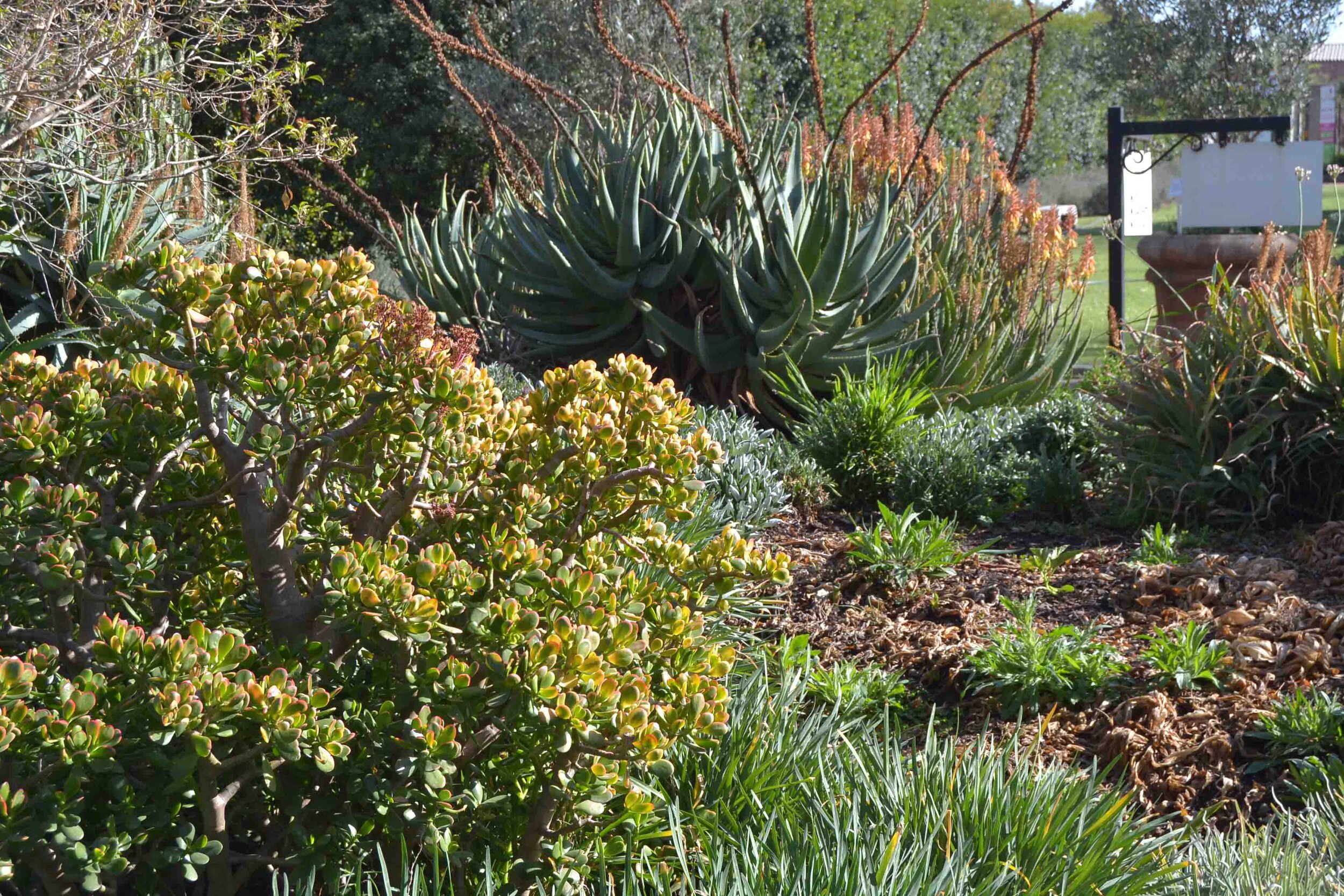
Crassula ovata - Aloe arborescens - Tulbaghia violacea

Crassula ovata - Aloe arborescens - Tulbaghia violacea

Zantedeschia aethiopica - Agapanthus praecox

Zantedeschia aethiopica - Agapanthus praecox

5 Things to Consider when Planning a Vegetable Garden

DSCN0480.JPG

Having an area where herbs, vegetables and fruits can be found at various times throughout the year can be incredibly rewarding. Any homemaker knows the joy of stepping outside and picking perfectly fresh herbs to compliment the evening meal. Likewise many of us have childhood memories of climbing fruit trees in back gardens and can recall the delight of discovering edible treasures.

DSCN0467.JPG

The landscapes we live in need to be a provider in order to benefit us and bring value to the community in which we live. I give my neighbour lemons and she gives me sweet potatoes in exchange. Sharing the joy of gardening and tending the earth is something that not only brings delight to an individual, it also has the ability to bring people together, provide food during times of shortages and educate the next generation.

It would be beneficial for every homeowner to introduce fruit trees, herbs and edible plants into their garden. While fruit trees can be planted anywhere, a vegetable garden is often a designated area where there are beds assigned to edible plants so that it can be easily maintained and cared for.

Now that you are planning a Vegetable Garden here are 5 things to consider:

1.       Choose the right Position

Most vegetables and herbs require full sun so choose the position of the vegetable garden carefully. If your garden is very shady it is unlikely that you will be able to have a successful vegetable garden so you may want to consider cutting back some trees or introducing free-standing planters on paved areas.

2.       Soil

A whole science on its own, soil needs to be healthy and consist of organic matter, earthworms etc to make sure it is well aerated so that plants will grow well in the medium it is planted in. If soil is too sandy or compacted or clayey it will need to be modified. The best way to do this is to create a compost heap with old leaves and garden matter that is regularly turned and will eventually create compost that can be used in your garden beds.

3.       Access

You need to be able to move in and around the plants in order to harvest them, watch for pests, prune and replace and also to get full enjoyment from them. Pathways can be made from brick, pavers, gravel or bark chip.

4.       Planting

There has been a lot of research into companion planting and also plants which can naturally repel pests such as Tulbaghia violacea (Wild Garlic), Nasturtiums, Tansy, Marigolds, Cotton Lavender and Geraniums. I also like to have several bushy herbs (Rosemary, Lavender, Sage) and perennial plants (Salvia, Helichrysum, Nemesia) that look good throughout the year so that when certain plants aren’t looking great these still add colour and structure to the garden.

5.       Focal Points

In landscape design (as in every artwork) there needs to be certain elements that bring a sense of order, balance and beauty to the landscape. This can be created using focal points and other elements that the eye is drawn towards so that the observer takes in their surroundings and as a whole this atmosphere influences their experience and ultimately their mood. In order to create this atmosphere one can use pots, obelisks, trellises, arches and other objects to create that beauty on the canvas.

166.JPG

Vegetable gardens do not have to be forlorn and ugly. In fact if you have been to Babylonstoren in the Cape you will know that their vegetable garden is unbelievably beautiful and inspiring. Another amazing place to visit for inspiration is The Herb Farm in Midrand. So good luck and let the journey begin!

Gina Switala - Landscape Architect

5 South African Medicinal Trees that should be used more in Garden Landscaping

1. Clausena anisata (Horsewood)

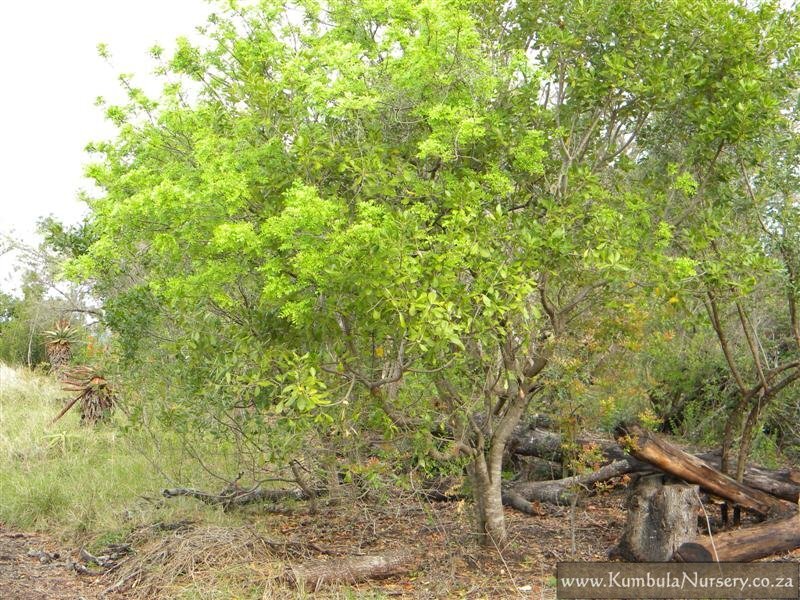
Clausena anisata (Size 3 to 10m) is a very hardy, evergreen, shrub or small tree that is spindly when young but matures to a lovely rounded shape.  It bears sprays of attractive creamy-white flowers from May to August. These are followed by black berries that attract birds to the garden. The attractive compound, glossy leaves droop gracefully. When crushed they emit a strong smell and can be used as a substitute for curry leaves. It is the host plant of several Swallowtail butterflies.  Plant in sun or semi shade. It makes an ideal specimen tree for a small garden.  It has many medicinal and magical.  (Information from Random Harvest) Some of these uses include

Clausena anisata (Image from KumbalaNursery.co.za)

Clausena anisata (Image from KumbalaNursery.co.za)

2. Moringa oleifera (Moringa)

The small fast-growing and hardy Moringa oleifera tree is also known as the drumstick tree, horseradish, been oil tree or ‘peperwortelboom’ in Afrikaans. Growing between 5 and 12 m tall, it has a straight trunk and and umbrella-shaped crown of feathery green leaves. Flowers are up to 25 cm long and produce thin and long reddish brown seed pods. Although native to India, Pakistan and Nepal, Moringa oleifera grows in the Limpopo, Free State, Mpumalanga, KwaZulu-Natal and Gauteng provinces of South Africa.

According to traditional African and Indian (Ayurvedic) medicine moringa has almost 540 compounds that can treat or prevent about 300 health issues. Used for centuries in Eastern countries for diseases such as diabetes, heart disease, anemia, arthritis, liver disease, as well as respiratory, skin and digestive disorders, it is now considered a ‘super-food’. The powdered leaves, roots, bark and immature pods are used for its nutritional, anti-inflammatory, antioxidant and tissue-protective benefits.

Moringa is a source of vitamins, minerals, as well as all the essential amino acids, making it a complete protein. It contains significant amounts of vitamin C, E, potassium (K), iron (Fe) and zinc (Zn). In addition moringa leaves are an excellent calcium (Ca) source and contain 10 times more vitamin A (beta carotene) than carrots. moringa powder can be used as a substitute for iron tablets, hence as a treatment for anemia. Beef has only 2 mg of iron while moringa leaf powder has 28 mg of iron.

In India, moringa leaves are used stimulate breast milk production in new mothers and usually added to lentil soups during the cold and flu season to increase disease resistance. The leaves, gums, roots, flowers as well as kernels have been utilized for managing tissue tenderness, cardiovascular and liver maladies, normalize blood glucose and cholesterol. It has also profound antimicrobial and anti-TB activities.

In developing countries, the moringa leaf powder is commonly used as a medicinal herb, rather than food as in Asian populations. It is often taken as a supplement by HIV-infected people to enhance immunity and manage opportunistic infections. The fact that moringa is easily cultivable makes it a sustainable remedy for malnutrition - countries like Senegal and Benin treat children with moringa. Moringa products range from leaf extract, powder and tablets to protein shakes, seed oils, teas and probiotic drinks. Leaves can be harvested by cutting the top of the plant off when the plant has grown to 1 m, leaving about 30 cm. It is easily propagated by seeds, but needs nitrogen for good yields. It prefers daily temperatures of 25 to 30 °C and neutral, well-drained soils, but can grow well in clay soils. (http://southafrica.co.za/moringa-miracle-medicine.html)

Moringa Tree (Image from https://www.seedsforafrica.co.za/products/moringa-oleifera-tree-medicinal-seeds)

Moringa Tree (Image from https://www.seedsforafrica.co.za/products/moringa-oleifera-tree-medicinal-seeds)

3. Tarchonanthus camphoratus (Camphor Bush)

Tarchonanthus camphoratus is a hardy, large, decorative, evergreen shrub or small tree with attractive silver foliage that smells of camphor when crushed. Sprays of white, thistle like flowers covered in white woolly hairs are borne from March to November. All parts of the plant are aromatic and smell strongly of camphor. This useful plant makes an excellent screen and windbreak. It has a fibrous root system and can be used for binding the soil. It also makes a lovely shade tree for a small garden. This drought resistant shrub is heavily browsed on by game. Used extensively as a medicinal plant.The wood is beautiful and among other things has been used to make musical instruments. Grows Up to 5m (Information from Random Harvest)

The camphor bush is used for medicinal purposes. Problems such as blocked sinuses and headache can be healed by inhaling the smoke from the burning green leaves. Drinking boiled mixture of leaves and water can help to treat coughing, toothache, abdominal pain and bronchitis. Leaves can also be used for massaging body stiffness and also as a perfume. The cotton wool-like seedheads were used to stuff cushions. (http://pza.sanbi.org/tarchonanthus-camphoratus)

Camphor Bush (

Camphor Bush (Image from http://pza.sanbi.org/tarchonanthus-camphoratus)

4. Warburgia salutaris (PepperBark Tree)

The endangered pepper-bark tree of southeastern Africa, Warburgia salutarus, grows in South Africa, Swaziland, Mozambique and Zimbabwe. The name ‘salutaris’ means health giving, alluding to the pepper-bark’s medicinal uses. A related species, known as ‘Karambaki’, has been used medicinally by Arab traders, East African residents since ancient times. Pepper-bark is extremely rare to find in the wild and is listed as a Red Data Book threatened species. Heavy harvested by traditional healers for its much sought-after bark used in traditional medicine, considerable effort is made to encourage propagation of this tree.

It grows easily from cuttings or root suckers in well-drained soil rich in organic matter and makes an attractive landscaping plant. A tropical tree, the slender evergreen pepper-bark grows 5-10m tall and fixes nitrogen in the soil while its leaves makes an nitrogen-rich mulch. Small yellow-green flowers form 30 mm round berries that ripen to a purple colour. Leaves, fruit and inner bark have a strong peppery taste and harvesting is severely impeded by the fruit’s popularity with fruit flies and monkeys. The trees are slow to mature and can only be harvested at around 10 years old, but takes 20 years to reach full maturity.

The bark and leaves of the pepper-bark contain various compounds with antibacterial, anti-fungicidal (particularly against Candida yeast infections), anti-ulcer and diuretic properties. The plant material is dried, then crushed into a powder and used as infusions and decoctions to treat vaginal thrush, chest infections, venereal diseases, body aches, stomach problems (diarrhoea, aches) and malaria. Used as a snuff, it clears nasal passages and when the bark is chewed or the smoke inhaled, it remedies chest complaints, relieves constipation, fevers and body pains. An infusion of the leaves helps against rheumatism and skin diseases, while boiled roots are added to soup to cure diarrhoea. Both stems and root bark are remedies for malaria and when ground up and mixed with water, it can cure mouth sores. In Kenya, the leaves are added to flavour curries. (http://southafrica.co.za/pepperbark-tree-endangered-medicine-plant.html)

Image from http://pza.sanbi.org/warburgia-salutaris

Image from http://pza.sanbi.org/warburgia-salutaris

5. Lannea discolor (Live Long)

Lannea discolor is a small to medium-sized deciduous tree with a neat round crown occurring in bushveld. It is often found on rocky granite ridges. The tree grape is a medium-sized deciduous tree that grows up to 15 m in height with a neat rounded crown. Lannea discolor is generally used as traditional medicine to treat fevers and constipation in children. Its fruits are edible and are utilized by animals, birds and humans. The wood is soft and used to make fences. Fencing poles made out of the wood will easily take root and flourish again, which has earned it its common name Live long. (http://pza.sanbi.org/lannea-discolor)

Lannea discolor (http://pza.sanbi.org/lannea-discolor)

Lannea discolor (http://pza.sanbi.org/lannea-discolor)

5 Unusual Red Flowering Indigenous Plants

  1. Sutherlandia frutescens (Cancer Bush)

Sutherlandia frutescens is a very hardy, evergreen, fast growing, sun-loving shrub with lovely silver-grey foliage. The striking, large, luminous orange pea-like flowers are borne from September to December. They attract Sunbirds and insects to the garden. These are followed by inflated green to pink, papery pods that are so light they are dispersed by wind. The pods and flowers are decorative in a vase. It is an important medicinal plant and has traditional uses as well. This beautiful slender shrub is a must for any garden. Plant several together for effect and use as a textural plant. It makes a beautiful container plant. It is both wind and drought resistant. This is a short-lived plant but it seeds itself freely.

Prune regularly to encourage it to bush out. This unfussy plant tolerates many different soil types and tolerates dry conditions but thrives with sufficient water (do not overwater). Plant in full sun. Size: to 50cm to 1m (https://www.randomharvest.co.za/South-African-Indigenous-Plants/Show-Plant/PlantId/695?Plant=Sutherlandia%20frutescens)

Sutherlandia frutescens

2. Ruspolia hypocrateriformis (Red Ruspolia)

Ruspolia hypocrateriformis is a fairly hardy, evergreen, scrambling woody shrub with bright green foliage. The spikes of showy pink to red flowers with darker spots on their lower petals are borne at the tips of new growth throughout summer and into autumn. Butterflies are attracted to the garden by the large amount of nectar that these flowers produce. The flowers are followed by a dry capsule which splits with a loud crack to release the seed within. Makes an interesting garden subject as a shrub and is said to make a good hedge.  It is not readily available in nurseries. Plant in full sun or semi-shade, in fertile, well-drained, loamy soil. Size: 1m but can climb to about 4m (https://www.randomharvest.co.za/en-us/South-African-Indigenous-Plants/Show-Plant/PlantId/510/Plant/Ruspolia-hypocrateriformis)

20200128_103448.jpg

3. Erythrina acanthocarpa (Tambookie Thorn)

The tambookie thorn is a much branched, deciduous, thorny shrub reaching up to 2m in height. The striking flowers are scarlet with the upper petal edged with green and are held in heads up to 10cm long and about 12cm wide. This is a very attractive shrub when in flower and makes an excellent garden specimen. Care should be taken not to plant it alongside paving as the large underground rootstock may cause the paving to lift. It performs best in a full sun position planted in well drained soil. Do not overwater and keep relatively dry in winter. It is frost hardy. (http://pza.sanbi.org/erythrina-acanthocarpa)

(Image from Wildflower Nursery)

(Image from Wildflower Nursery)

4. Crossandra greenstockii (Bushveld Crossandra)

Crossandra greenstockii is a beautiful little perennial that sprouts annually from a woody rootstock and looks stunning on a rockery. It flowers for quite a long time in summer. Flowers can either be orange or red. It grows in well-drained acid soil amongst grasses. The flower stalks emerge erectly from basal rosettes of broad green, unevenly lobed leaves.

Interplant Crossandra greenstockii with grasses in full sun. It responds well to a fertile, well-drained soil. (https://wildflowernursery.co.za/indigenous-plant-database/crossandra-greenstockii/)

crossandra

5. Gloriosa superba (Flame Lily)

Gloriosa superba is a striking climber with unusual and beautiful, red and yellow, flame-like flowers in summer; it is suitable for shade or sun, and is easy to grow. The slender stems are produced annually and are upright to scrambling and can grow up to 4 m long. Tubers sprout in spring, and a tuber sends up 1 to 6 stems. The leaves are shiny, bright green and are tipped in a tendril, which will cling to anything it touches. The stems die back in late summer and the tubers are dormant during winter. PLEASE NOTE: that all parts of this plant, both above and below ground, but particularly the tubers, are extremely poisonous, and ingestion could be fatal. The plants contain the alkaloid colchicine. It is a widely used and effective medicinal plant, but incorrect dosage has caused human deaths. Use with extreme caution and only under guidance of a qualified practitioner. Keep the tubers and the seed capsules away from pets and children and do not let the sap come into contact with your mouth or eyes while working with them, as it can cause skin irritation. The tubers are poisonous to grazing stock. (http://pza.sanbi.org/gloriosa-superba)

gloriosa superba


While most people prefer to have a landscape filled with the tried and tested plants it can also be exciting to experiment with unusual plants that can bring an element of surprise and interest to your garden.

Which Unusual Indigneous Plant is your favourite?

Plectranthus - the perfect plant for Shade

Plectranthus is the largest South African genus in the mint family (Lamiaceae), with 44 species natural to our region, most of which occur on the eastern side of the country. Plectranthus are noted for their aromatic leaves when crushed and provide a mass display of colour in late summer and autumn. Colour selections range between pink, purple and white and many shades in-between. (http://pza.sanbi.org/plectranthus accessed on 02-03-2020)

I love using Plectranthus in garden designs as their broad soft leaves can create a lovely atmosphere in a garden. They are quite versatile and do well in semi-shade below trees where often other plants do not easily grow. They are a bit frost tender and can take a knock in winter, but if you prune them to about a third of their height (at the end of winter) they will quickly send new growth. You can also grow new plants from cuttings and this is a great way to fill up a garden with bare spots.

There are so many species and varieties of Plectranthus, here are only a few:

Plectranthus oertendahlii

Plectranthus oertendahlii

Plectranthus hadiensis

Plectranthus hadiensis

Plectranthus lucidus

Plectranthus lucidus

Plectranthus ciliatus

Plectranthus ciliatus

Plectranthus 'Mona Lavender'

Plectranthus 'Mona Lavender'

Plectranthus zuluensis

Plectranthus zuluensis

Plectranthus ciliatus ‘Richard’

Plectranthus ciliatus ‘Richard’

Plectranthus ciliatus ‘Aureated’

Plectranthus ciliatus ‘Aureated’

Plectranthus saccatus ‘Purple’

Plectranthus saccatus ‘Purple’

Plectranthus ecklonii

Plectranthus ecklonii

There are so many beautiful types of Plectranthus one can use in a garden! Let me know which one is your favourite?

University of Pretoria - Roosmaryn

Roosmaryn Square Impression.jpg
Roosmaryn Concept Phase Plan

Roosmaryn Concept Phase Plan

Brief

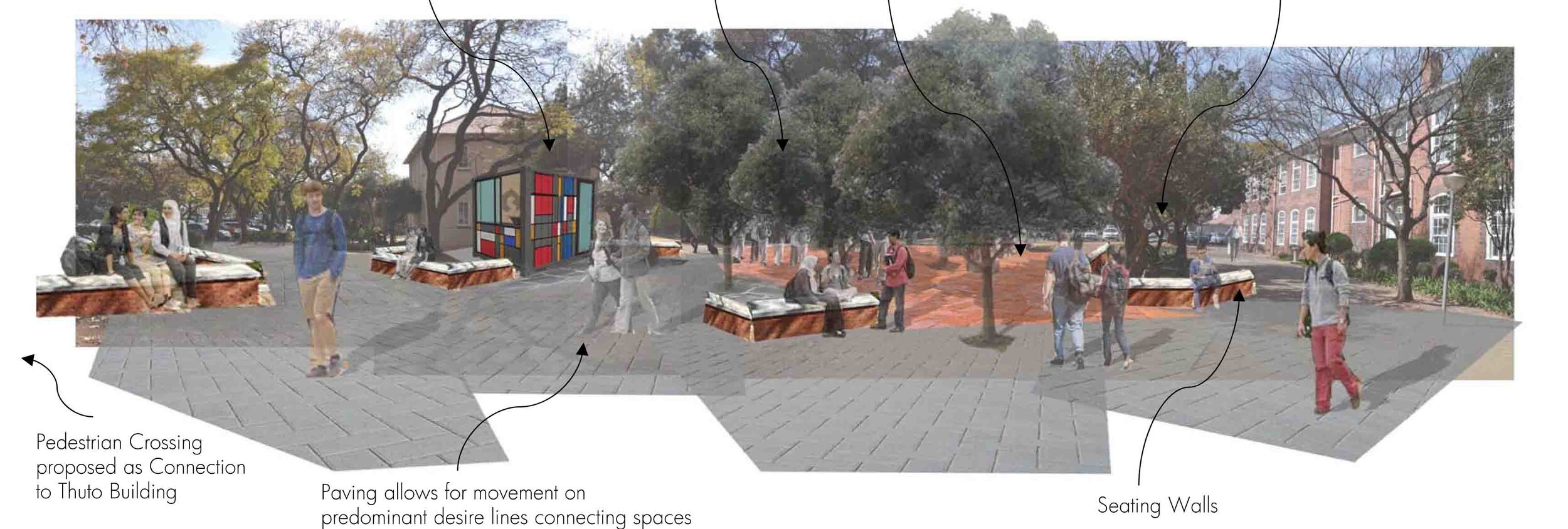
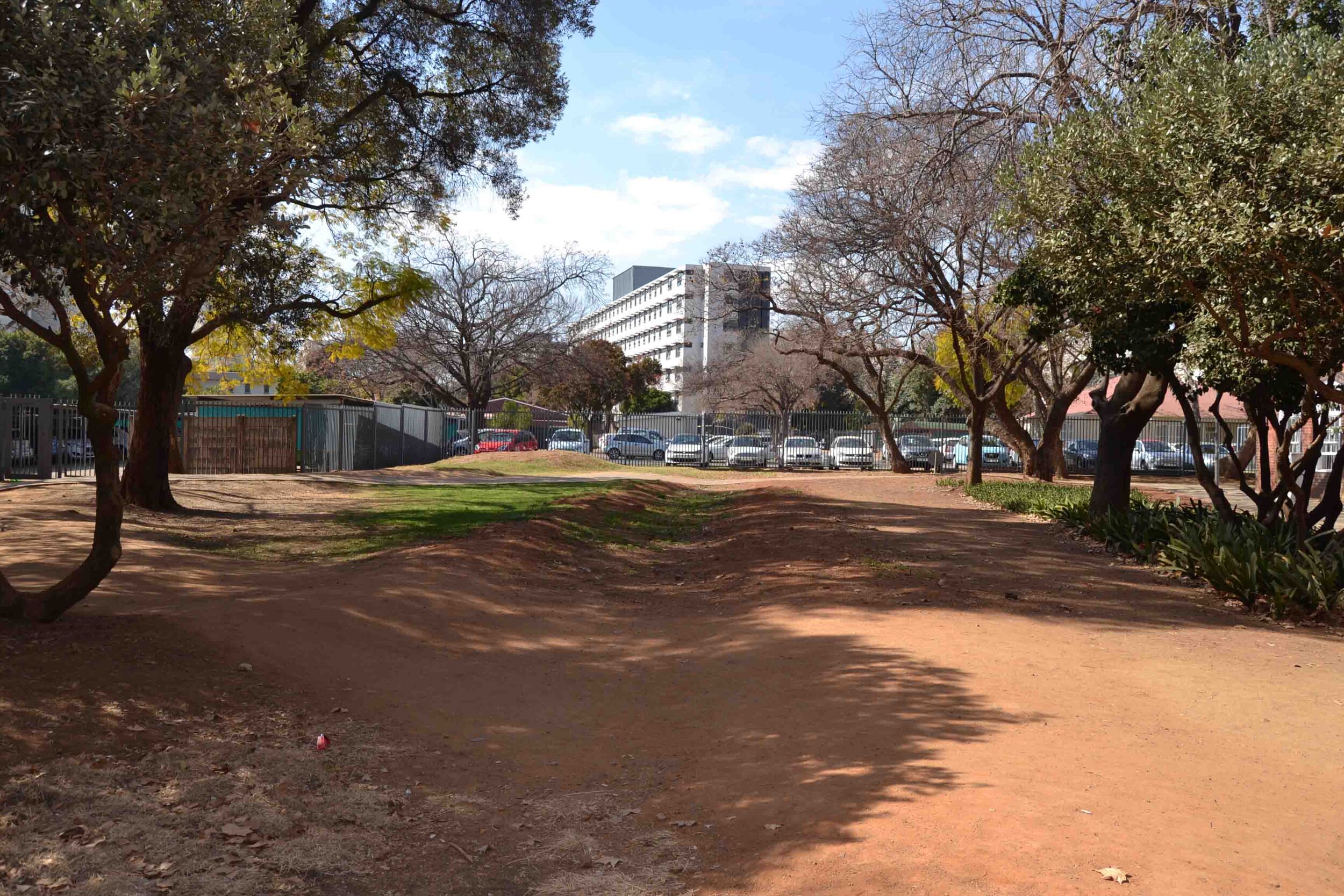
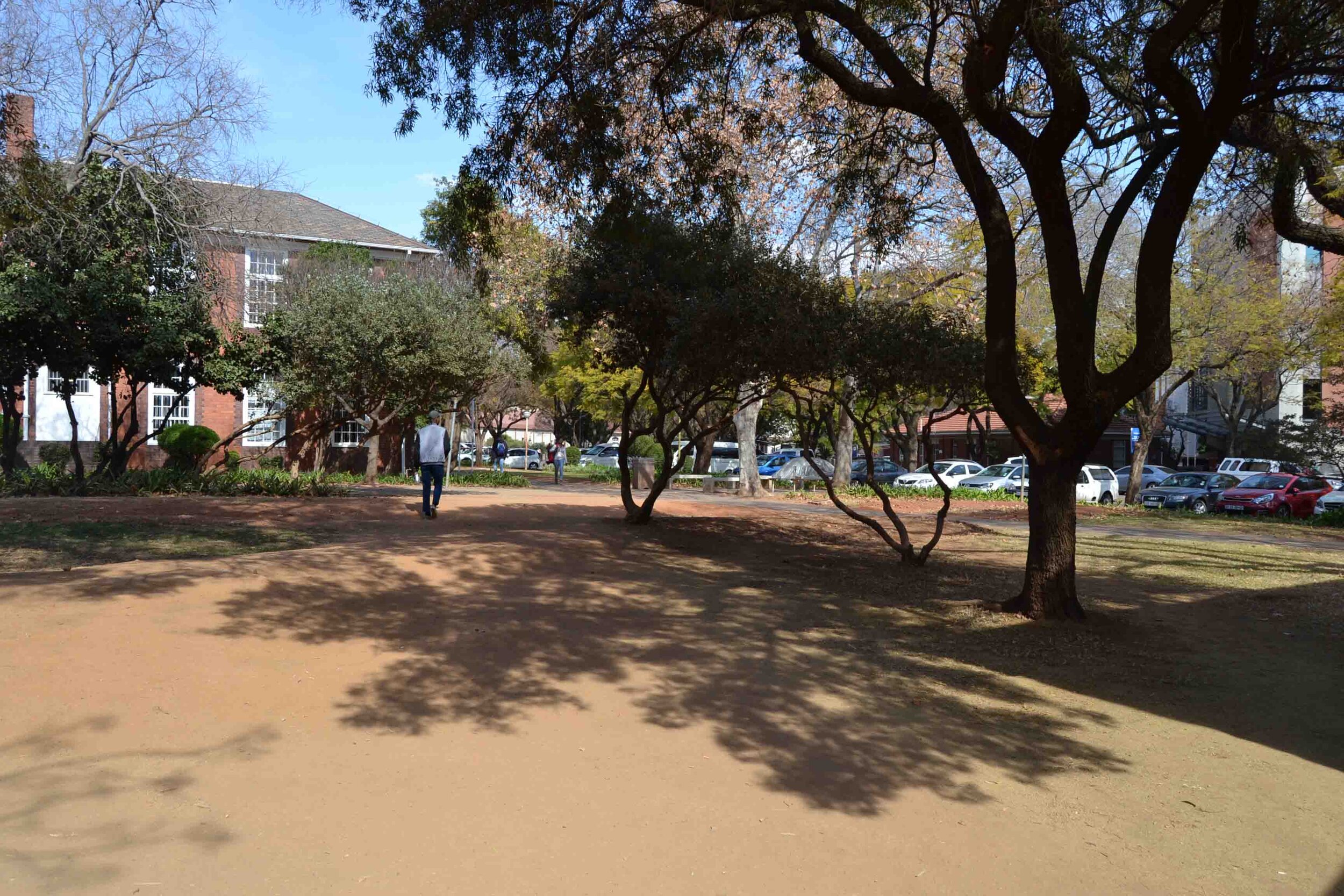
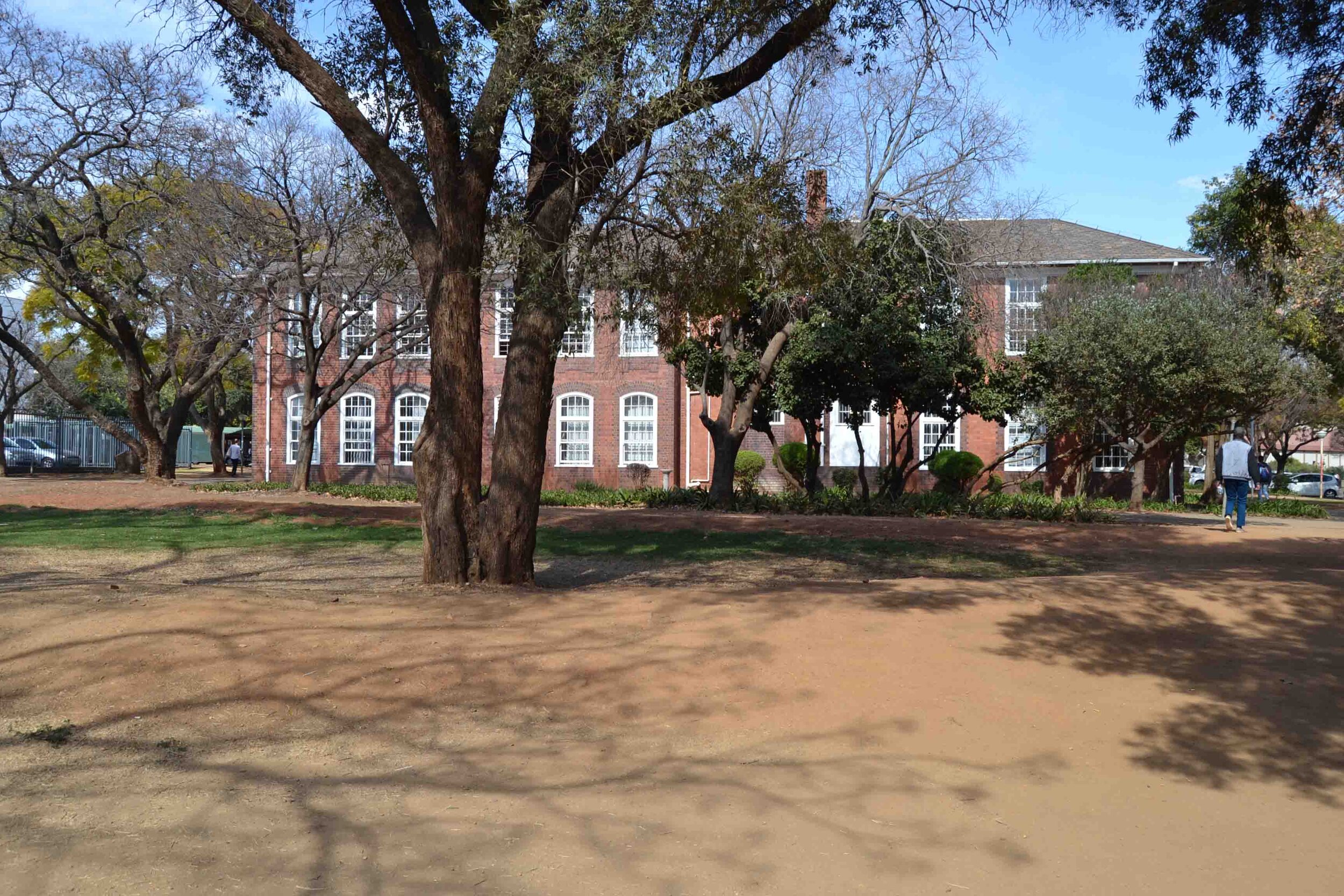
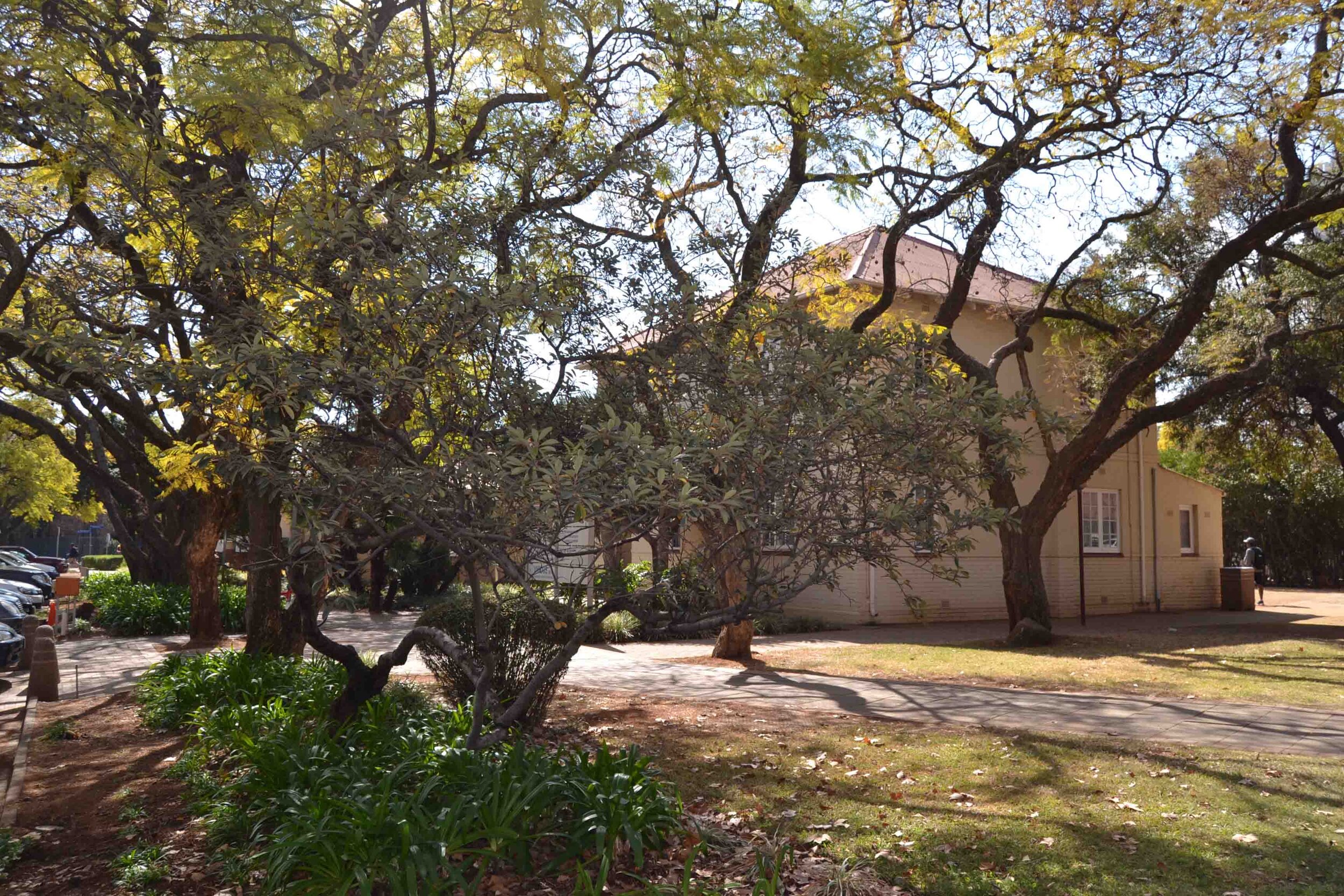
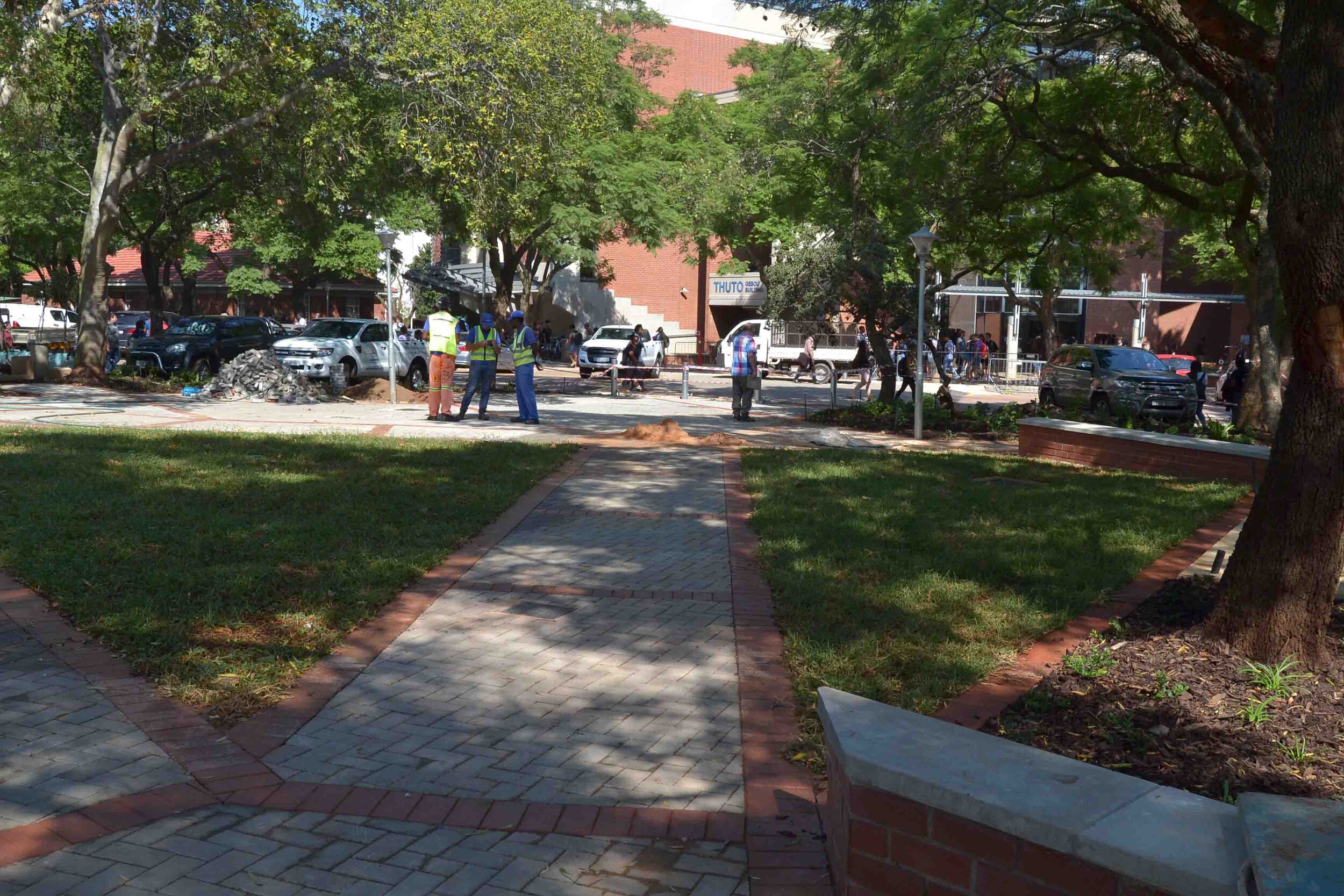
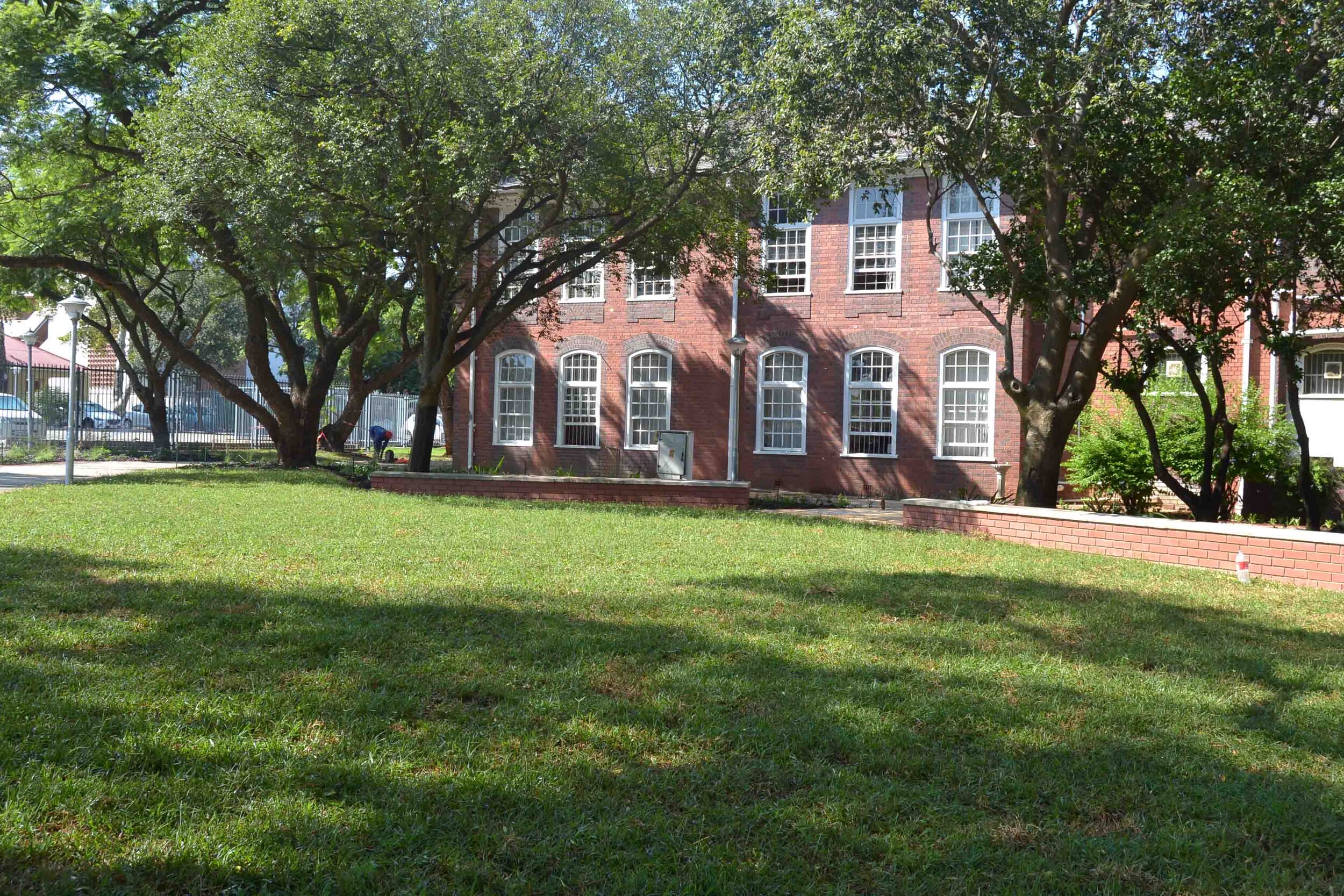
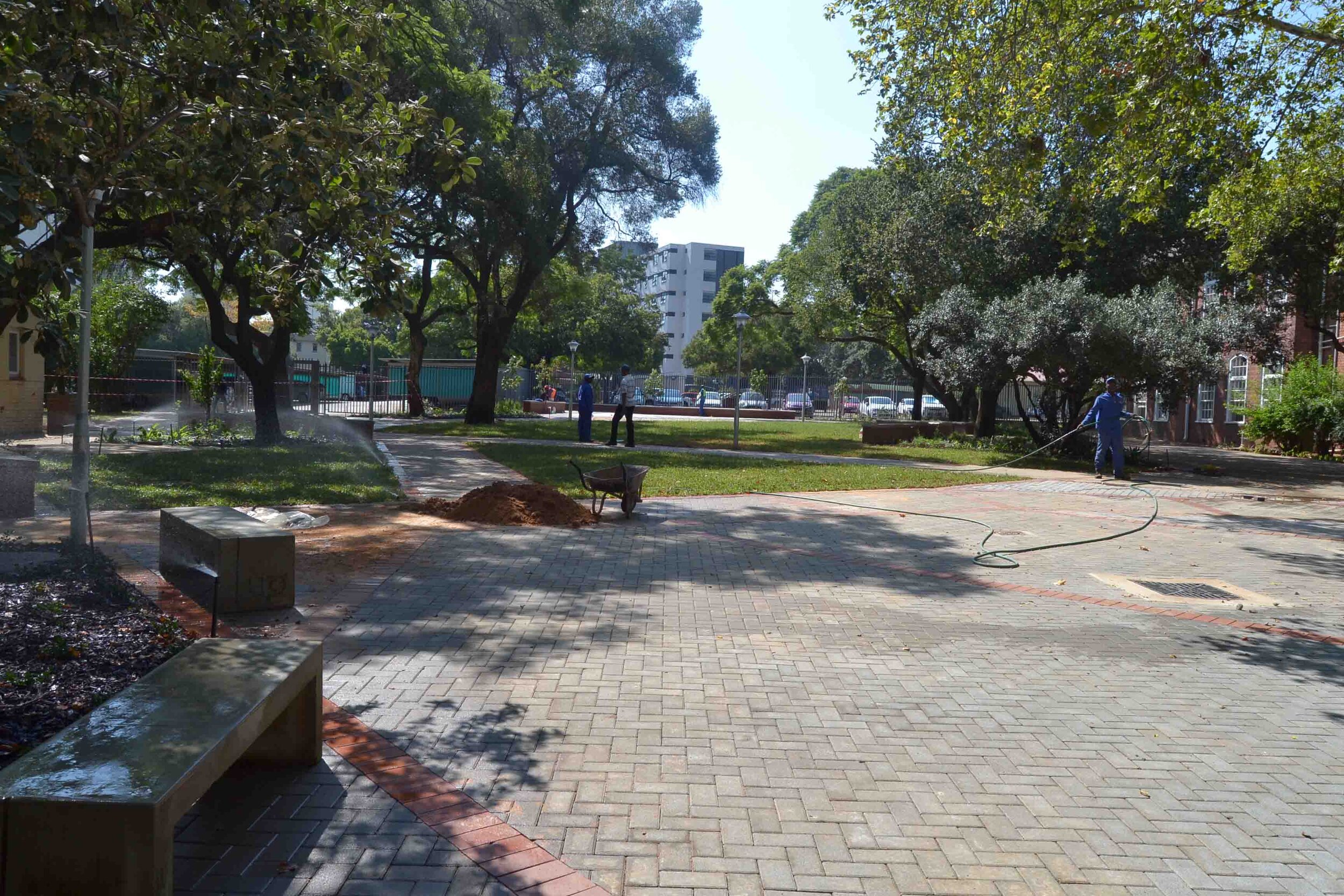
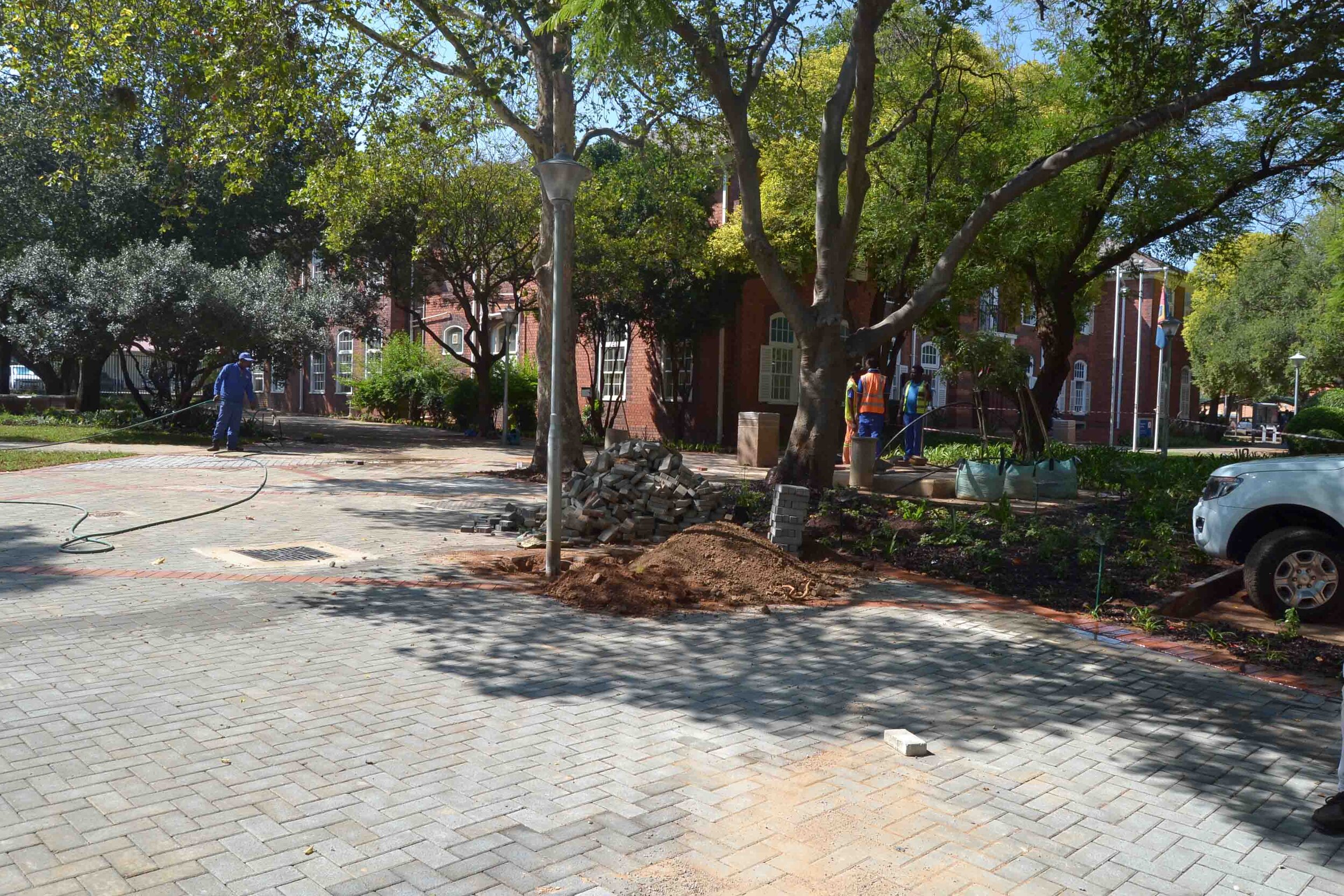
The site was identified by the University of Pretoria as an area to be allocated for students to spill out into from the large adjacent Thuto lecture hall and have a stong connection to this building even though it is separated by a vehicular road. The site also needed to respect the heritage building called Roosmaryn on its boundary.  There were existing trees but otherwise the site was bare and the soil exposed as seen by the images below:

Stormwater

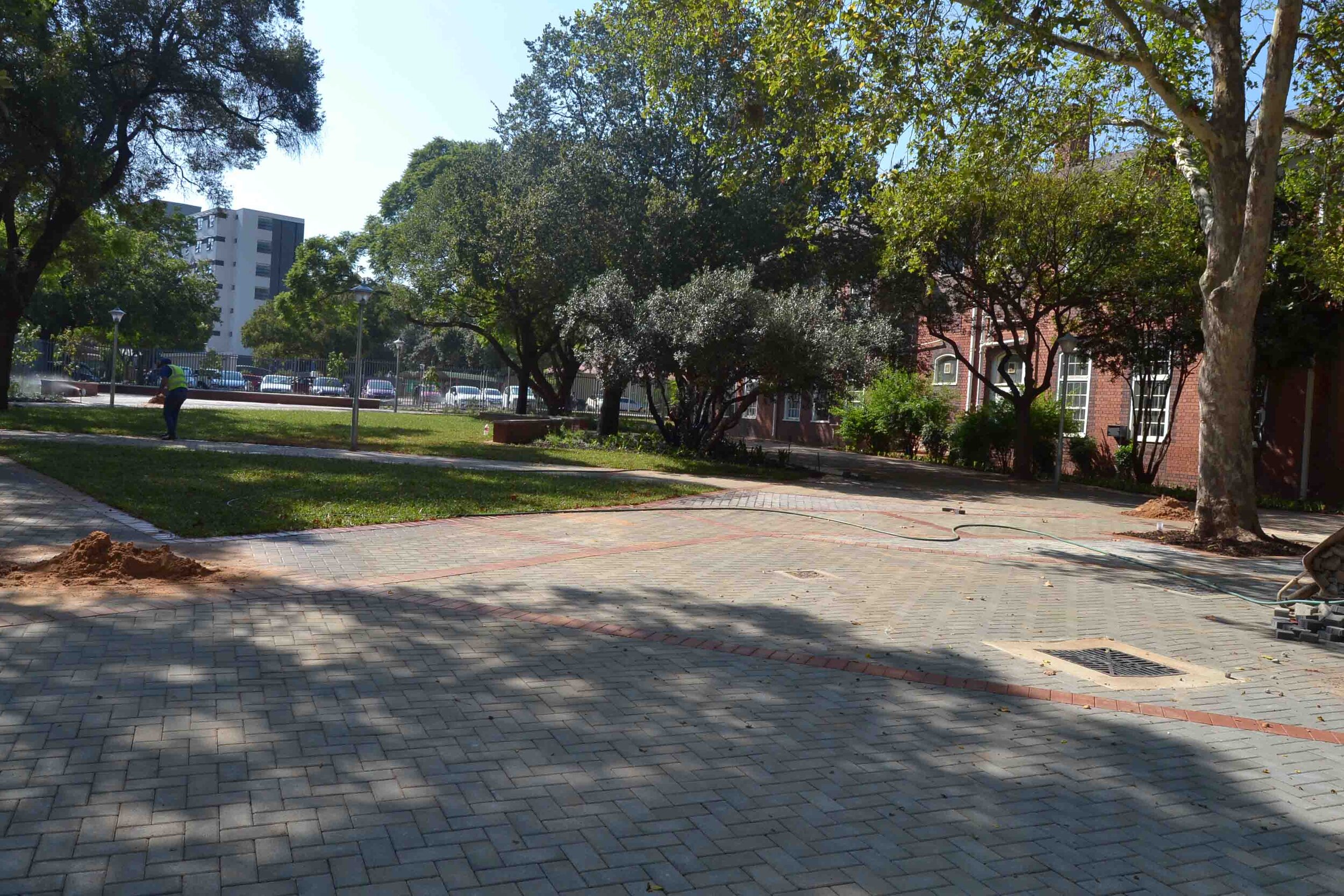
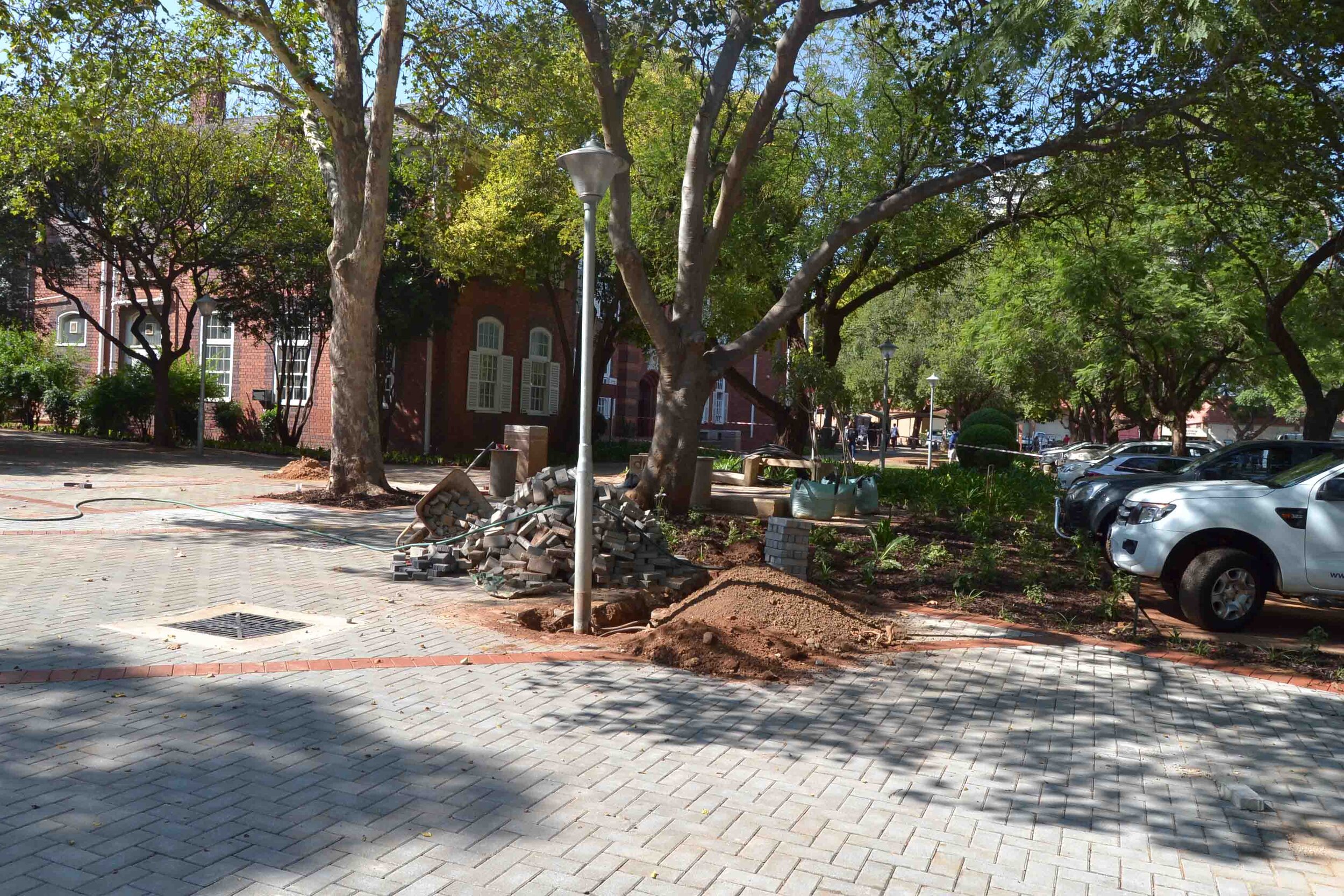
Civil Consult was appointed as the consulting engineer to address the inadequate stormwater infrastructure as the site often experienced flooding. The area serves as a catchment for water surface run-off from several adjacent parking lots and paved areas. Permeable paving options were investigated but the ultimate decision taken was to use an underwater catchpit (infiltration trench) that releases water into the surrounding soil over time with overflow going into the existing stormwater system.

Site Leveling - During Construction

Site Leveling - During Construction

Circulation

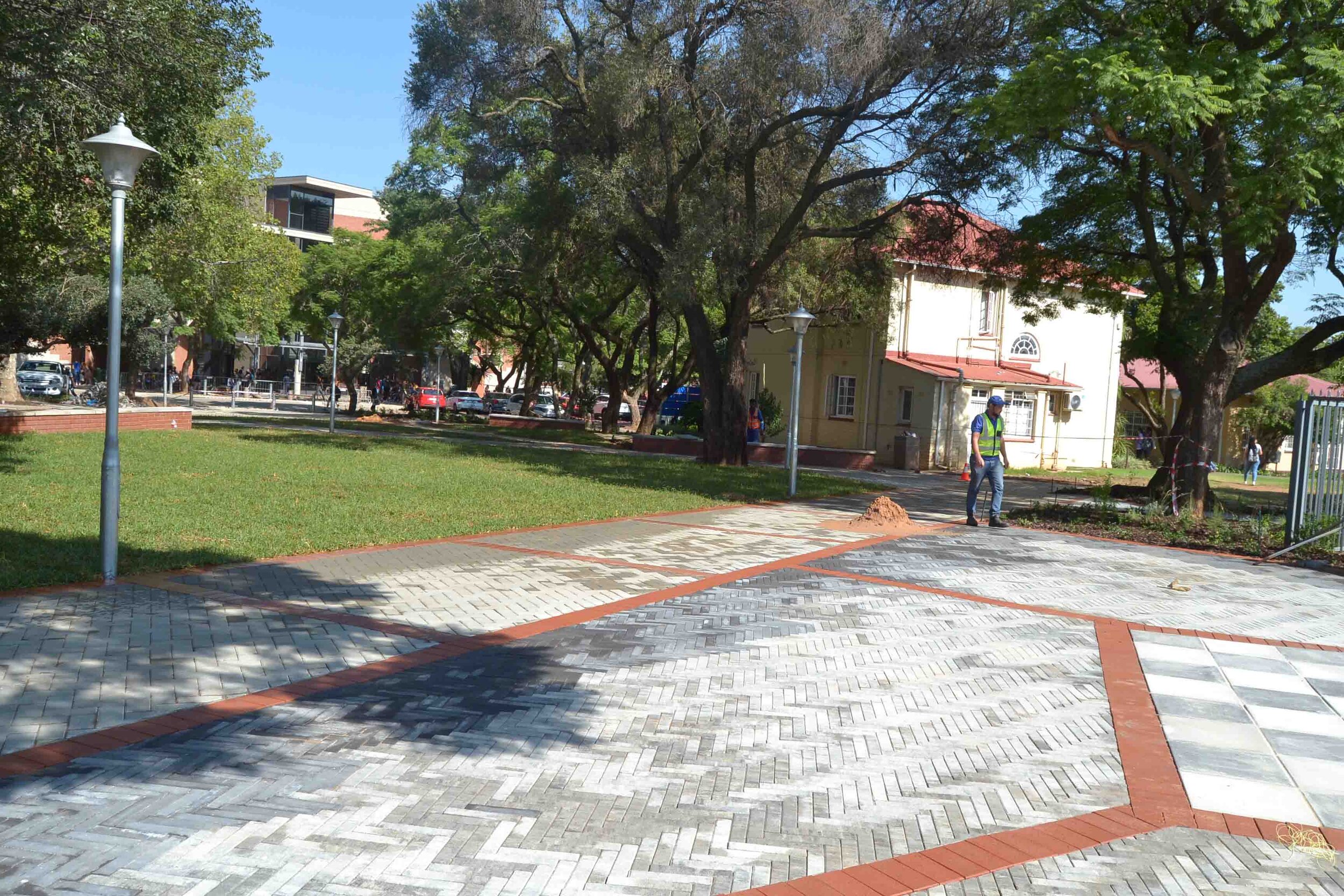
The primary focus of the design was to improve circulation through and across the site and in this way the site becomes a node for students to stop and pause while on their way to their destination. It is close to an important entrance at Prospect Street which is the main access from Hatfield and formalised pathways are used to create connections along existing desire lines.

Creating a raised pedestrian crossing over the road to connect the site to Thuto came at the expense of several parking bays, but this was an important decision as this area was meant to be strongly linked to the Thuto building and allow for easy access between these areas.

New Pedestrian Crossing Built over the Road - Improving Connections

New Pedestrian Crossing Built over the Road - Improving Connections

Social Spaces

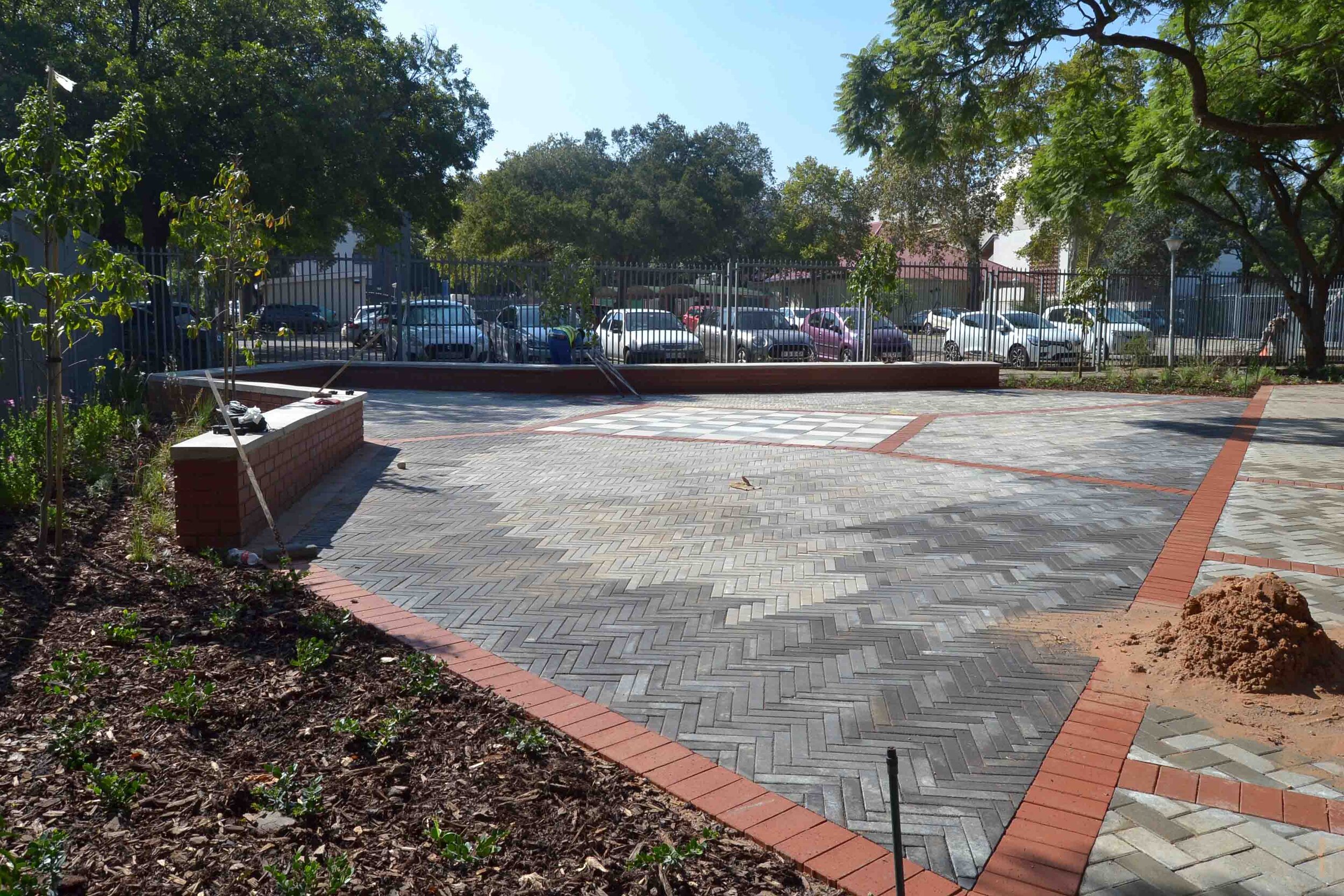
The next important requirement was to create ‘social learning spaces’ for students to sit and interact. Students are encouraged to stop, rest, study, socialise and use this space as their own through use of the seating walls, paved area and lawn area. The paved area includes a giant chess set so a game of chess can also be enjoyed in between classes. The irony that this project was built to encourage student interaction and connection during a time when social distancing is being encouraged does not escape me. I do hope that the future holds opportunities for humans to interact with one another in outdoor spaces and share the joy of being in a beautiful outdoor environment.

Seating Wall with Chess Board in Paving

Seating Wall with Chess Board in Paving

UP Containers

Three concrete plinths were built to activate certain areas of the site. These were built for custom designed storage containers that will serve as wifi hotspots and shelters where students can charge their laptops or cellphones. The containers are still to be installed.

container

Vegetation

All existing trees were maintained and incorporated into the design. Only a few new trees, namely Caledendron capense, were included which will create a unique atmosphere once mature and in flower. Several shrubs were included to create a diverse landscape that has a variety of foliage and texture such as Burchelia bubalina, Syncolostemon densiflorus, Leonotis leonorus, Bauhinia natalensis and Rhus burchelli . Anisodontea scabrosa was selected to compliment the Roosmaryn building as well as ‘softer’ plants such as Agapanthus and Scabiosa. Existing shaded areas were planted with Carissa ‘Green Carpet’, Hypoestes aristata, Plectranthus spp, Orthosiphon labiatus and Barleria ‘Rosea’.

103.jpg

A grass mix was used in the area that receives sun and is located behind a seating wall for when it looks less attractive during winter. The grassland plants were incorporated to provide an opportunity for the University to see how this type of landscaping can work on campus, learn maintenance techniques and also to provide education for the students. Landscaping with grasses is a relevant landscaping style and this was an opportunity to showcase the beauty of South African grasses and grassland species. Some of the species included Eragrostis gummiflua, Dimorphotheca jucunda, Melinis nerviglumis, Andropogon eucomis, Aristida junciformis, Pelargonium sidoides and Helichrysum umbraculigerum.

Future Overlays

The project lays an important foundation of circulation and structure for further activity layers to be superimposed onto it. It is hoped that future art installations, events and food trucks planned for the site will bring a send of fun and vibrancy that will enrich the students experience at the University. I will post more photographs of this project once the plants have established in a few months time.