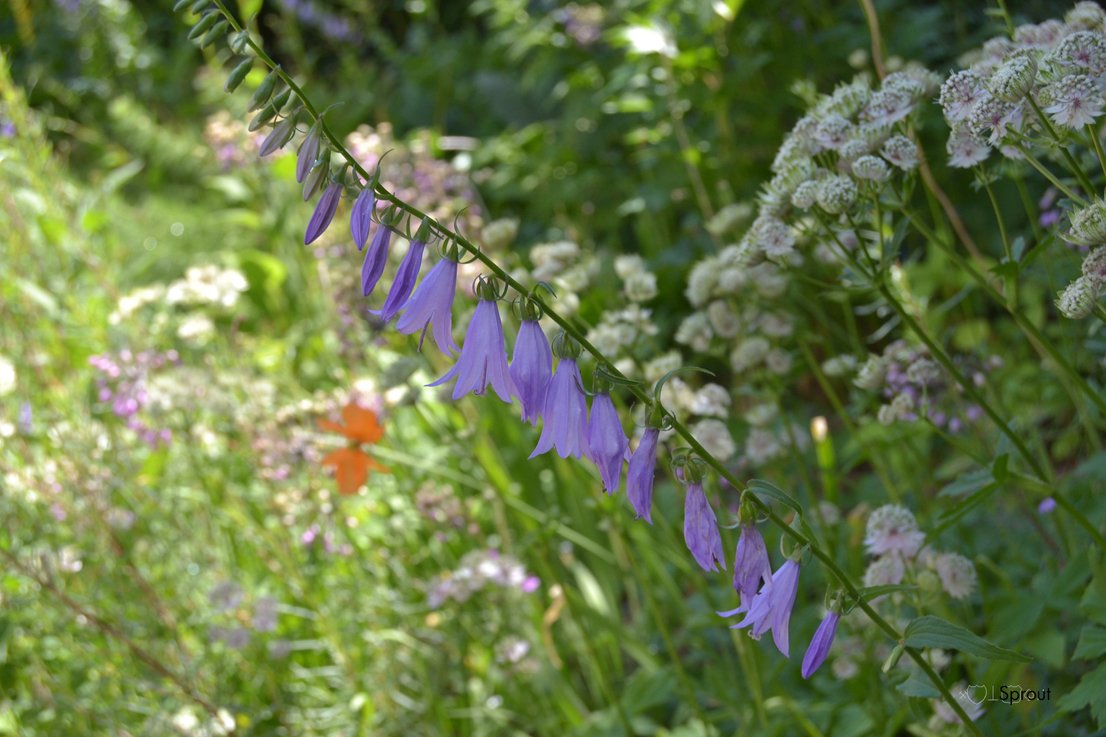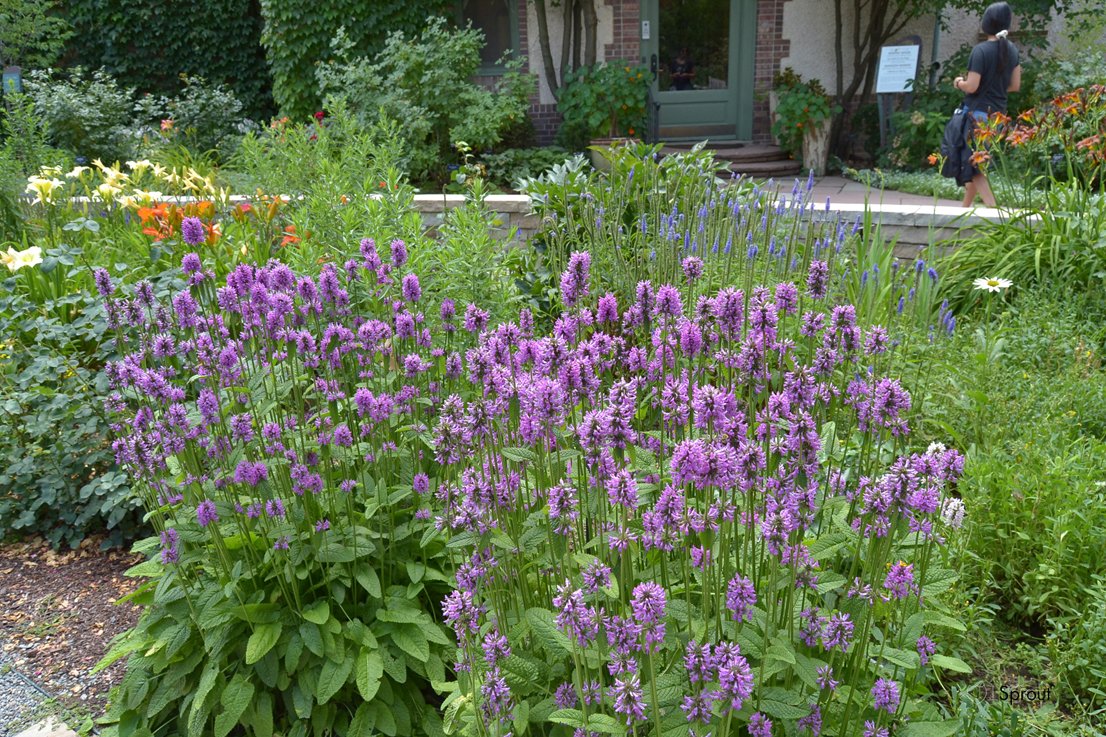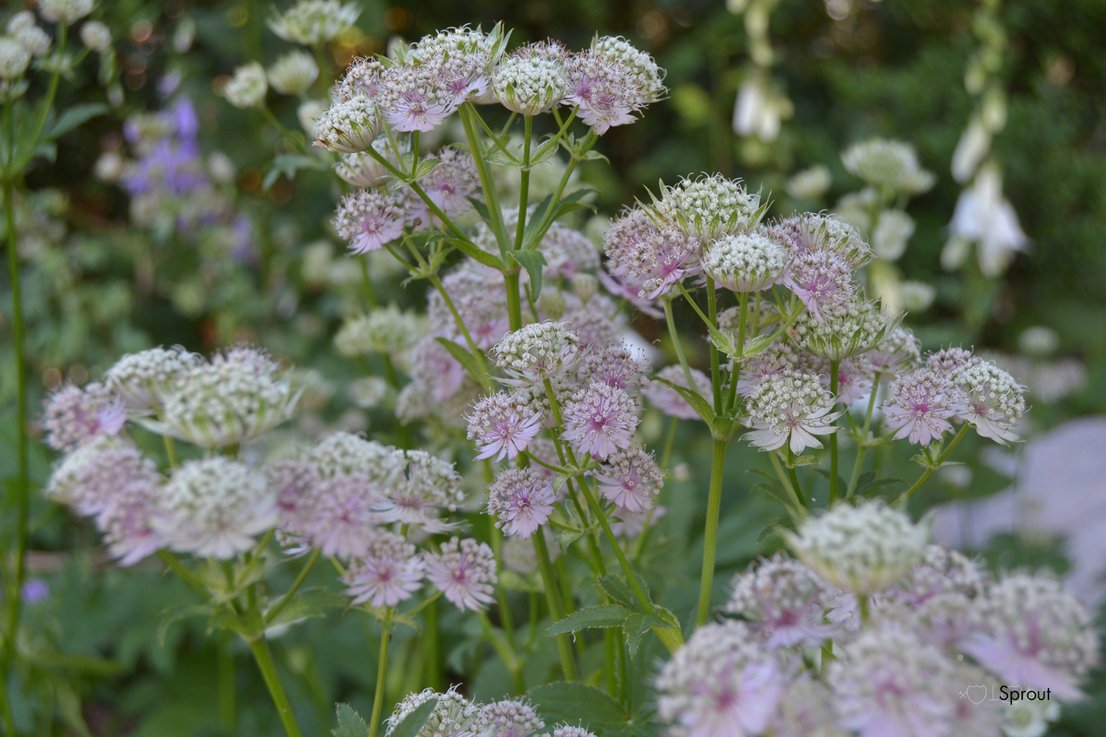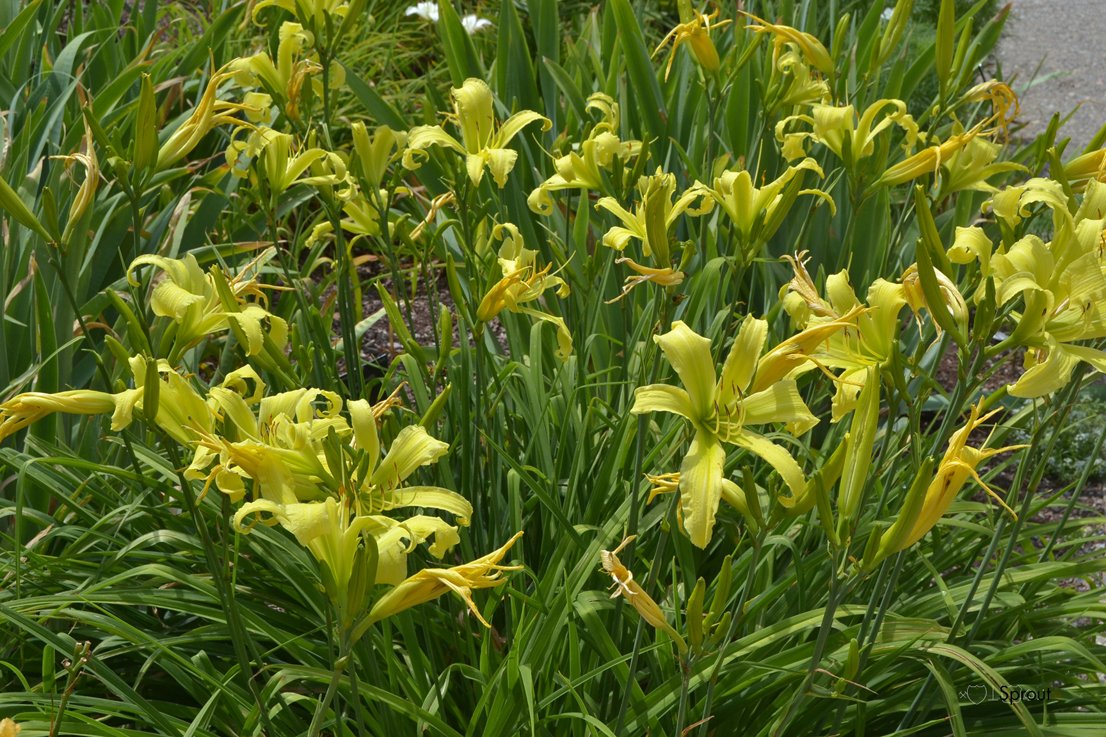
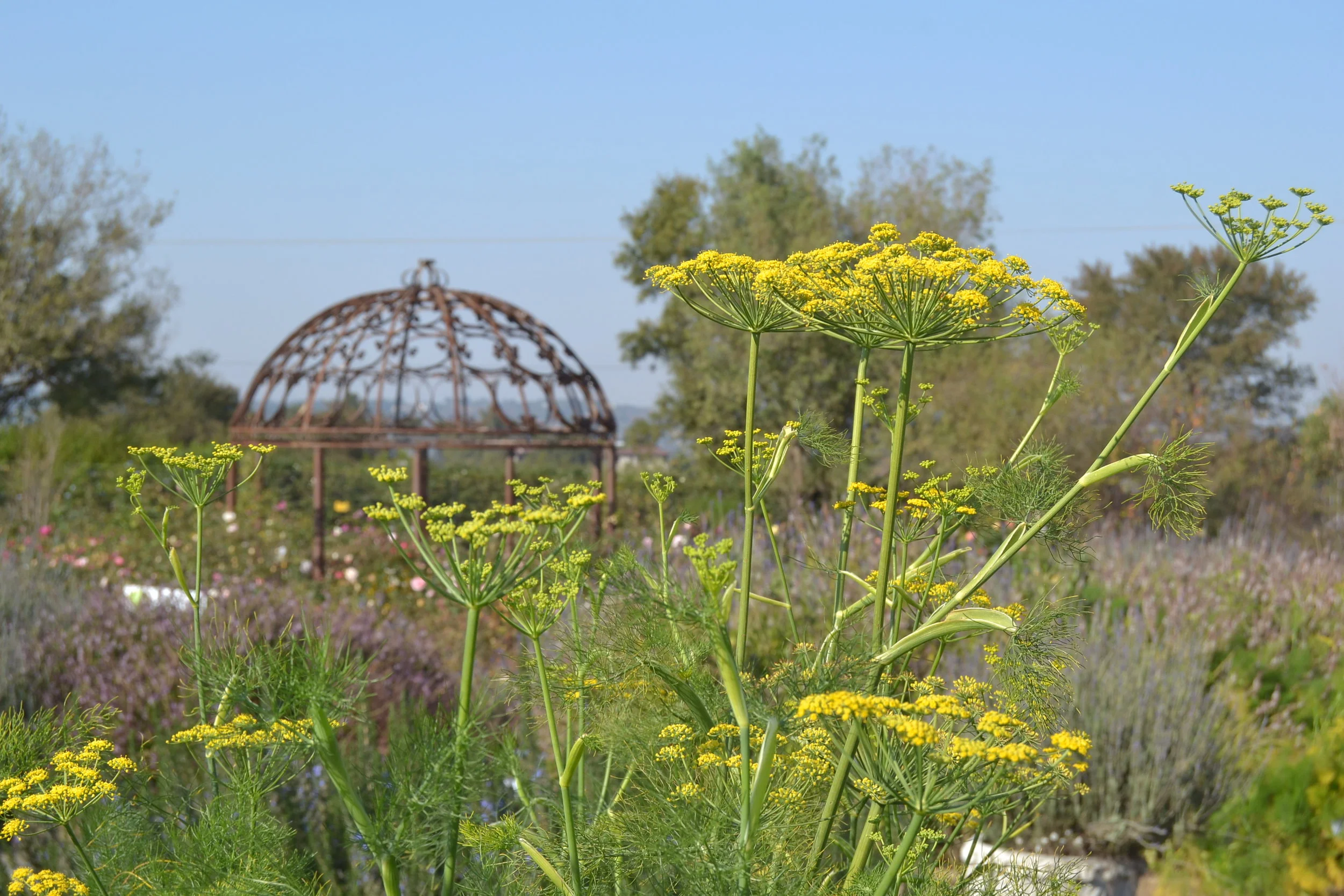
Denver Botanical Gardens, Colorado

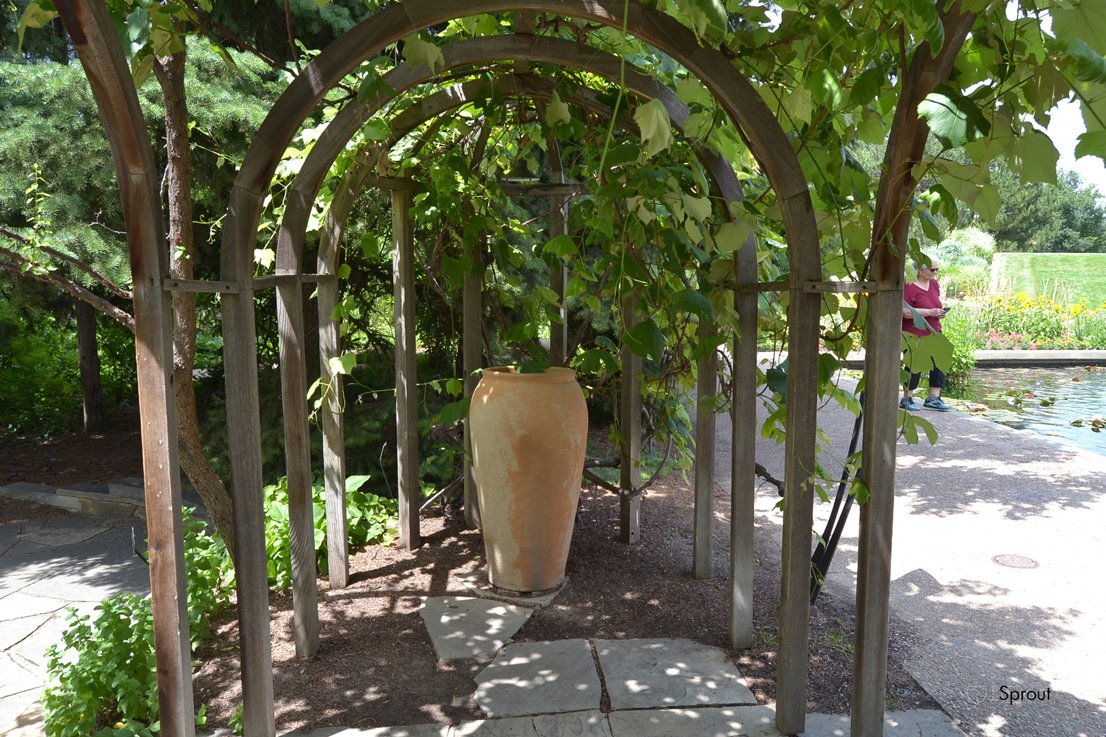
I was incredibly impressed with the Denver Botanical Gardens located in York Street, Denver, Colorado, when I had the privilege of visiting the USA in July. I had no idea a Botanical Gardens could have such a variety of activities and opportunities available. I thought if I ever lived in Denver someday, I would love to work at this place! The love of all things Botanical is tangible.

Four Towers Pool next to Science Pyramid

Denver Botanic Gardens Facilities

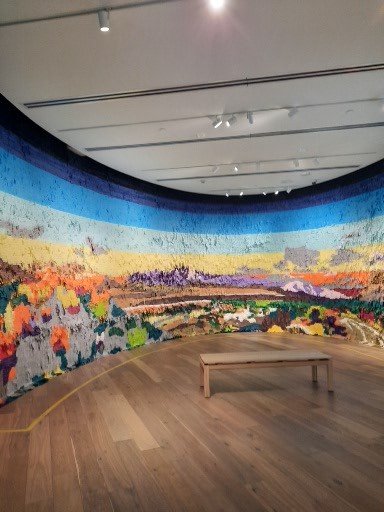
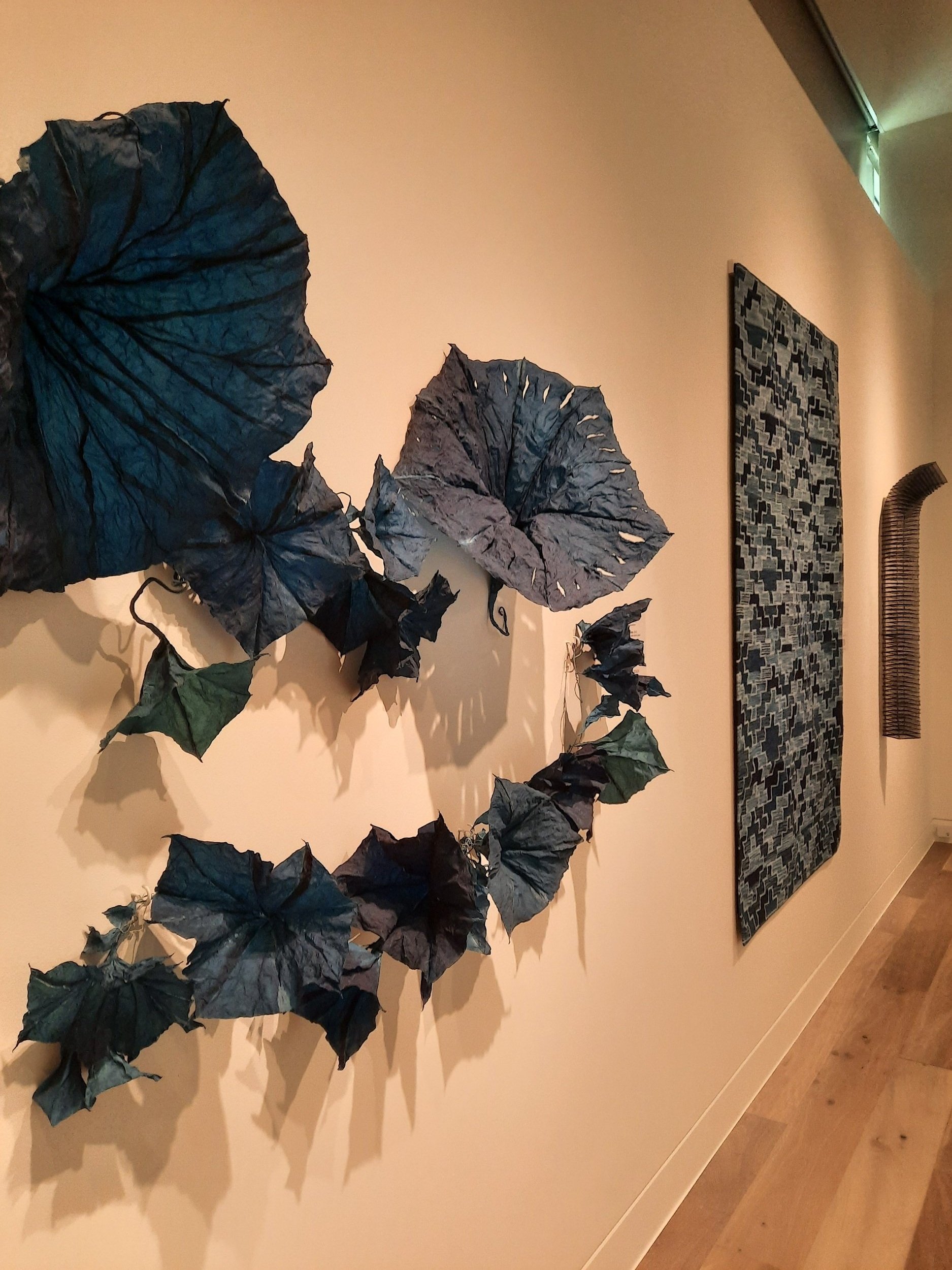
Typically, people spend 2.5 hours at the Denver Botanical Gardens and it is not surprise why - there is so much to see! The Gardens not only provide a wide variety of incredible plants to view and enjoy (exploring the gardens is amazing) but they also host Art Exhibitions; a Science and Research Centre is connected to the Gardens; the Helen Fowler Library offers books related to horticulture; there is a school of Botanical Art and Illustration; a coffee shop and they even screen movies!

The Gardens established Denver Botanic Films in 2021 to create yet another powerful bridge between people and the rest of nature. By telling stories about the special relationship between humans and plants, we hope to educate and inspire.

You really do feel inspired after a visit to this place and I love how they focus on education and the appreciation of art. I really enjoyed the art exhibitions that were on display.

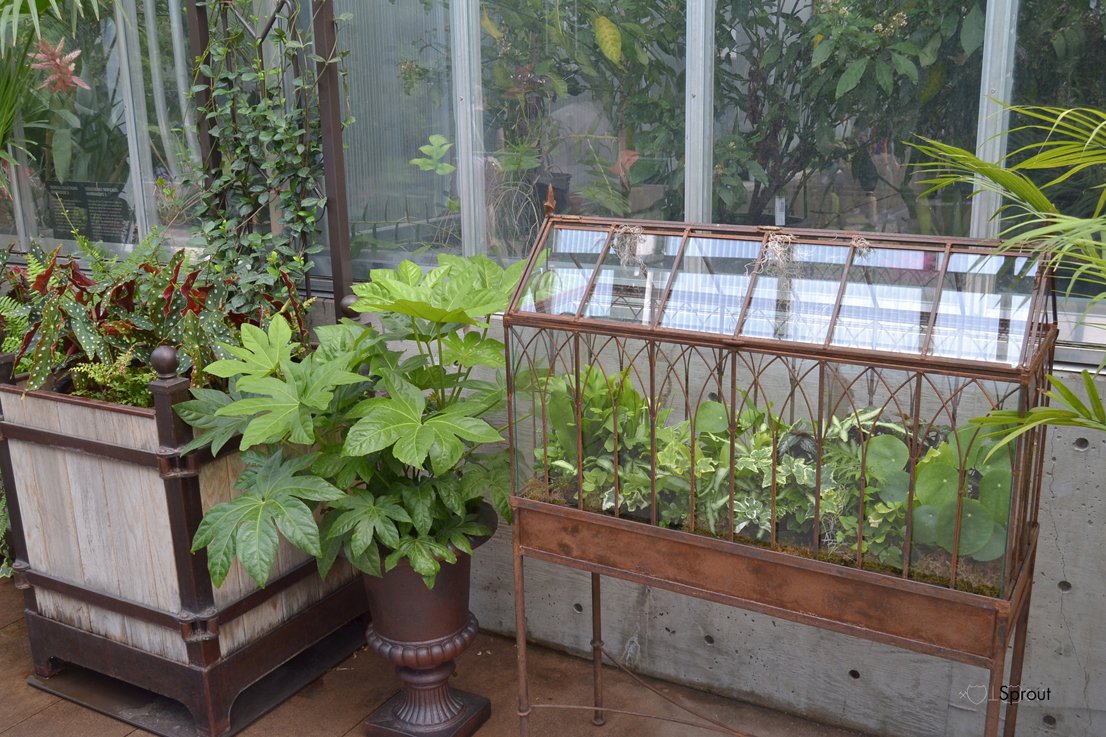
Orangery
Exploring the Gardens

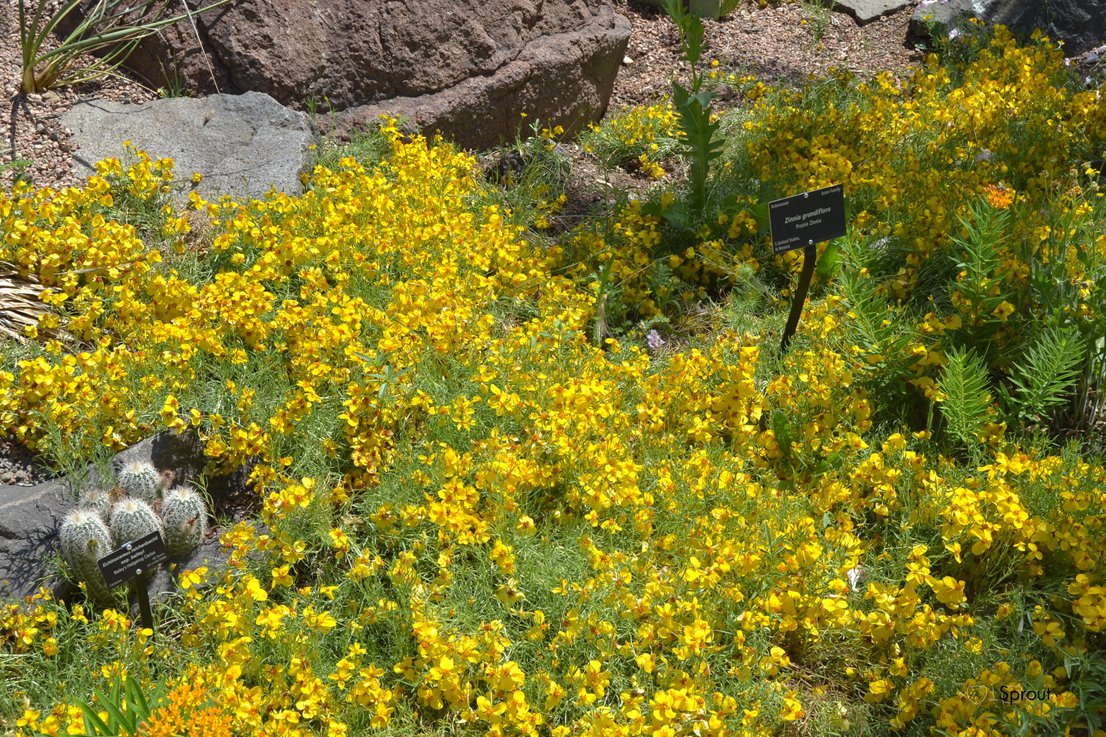
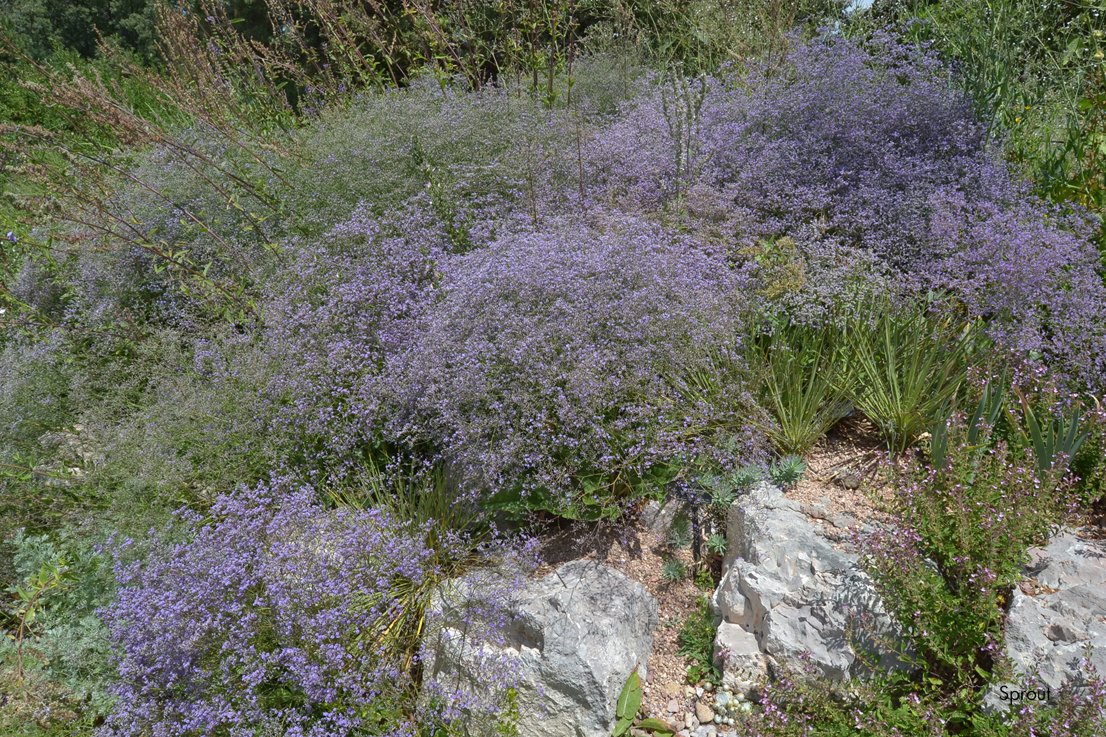
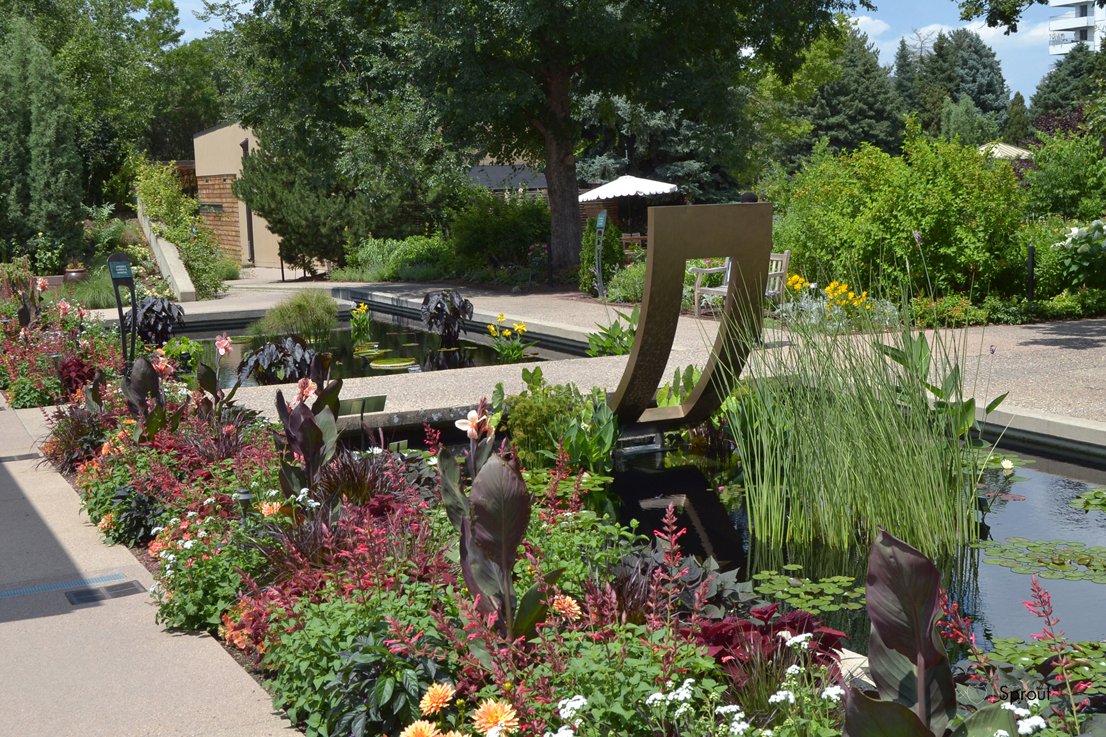
The Gardens have a large selection of interesting spaces to explore - it would be best to consult the map and decide which areas you want to prioritize. I started from the Visitors Centre and moved in an anti-clockwise direction trying to take in as much as I could. This includes Gardens of the West, Internationally inspired Gardens, Ornamental Gardens, Shady Gardens and Water Gardens. Every area you walk into is a sensory delight. Colours, textures, sounds and sculptures combine to create memorable and beautiful moments. Water is also present throughout the Gardens adding movement and creating a sense of calm and serenity.

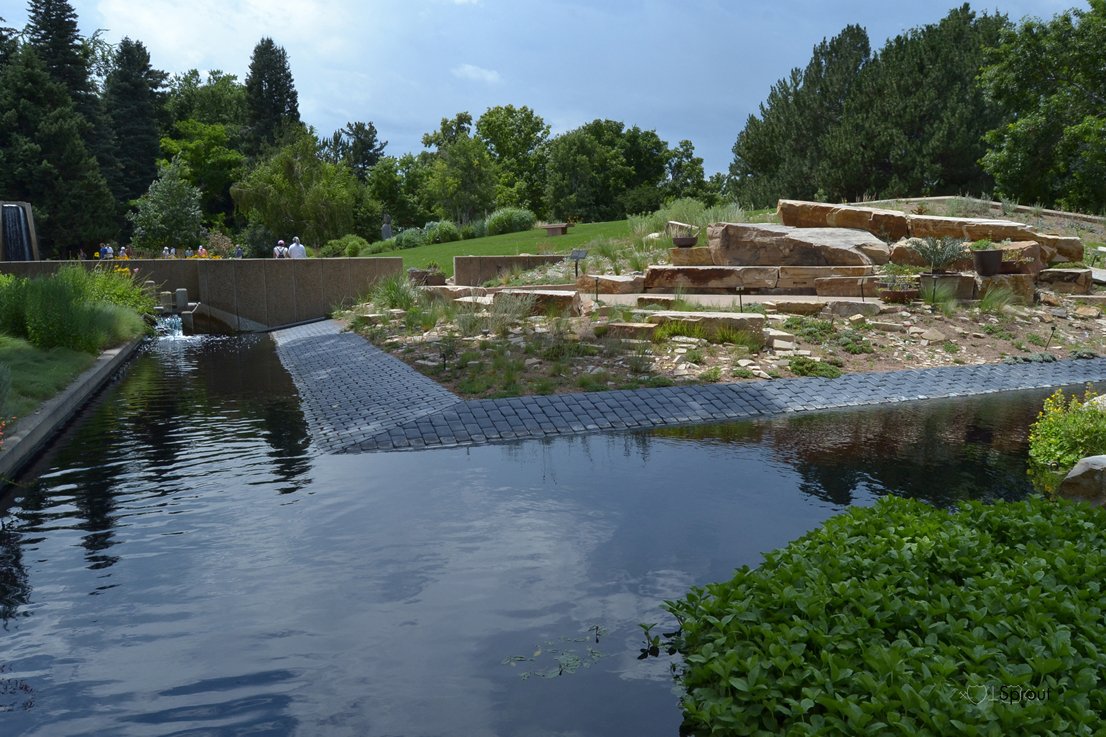
Water runs throughout the Gardens
There are bees and butterflies throughout the garden - I spotted this dragonfly who was happy to be photographed

I think this was my favourite part of the Garden (a tough decision) - The Monet Pond. Before I took the photos the water was perfectly still and reflected the sky, beautifully ordained with colourful waterlilies.

The Monet Pool is our largest water garden and features a stunning collection of aquatic plants including hardy and tropical waterlilies, Victoria waterlilies, pickerel plants, cannas, iris and more. Peak bloom occurs from June through September each year. An annual Water Blossom Festival is held in early August.

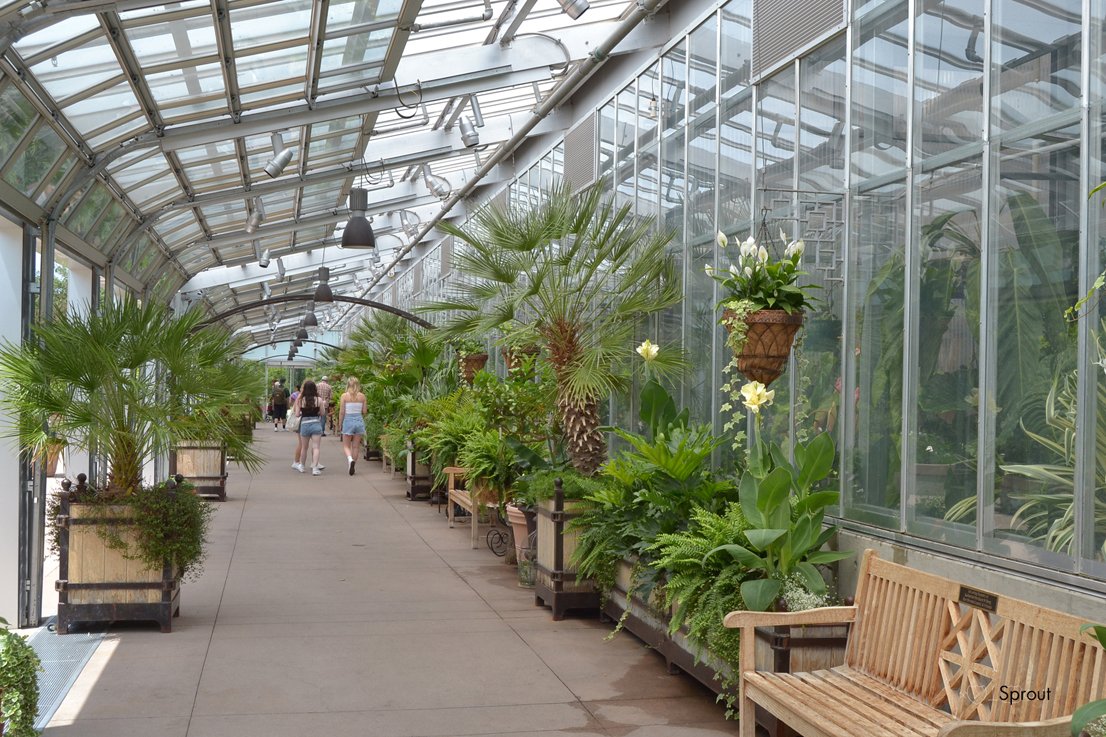
Boettcher Memorial Tropical Conservatory

This enormous greenhouse makes you feel like you are in a tropical rainforest. I spotted several plants I recognised that are commonly grown in the Lowveld with its tropical climate, including Heliconia (Lobster Claws) and several orchid varieties.

Dedicated in 1966 and awarded Denver Landmark Status in 1973, the Tropical Conservatory is one of the world’s most unique displays of exotic plants from tropical and subtropical regions. Midway on a circular path is a fabricated two-story banyan tree that offers a multi-layered view of the indoor tropical forest.

Helen Fowler Library

I really wanted to highlight this aspect of the Gardens as I think it is such an important contribution and really admire the connection of the Library to the Gardens and the legacy that Helen Fowler left. How I would love to have access to a facility like this!

The Helen Fowler Library holds a significant collection of botanical and horticultural materials about the Rocky Mountain region and similar regions around the world. The library supports research at the Gardens as well as community interests. The collection of approximately 25,000 titles includes subjects such as:

  • Gardening, horticulture, botany, agriculture and landscaping

  • Colorado native plants and world flora

  • Botanical art and illustration

  • Medical botany, ethnobotany, plant lore, plant pests and diseases

  • A large selection of children’s books, fiction and DVDs

Visitors are encouraged to peruse the shelves, research within the Helen Fowler Library and ask questions of library staff and volunteers during open hours. (all text in italics taken from website)

If you ever get the opportunity to visit the Denver Botanical Gardens, I would highly recommend it!

For further information visit www.botanicgardens.org

~ G.S

Storm's River Mouth

I have been wanting to return to the Garden Route National Park to share this beautiful part of the world with my kids for a few years now. Although they are still too young to do the Otter Trail I knew they would love the scenery and surroundings. It is really a nature lover’s paradise.

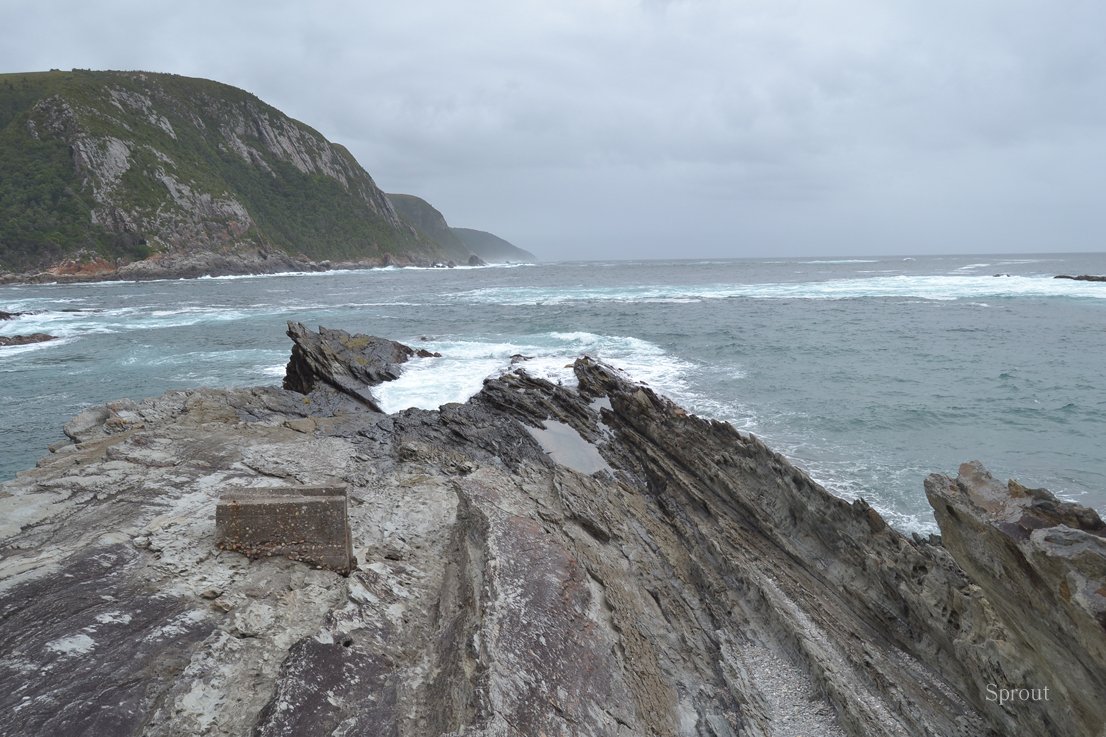
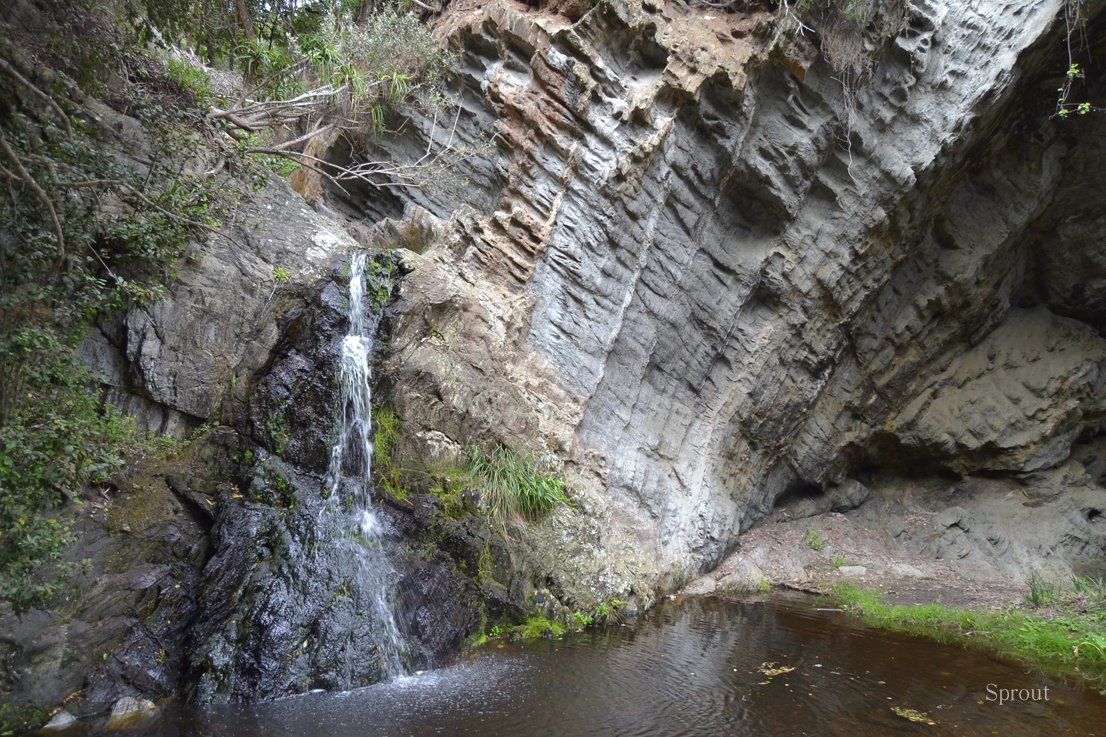
Dramatic scenery at Storm’s River Mouth

We spent a wonderful long weekend there with family and enjoyed the lilo adventure up the gorge. I didn’t want to risk my camera falling in the water so unfortunately I don’t have any pics of that experience!

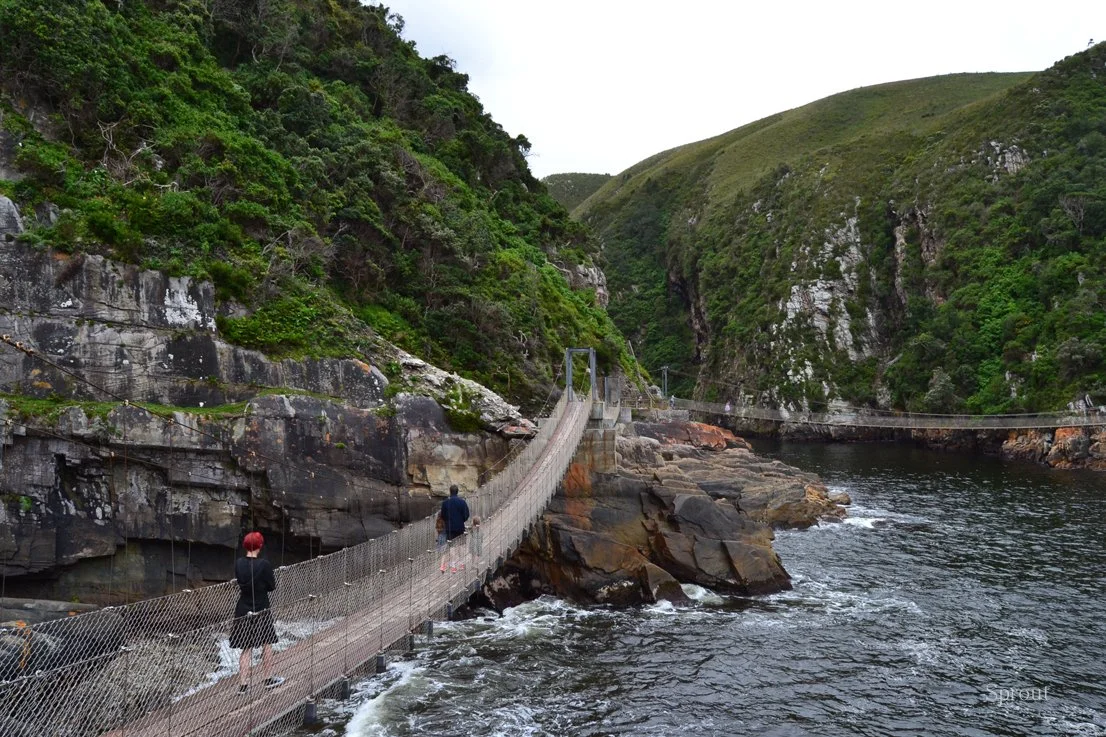
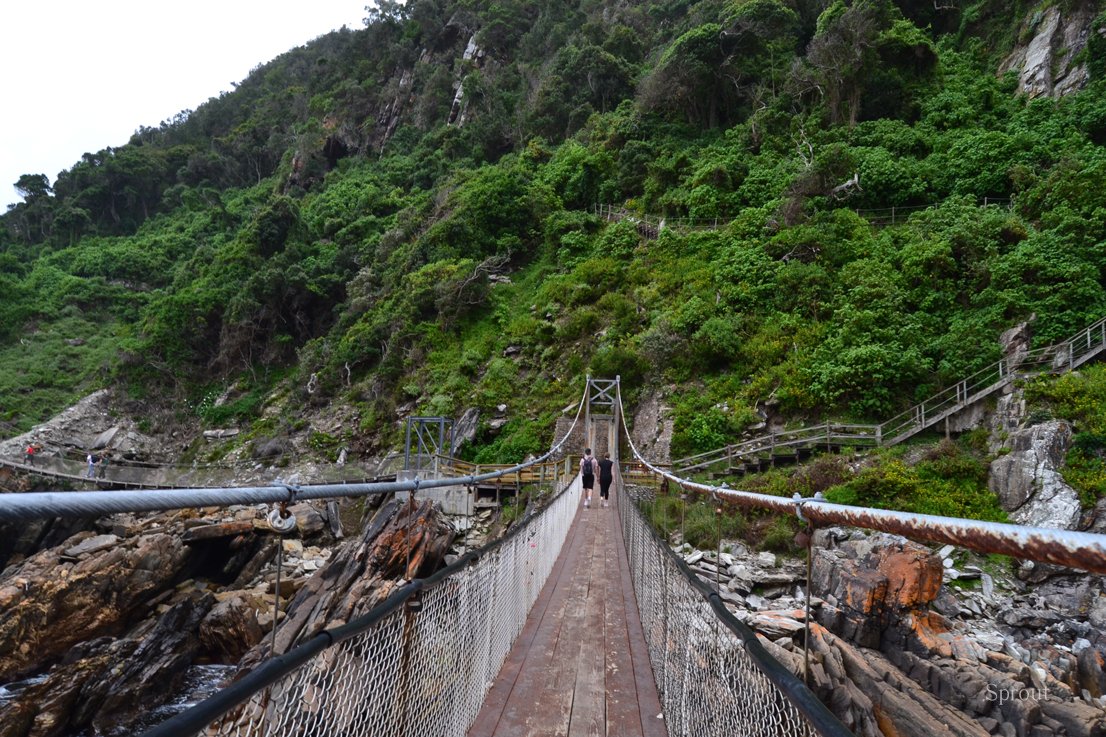
Suspension bridge

We enjoyed the hike to suspension bridge as well as the short Lourie Trail inside the Storms River Mouth Restcamp. Some of the more energetic also did the Waterfal hike which is the first part of the Otter Trail. See further trail information on the SANParks website .

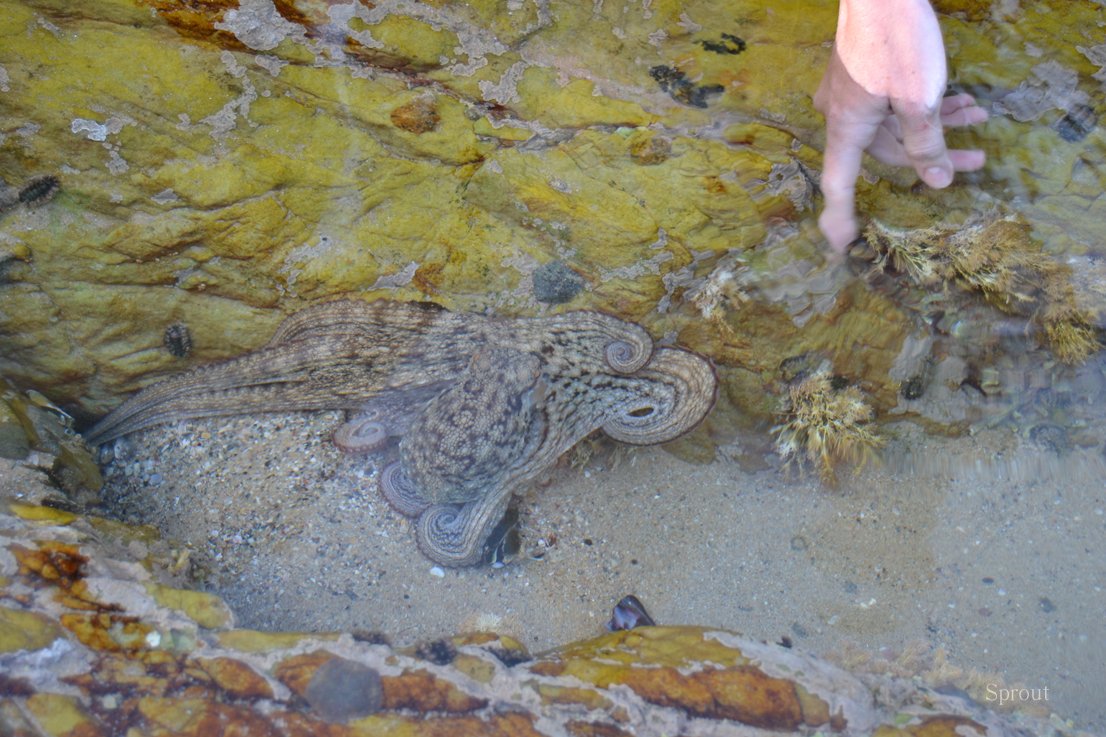
One of the highlights of the trip was finding and interacting with a beautiful Octopus as well as several starfish in one of the rock pools. We enjoyed watching whales, birdwatching and even spotted an otter.
The beautiful forests are an experience in themselves and I loved seeing the natural beauty and vegetation. Because the reserve is in a protected area you don’t see any ships on the ocean and the natural environment is pristine.

Inquisitive Octopus

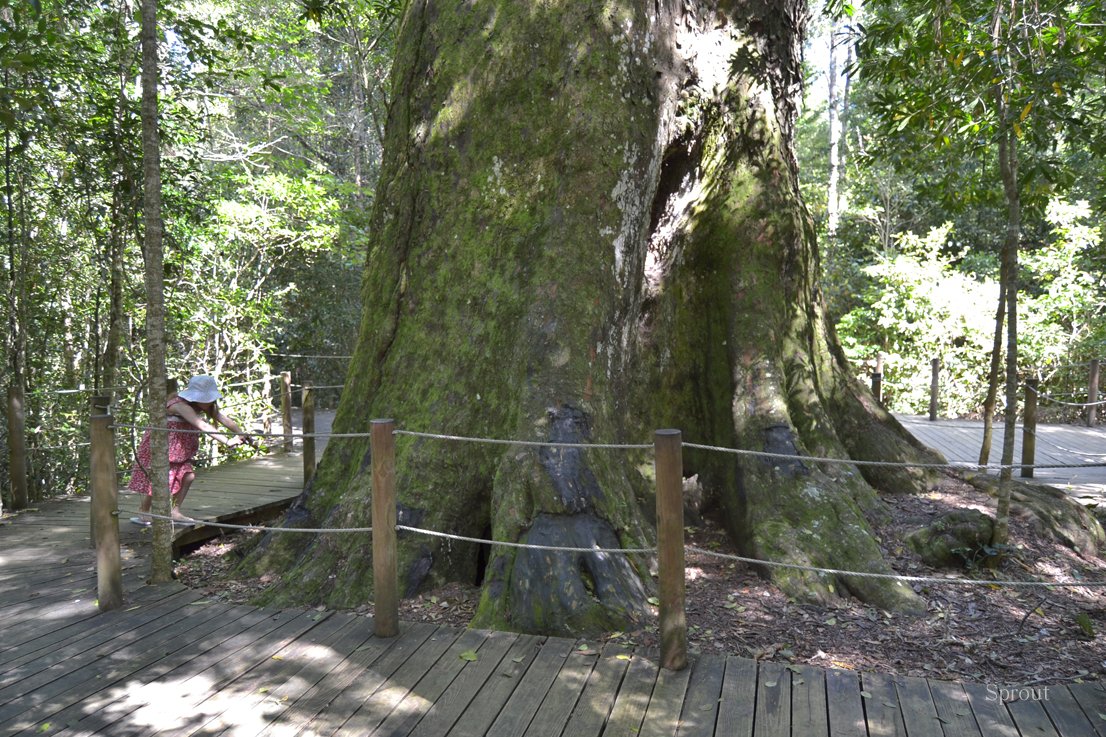
We visited the Big Tree just off the N2 highway where a lovely forest walk leads you to the impressive tree. The Outeniqua Yellowwood boasts an age of over 1000 years, height of 36 metres, main trunk length of 18.3 metres, crown spread of 33 metres and average circumference of 8.5 metres.

We had an amazing visit to the beautiful part of South Africa and look forward to visiting again whenever we get another chance!

J-Bay Shell Museum

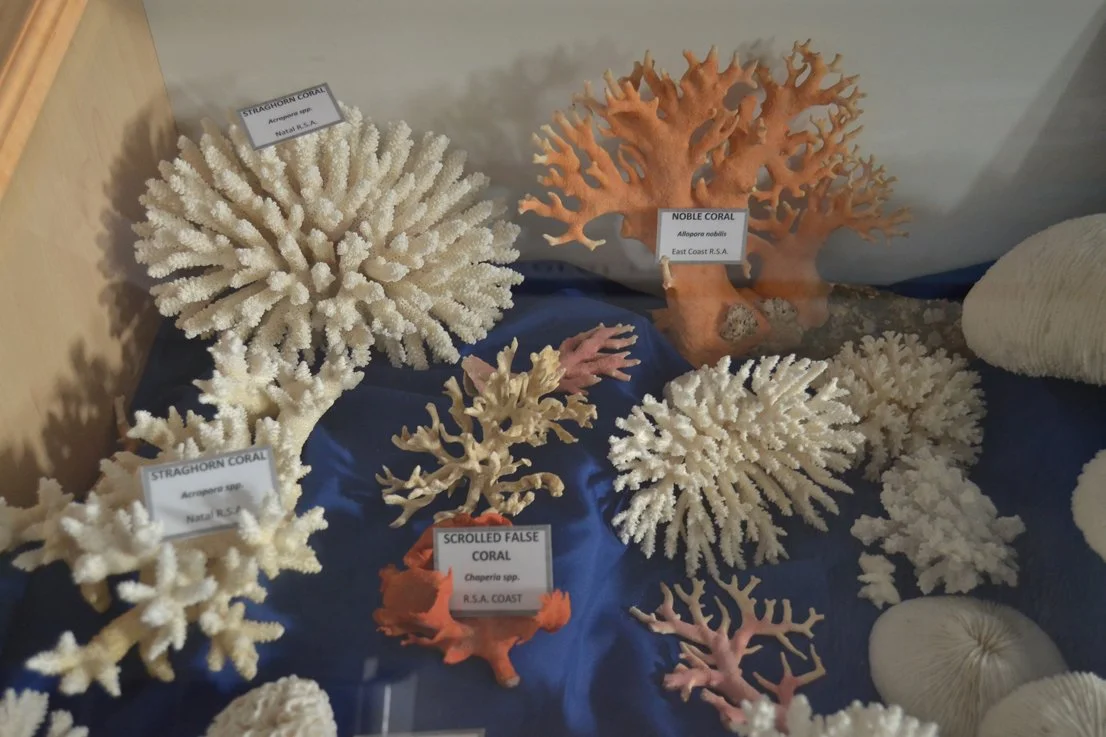
If your children love collecting shells from the beach as much as mine do then this is a lovely outing if you are visiting Jeffrey’s Bay. The Shell Museum is managed by the Humansdorp Museum Association and supported by Kouga Municipality. The museum houses a treasure trove of beautiful shells on display in large glass cabinets. A small gift shop sells shell memorabilia, and my daughter was thrilled to buy a box completely decorated in shells. These tiny shells are called micro shells and although fully grown they are tiny in size. The unique collection of micro shells on display was put together by Philip Steenkamp and Tana Kruger with the help of Alwyn Marais from Shell Collectors of South Africa.

History of the Shell Museum

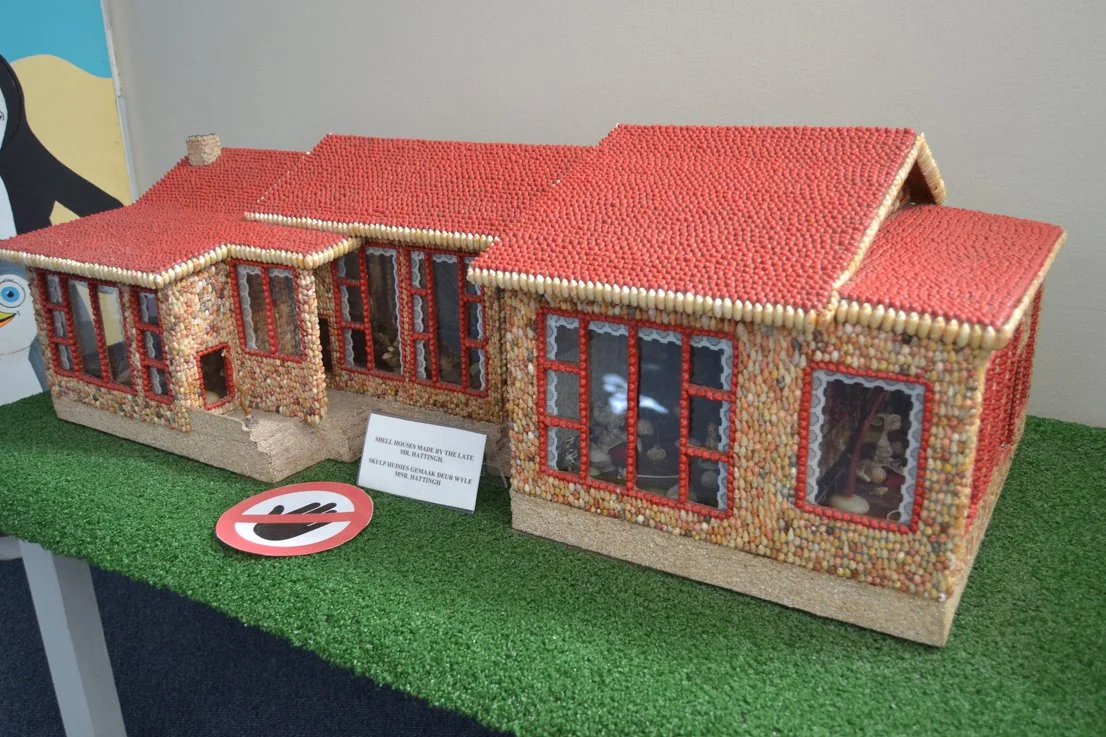
These shell houses were made by the late Mr. Hattingh and even have small furniture and people inside the houses.

Our visit was not long but definitely memorable. I love seeing natural history being celebrated and preserved for future generations. ~ G.S
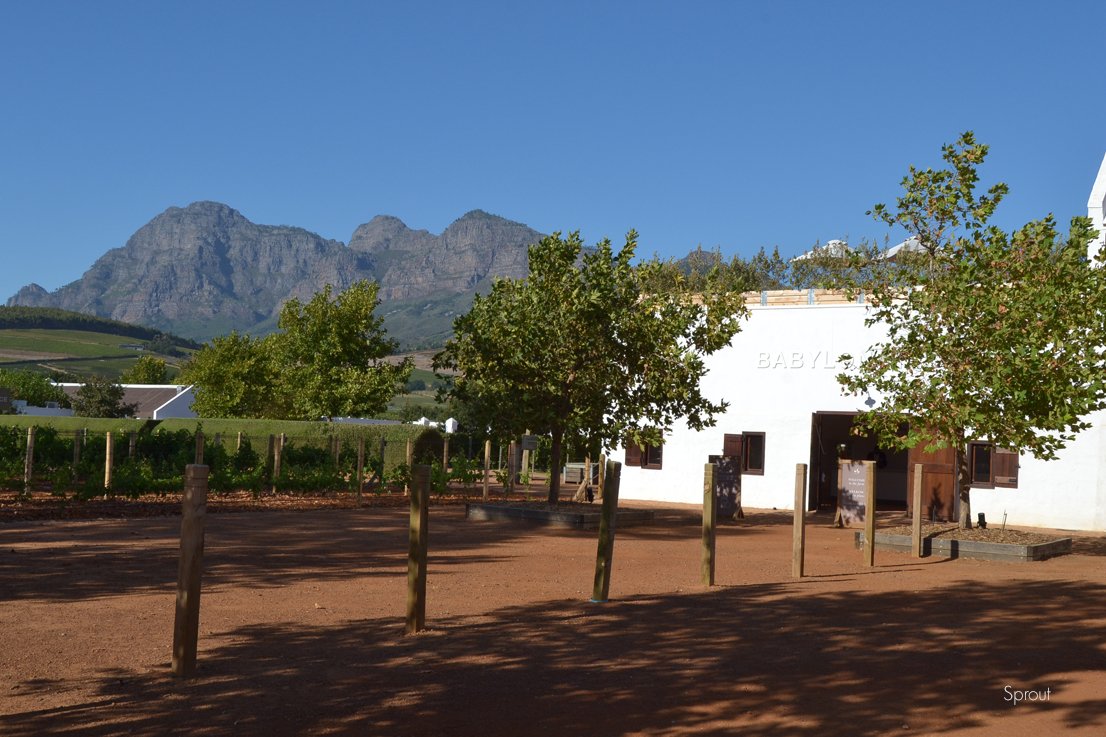
Babylonstoren - Garden celebrating South African Heritage

Babylonstoren is a wine farm located at the foot of the Simonsberg mountains in the Franschhoek wine valley. It is well known for its quality wines and luxurious accommodation including a hotel, spa, restaurants as well as the incredible gardens.

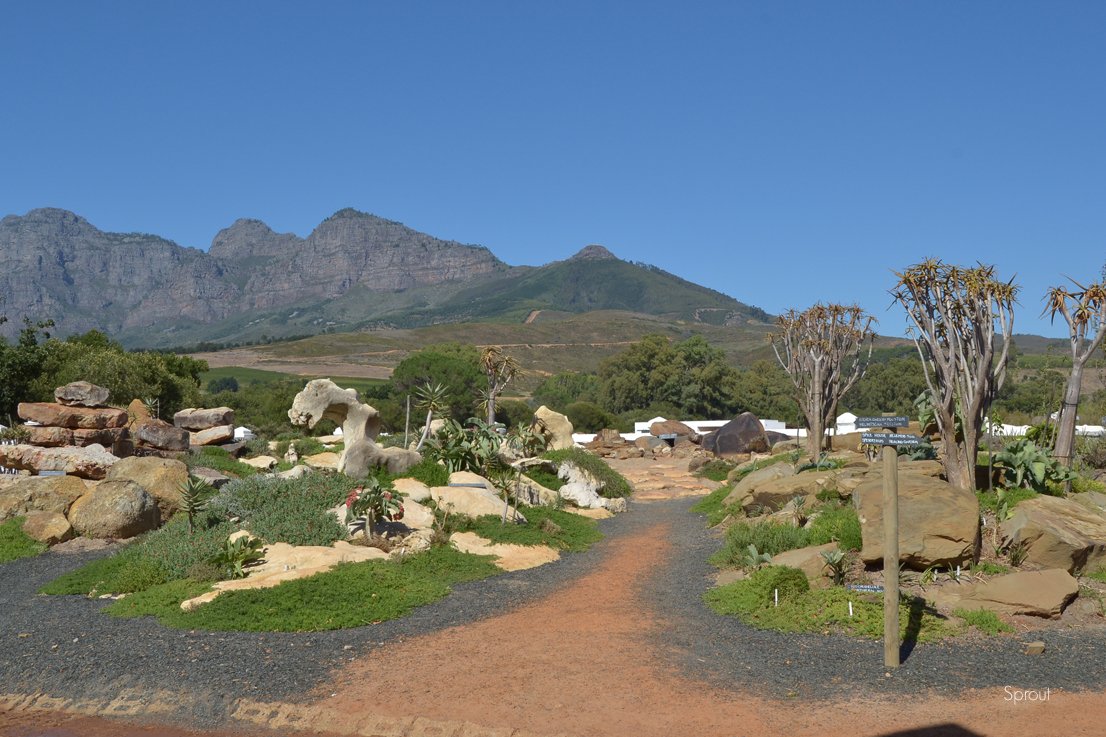
Although I’ve written about this garden before (previous blog) there is so much to share about this place that I think I will probably create a new post eacht time I visit! In fact, I think this is a garden that one can visit weekly and still not fail to learn something new. There is so much to see and learn - this botanical wonderland is a place to inspire and delight.

Interactive water feature highlighting the reptiles endemic to the area - watch out for the Spitting Cobra!

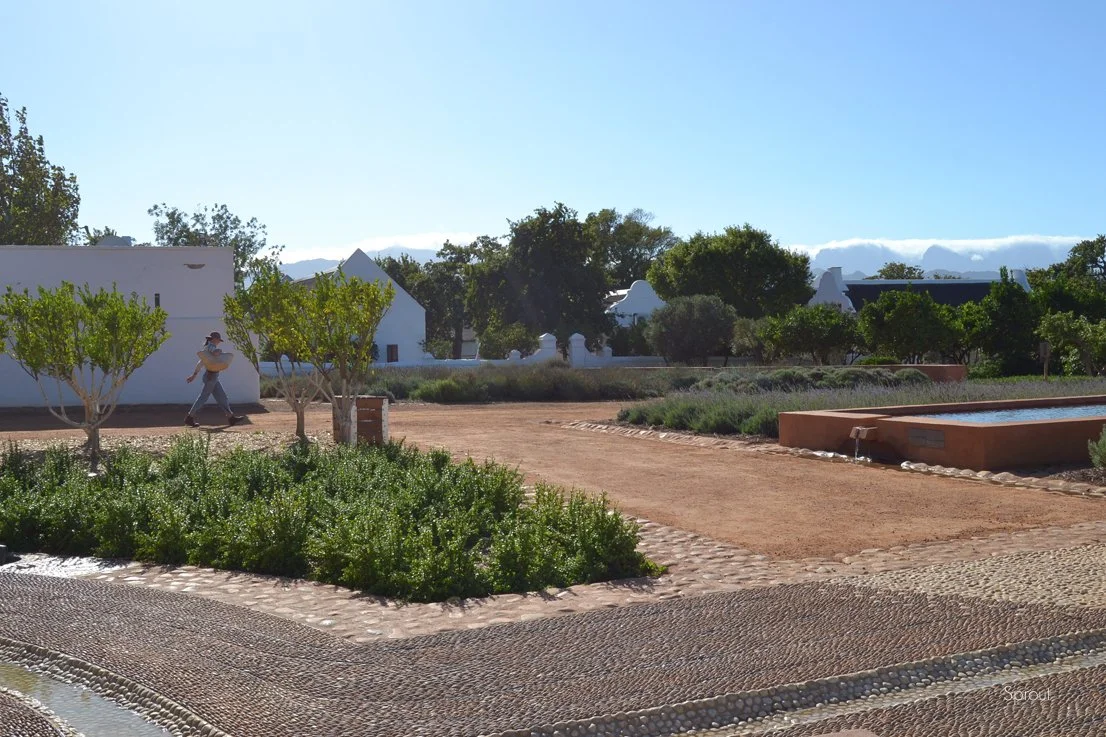
 The garden was designed by French architect Patrice Taravella and based on the formal layout of the historic Company Gardens in Cape Town. Those gardens were originally built by Jan van Riebeek to provide food for the ships that stopped over on their way to India. Hence, there is a strong focus on fruit trees and edible planting and the gardens are continuously expanding to include cultivars that were thought to be lost. The farm not only produces wine but also fruit, olives and vegetables. The food that is grown on the farm is also used by the two restaurants on site who adapt their menus seasonally to accommodate what is available from the garden.

I listened to a webinar given by Ernst van Jaarsveld before my latest visit (see link to video below). Ernst van Jaarsveld is a renowned botanist who has authored several books, discovered several new species and contributed extensively to the botanical realm. He worked for SANBI (mostly at Kirstenbosch Botanical Gardens) for 41 years and has now worked for Babylonstoren for the past 6 years. He complimented the owners Koos and Karen Bekker and explains how they want to create a destination that not only celebrates the history of the Cape but also a place that celebrates the creation of the vernacular specific to this region. Language and words are important (the name Babylonstoren references the story of the Tower of Babel), and one can find several references to words, poetry and language throughout the gardens.

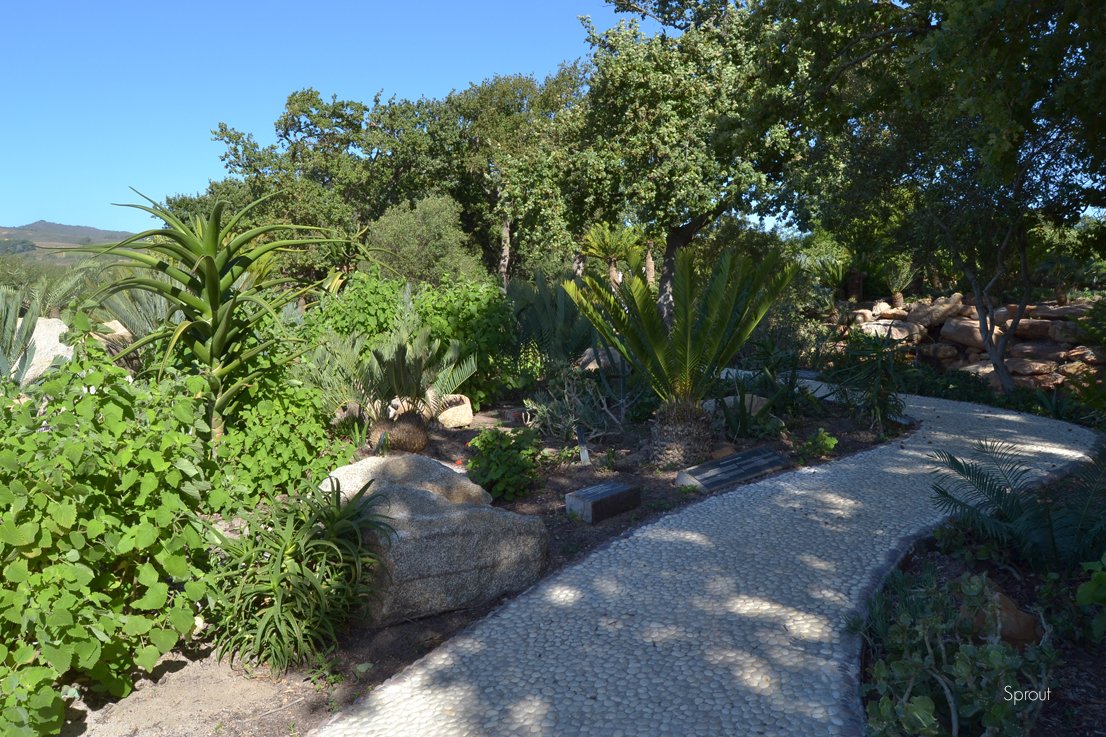
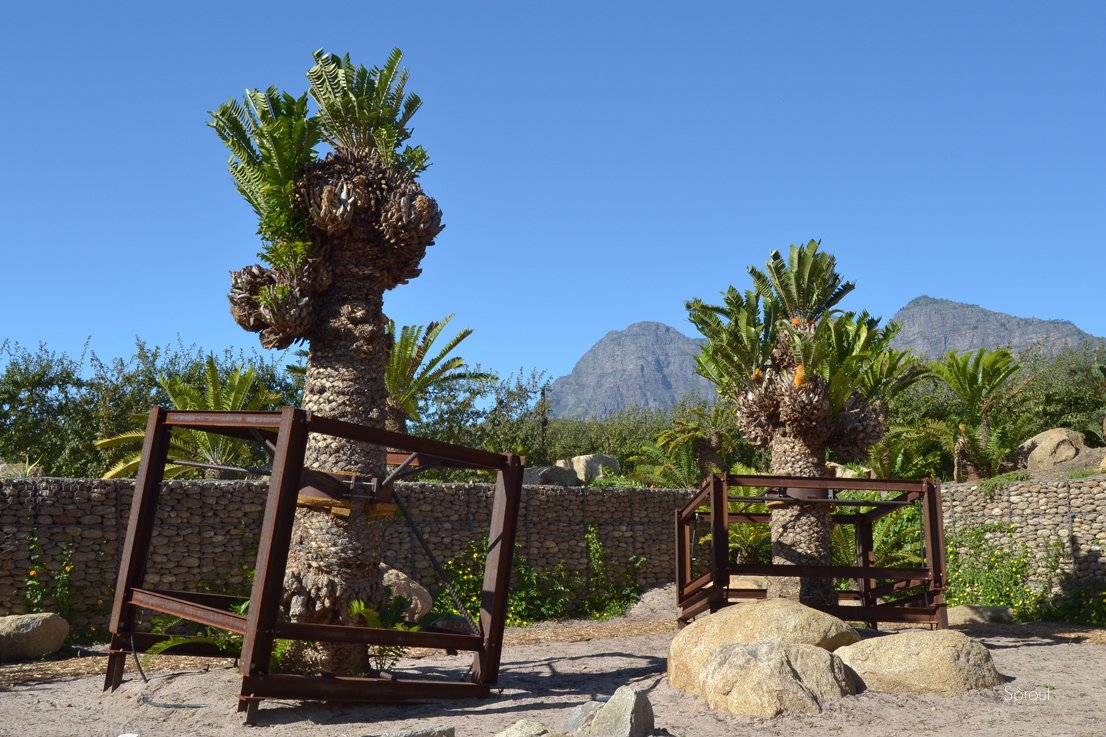
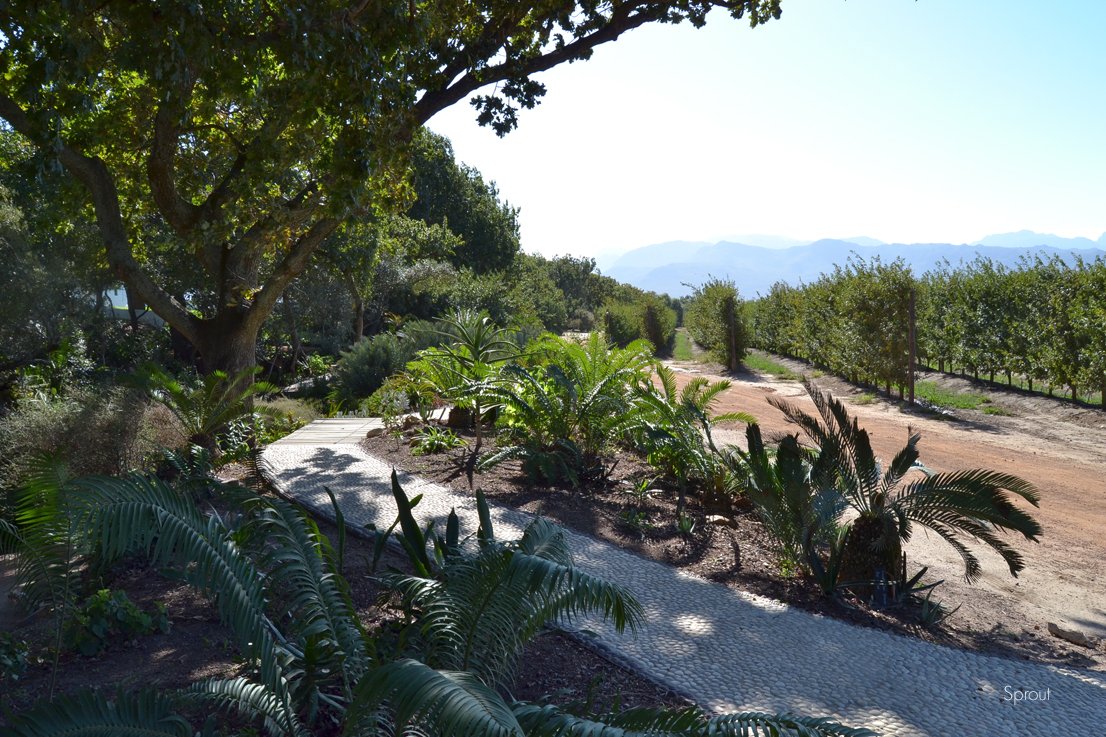
Ernst outlines several of the latest projects they have undertaken over the past few years including: the new cycad garden, the welwitschia garden, the spice room and the wine museum. They are continuously adding to their gardens and there are plans to expand by purchasing neighbouring land.

Succulent House with all Pots hand made by the late artist Ronnie van der Walt

 Ernst explained the detail that went into designing and implementing the creation of the Welwitschia Garden. These plants are endemic to Namibia where there is almost no water and very high temperatures. Heat pipes were laid below a bed of imported red Kalahari sand and the plants were protected from rain. Petrified wood was imported as well as unique and sculptural rocks.

Welwitschia Garden

A special biome garden has been introduced that showcases the beauty and diversity of South Africa’s botanical treasures. There is also a medicinal garden honouring the plant knowledge used by the San. There are many layers to this garden - it not only celebrates history and heritage but encourages education and conservation of the beauty, botany and significance of the vernacular we know as South Africa.

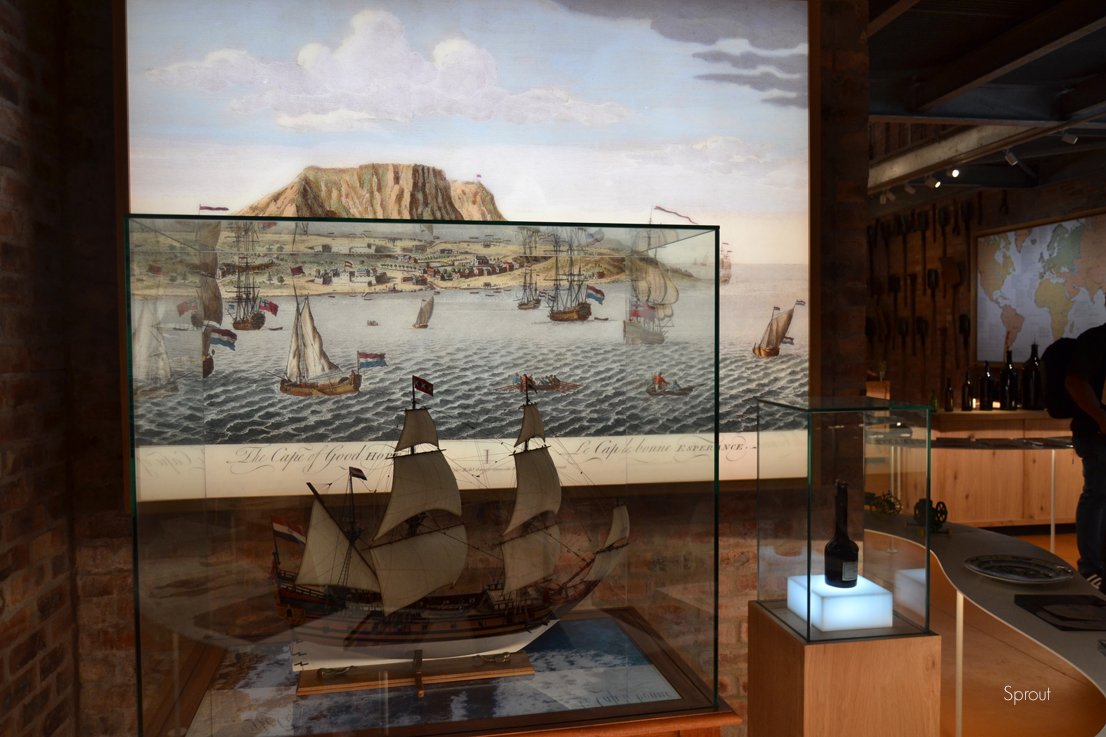
Wine Museum

I was particularly impressed by the new wine museum which feels more like an art gallery than a museum. It details the origin, cultivation and culture of the history of wine and how this has changed over time. One wall has hundreds of different wine openers on display. A visual feast and authentic experience.

 Look out for specialist tours such as garden tours or birding excursions held on a regular basis. A small entry fee is payable for day visitors or look into the annual pass if you plan to visit regularly.

www.babylonstoren.com

If there is one garden you can visit in South Africa then this should be it. ~ G.S
Benvie Gardens, Midlands

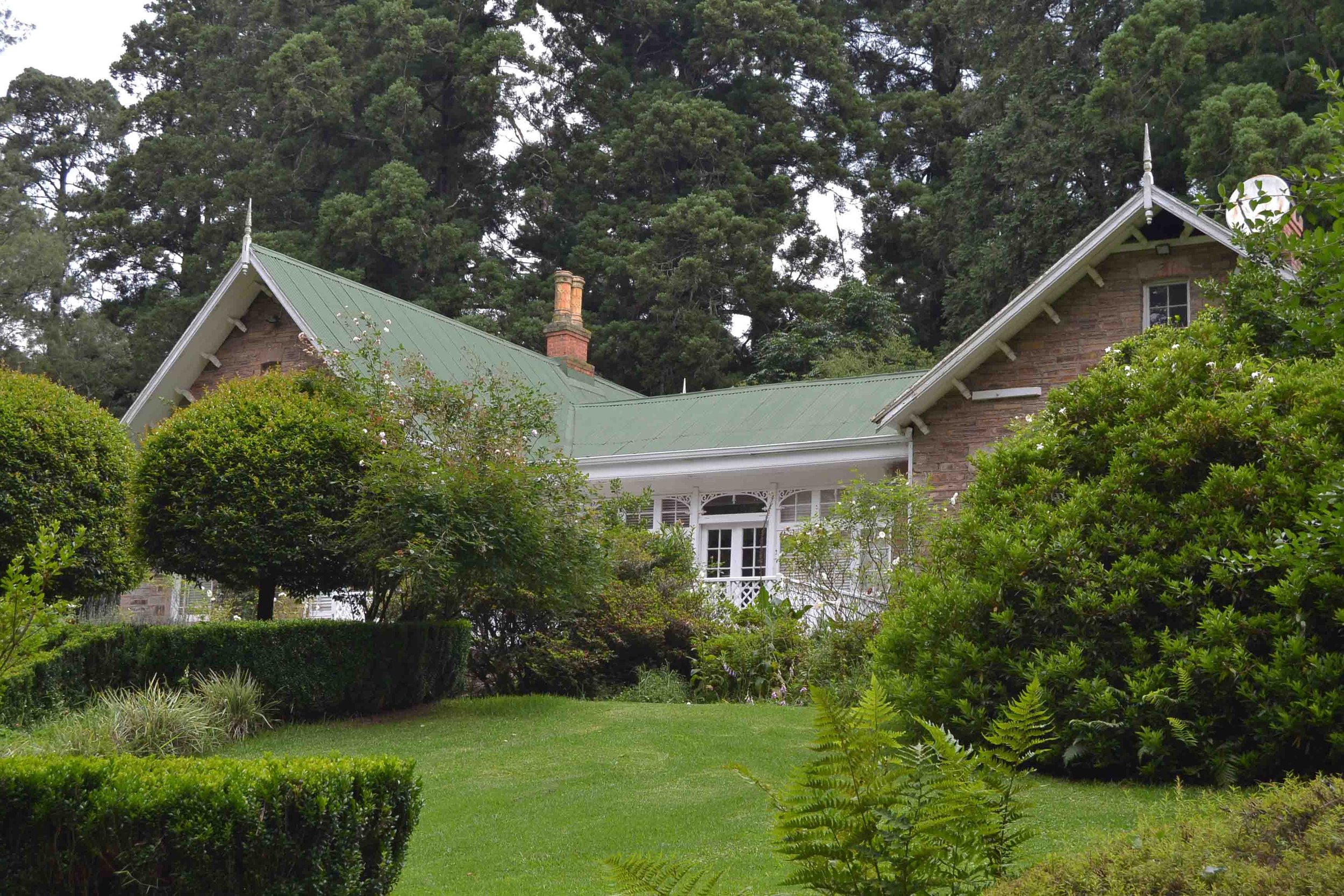
Benvie Gardens

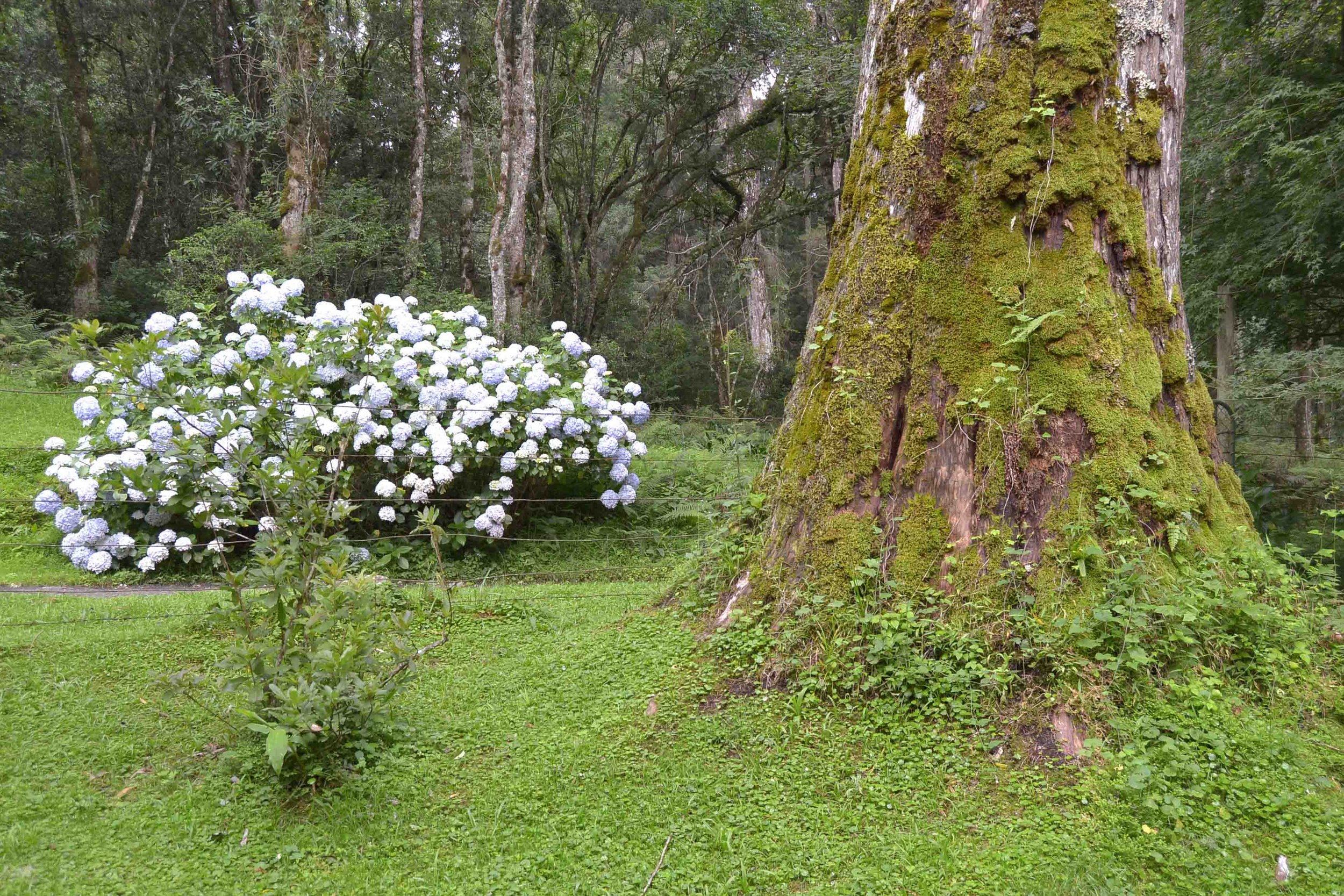
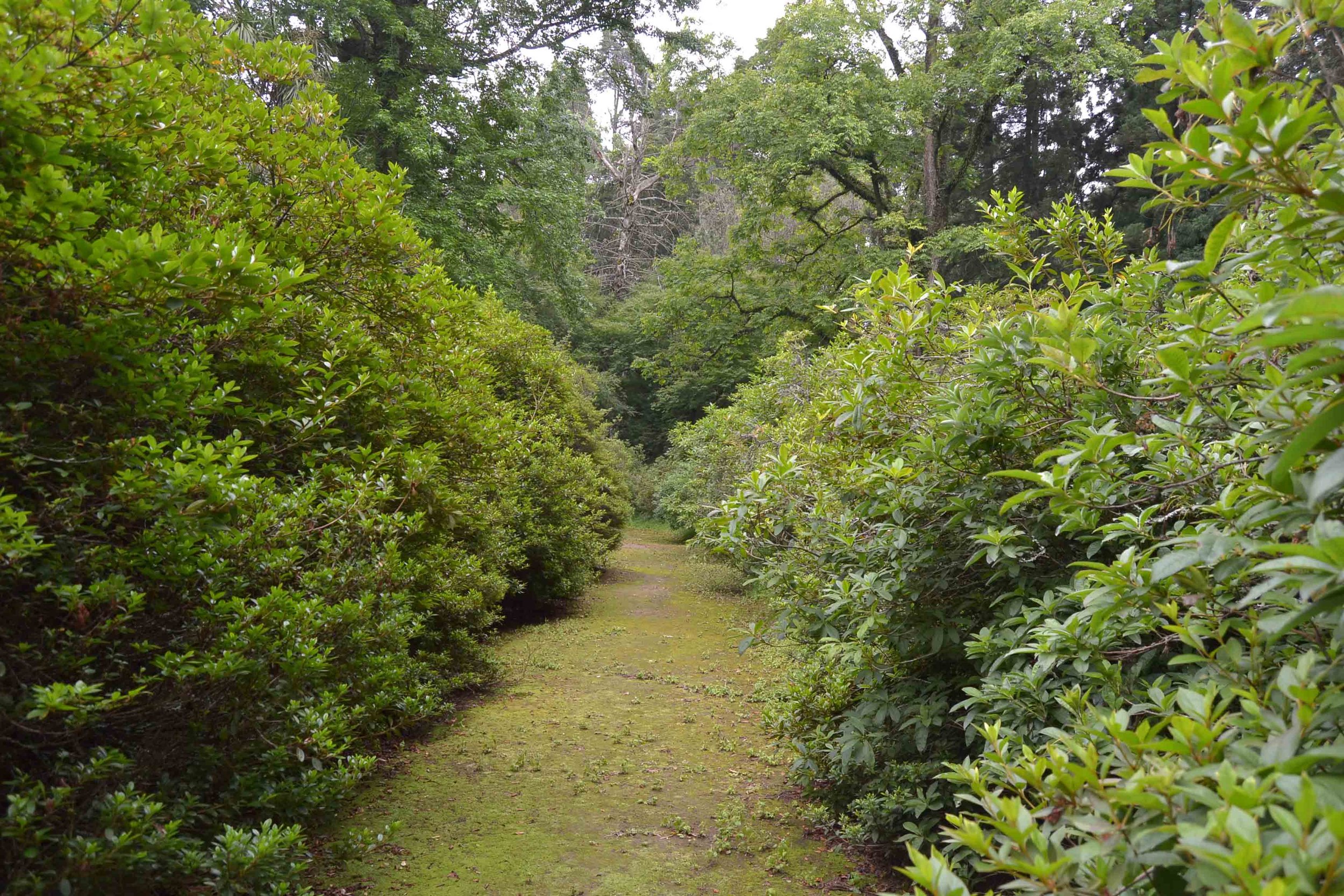
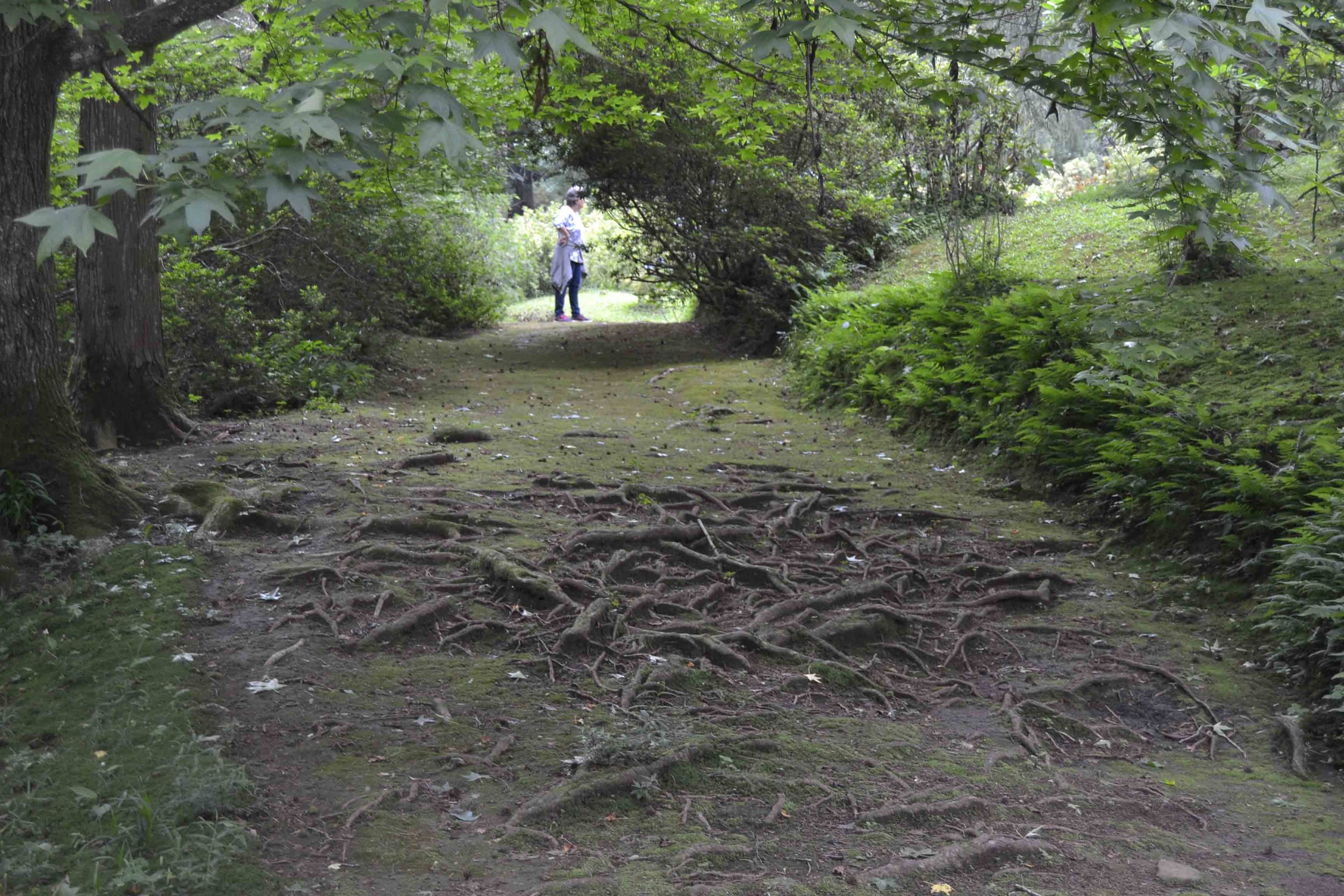
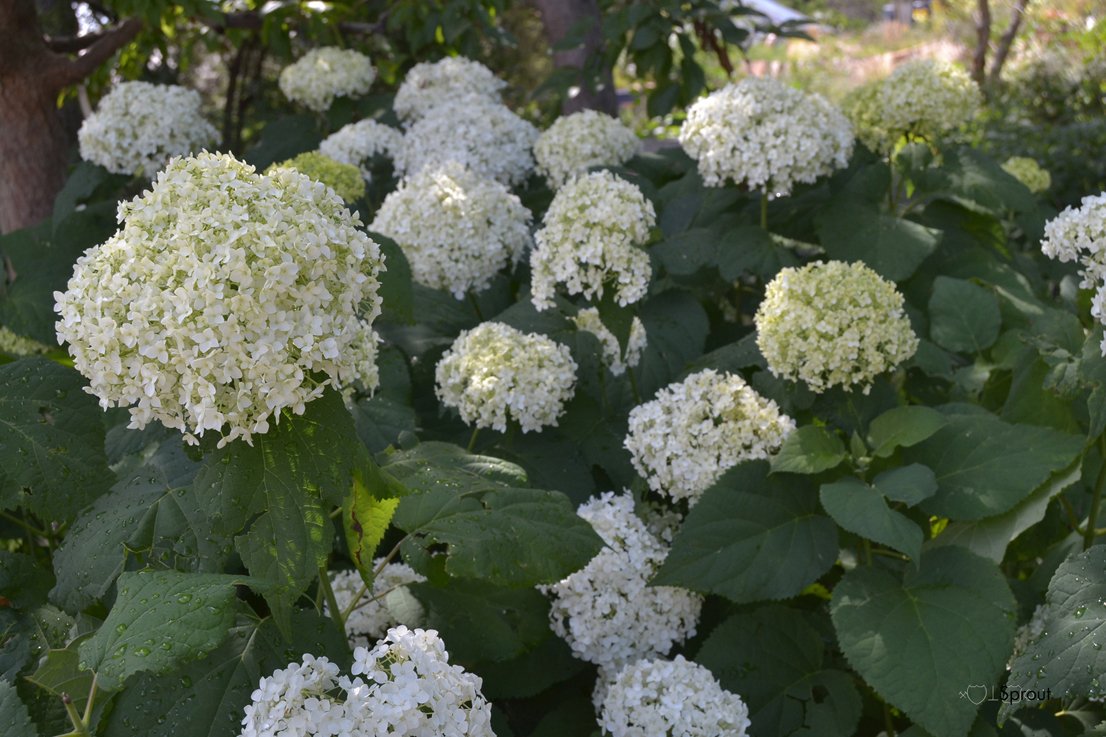
Tucked away along a dirt track in the mountains of Karkloof in the Midlands is a magical forest filled  with flowers and birdsong. The trees reach up to the sky and you feel as if you are transported to another world. It is a garden flowing with Azaleas, Hydrangeas, Camellias and other shade loving plants and the circular walk around its perimeter encourages you to come up close to these botanical beauties.

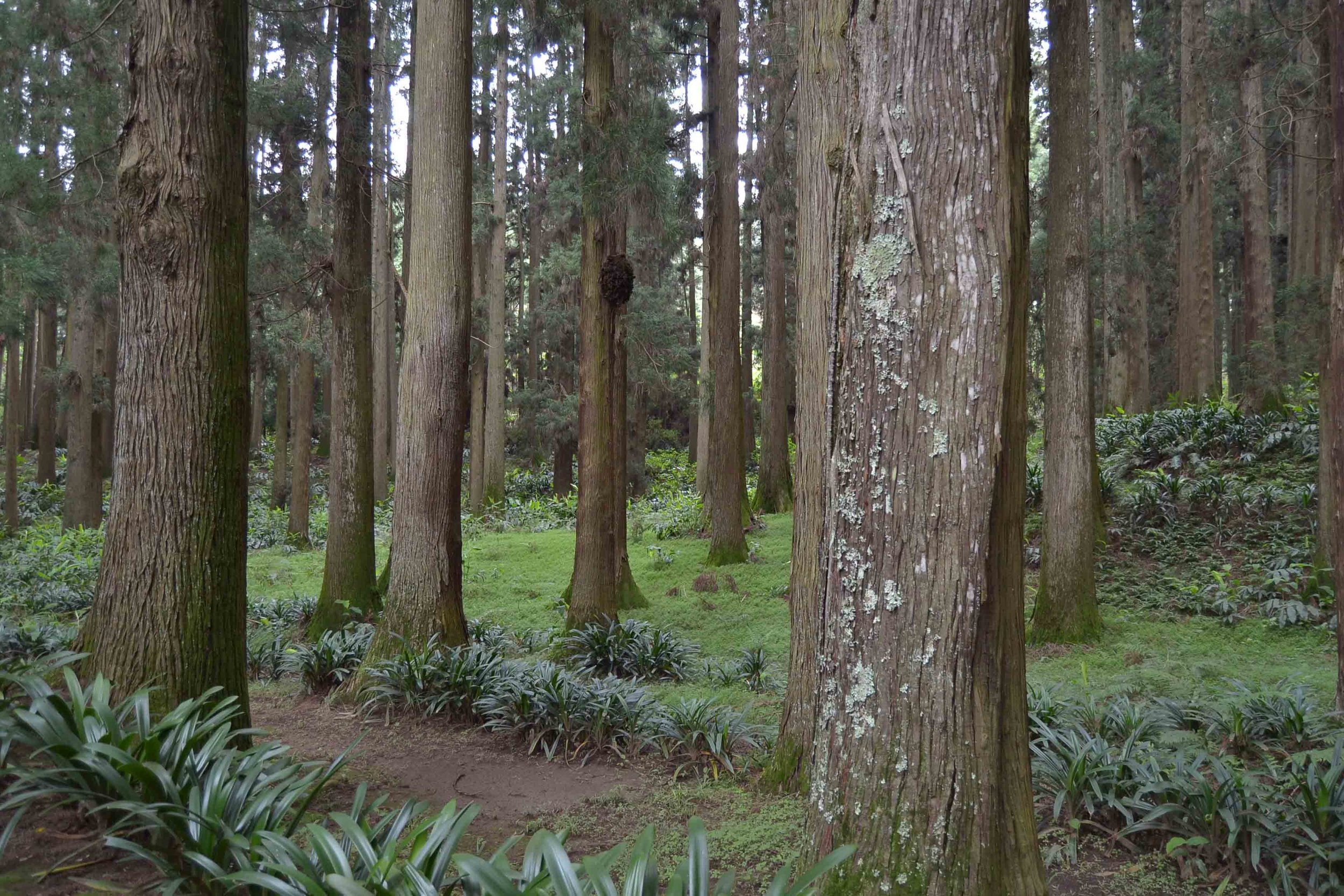
Trees

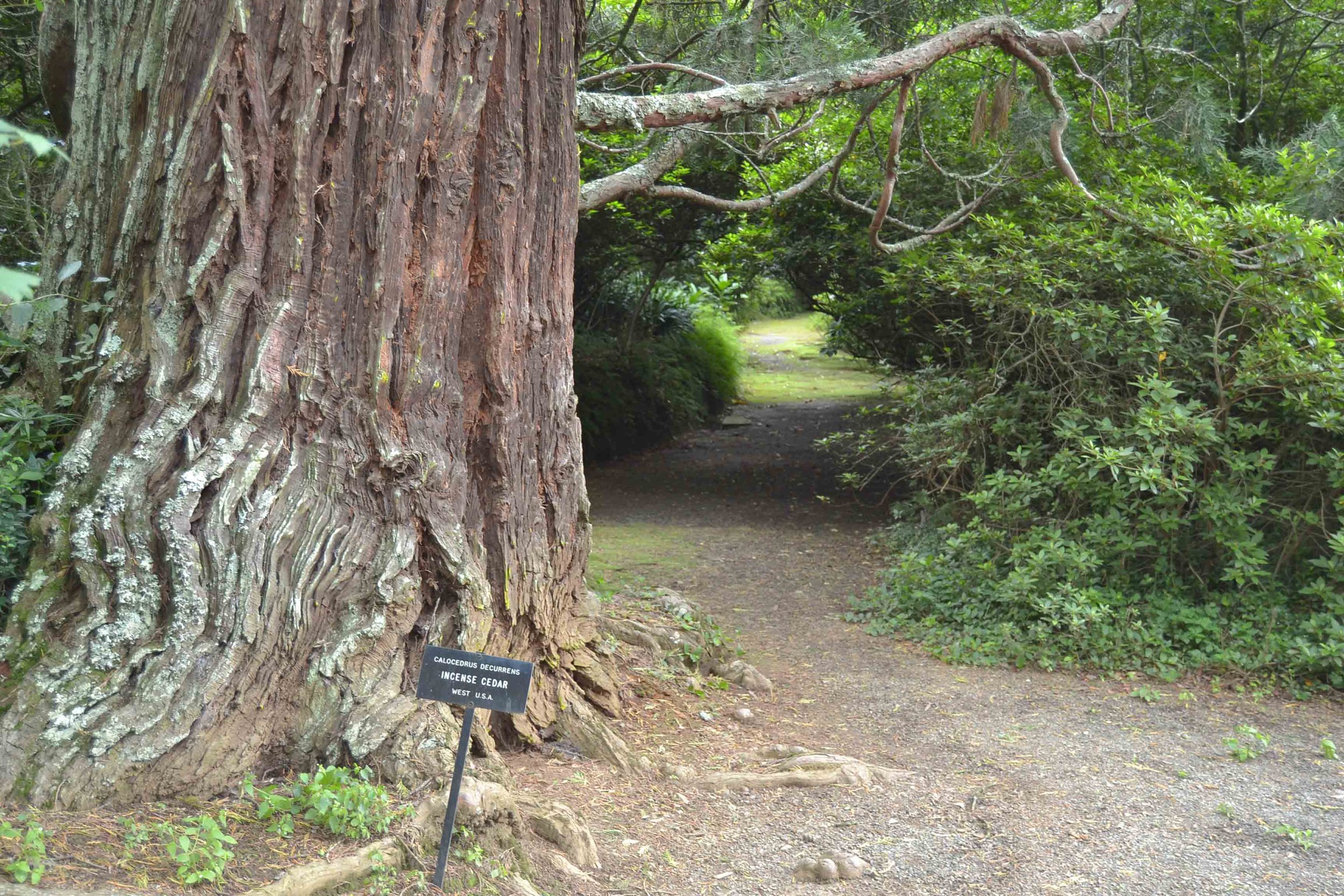
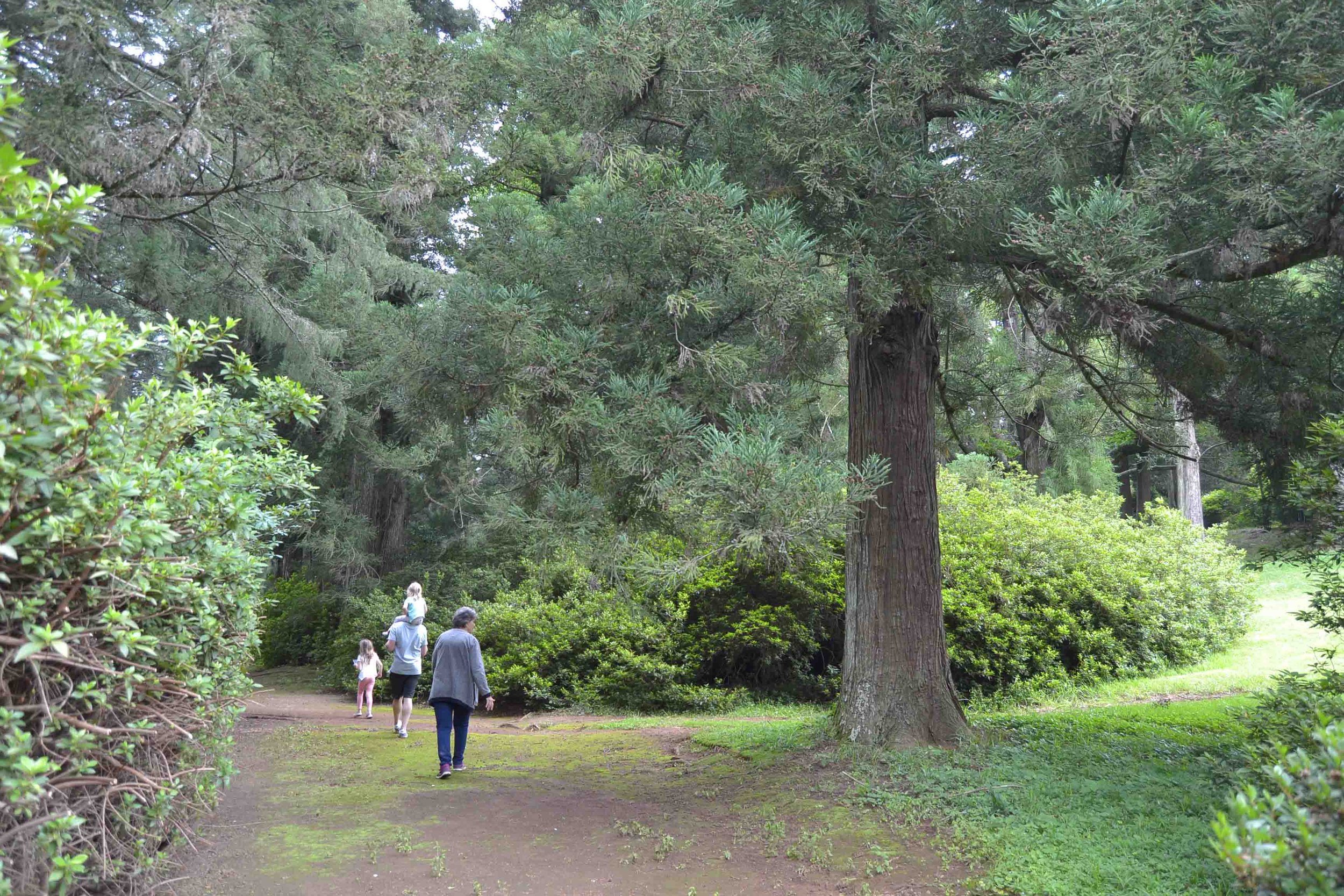
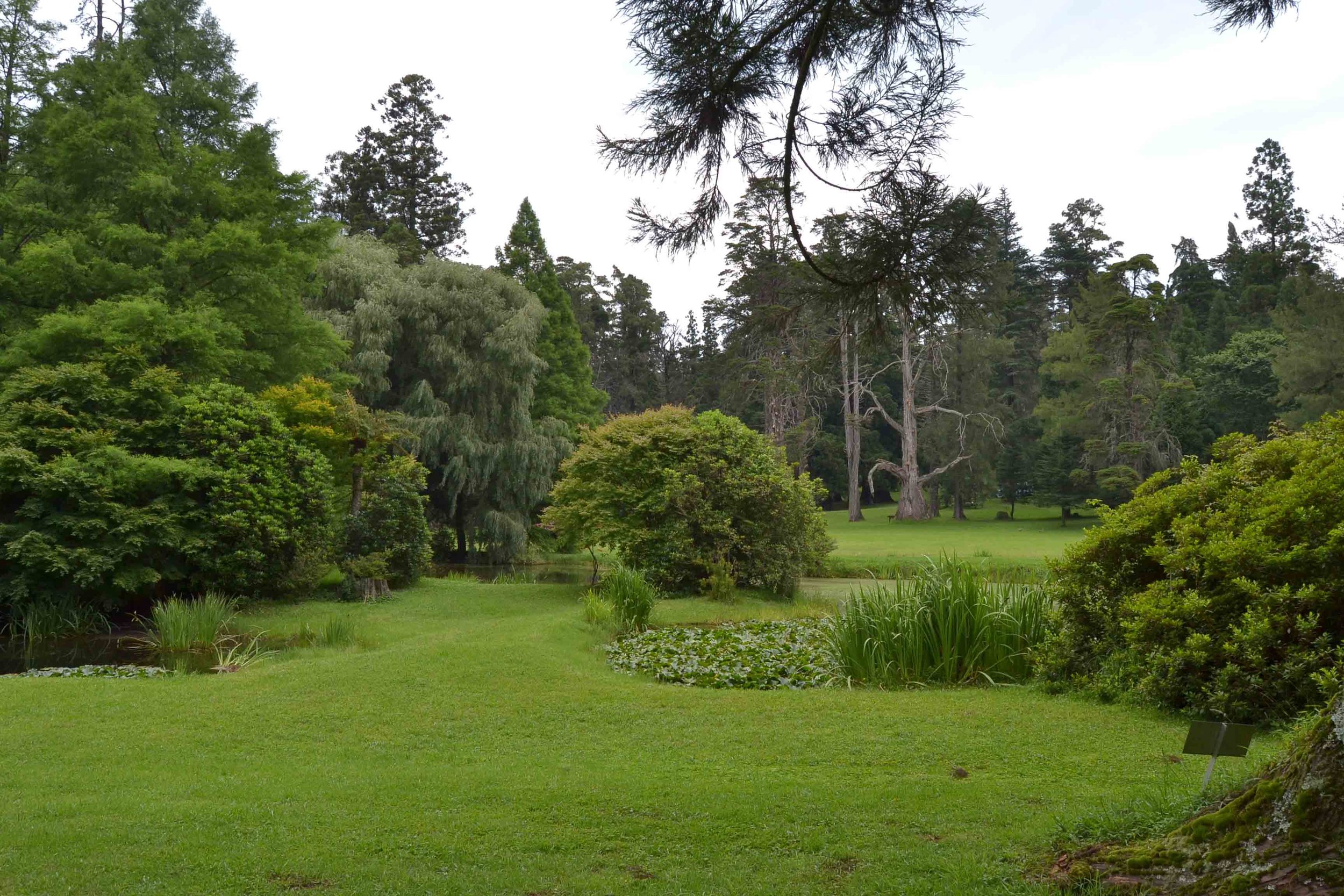
The garden is a generous 31 hectares in size and consists of a wide selection of species and impressive trees that make you feel very small because of their size and stature. If you contemplate the life of a tree and how stoic, steadfast and sure it stands for so many years (some of these trees are over a hundred years old) it makes you consider your life and its brevity. There is something very contemplative about spending time around these majestic monuments.

History

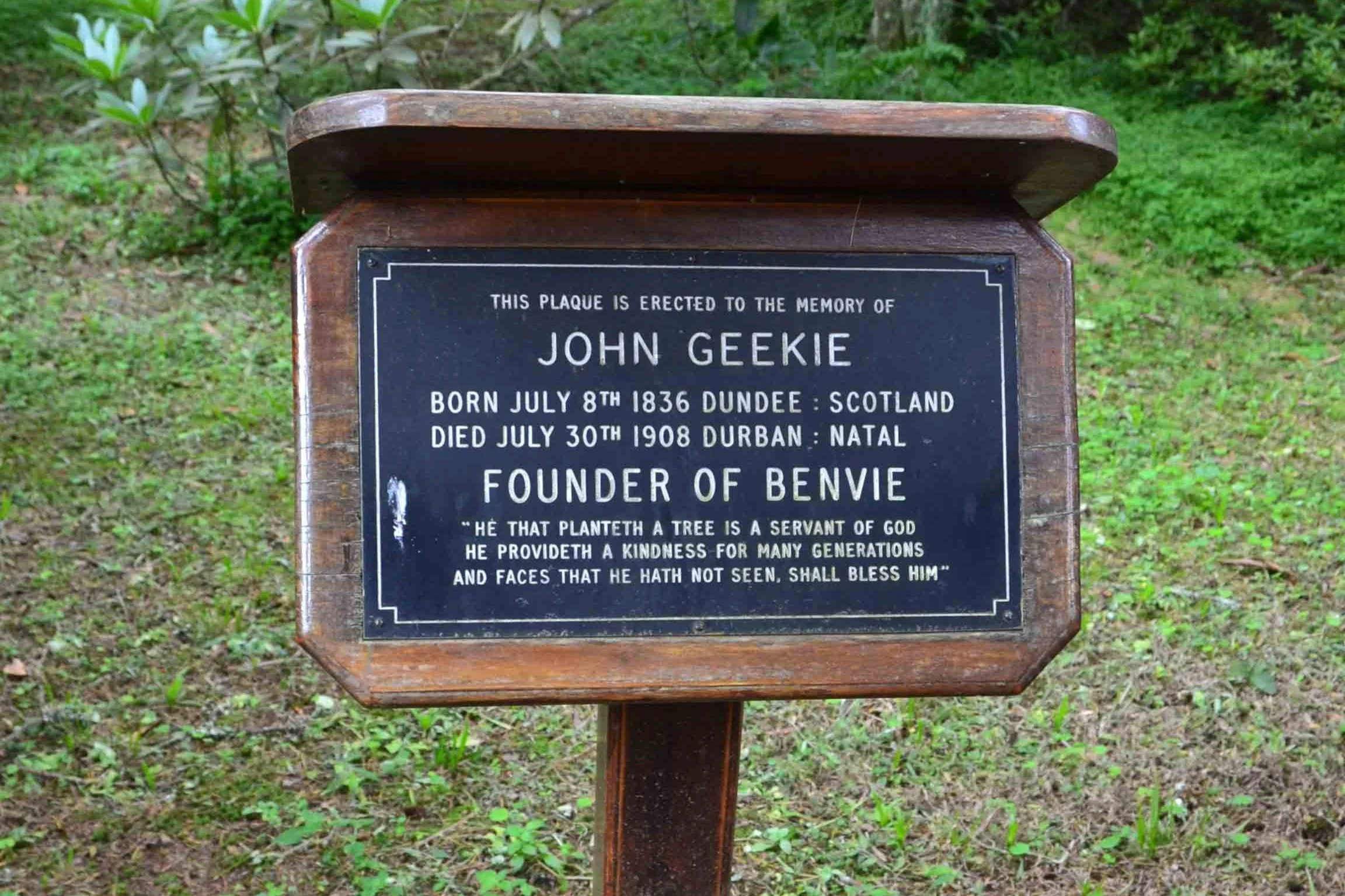
The founder John Geekie (1836- 1908) came from Dundee Scotland and settled in Pietermartizburg in 1860. He because a successful businessman and was able to realise his dream of recreating his garden in Scotland by purchasing the farm “Nooitgedacht”. He imported seeds, seedlings and plants from around the world. The imported stock travelled by boat to Durban Harbour and was then taken by rail to Merrivale before finally being driven by ox wagon up to Benvie.

Seeds and seedlings were imported from Howdens & Co in Inverness, Scotland while further seedlings of Conifer trees, Fruit trees and Hydrangeas came from Berkman’s Nursery in Georgia, USA. He received the nucleus stock of Azaleas, Camellias and Rhododendrons from the Botanical Gardens in Durban. During this time he requested the help of his relative Bill Marriott, who had worked at Kew Gardens, to assist him with the garden layout and planning. He began planting the garden around 1889 and it took him 6 years to establish. All trees were planted to the required distance apart to enable them to grow to their full capacity.

Birds

If you are a birdwatcher you may have already heard of this location as it is where the seldom spotted Orange Ground Thrush can be seen. Benvie has the most dense population of the Orange Ground Thrush in South Africa.

Visiting the Garden

The garden is open to the public for certain times of the year and the generous lawns allow for lovely picnics. It is best to call them ahead of the time to check if it is open. An entrance fee is charged (check for latest rates). The Rhododendron come into flower between October and December and this is an especially beautiful time to visit. The Clivias start flowering in the first week of September.

Benvie Gardens

A signboard encased in glass depicts the history of the garden and even shows the receipt for some of the plants purchased. Maintenance is an ongoing process and includes collecting seeds and propagating them from the existing trees in the garden and replanting when older trees are removed. The property is still maintained by the Geekie family with the 6th generation now enjoying their time at Benvie.

This garden is a delight for anyone who appreciates botanical beauty and is definitely something to put on your list of places to visit! ~ G.S.


Contact: John and Jenny Robinson 082 443 3805

Facebook: @BenvieOpenGarden

Directions from the N3 at Howick:

Take either the Midmar Dam or Tweedie turnoff. Both these roads lead to Howick. Travel along Main Street through Howick until you reach the Rietvlei/Karkloof Road. Continue on tar until road becomes gravel. Your next landmark will be the Mbona gate on your right. Carry straight on as you wind up the hill. Look for the 32 km stone. Then turn right onto the New Hanover/York Road which is signposted. Travel downhill for 3 kilometres. Turn left onto District Road 583. Benvie is signposted at this point and the home is 200m away.

Kruger National Park (Southern) Overview

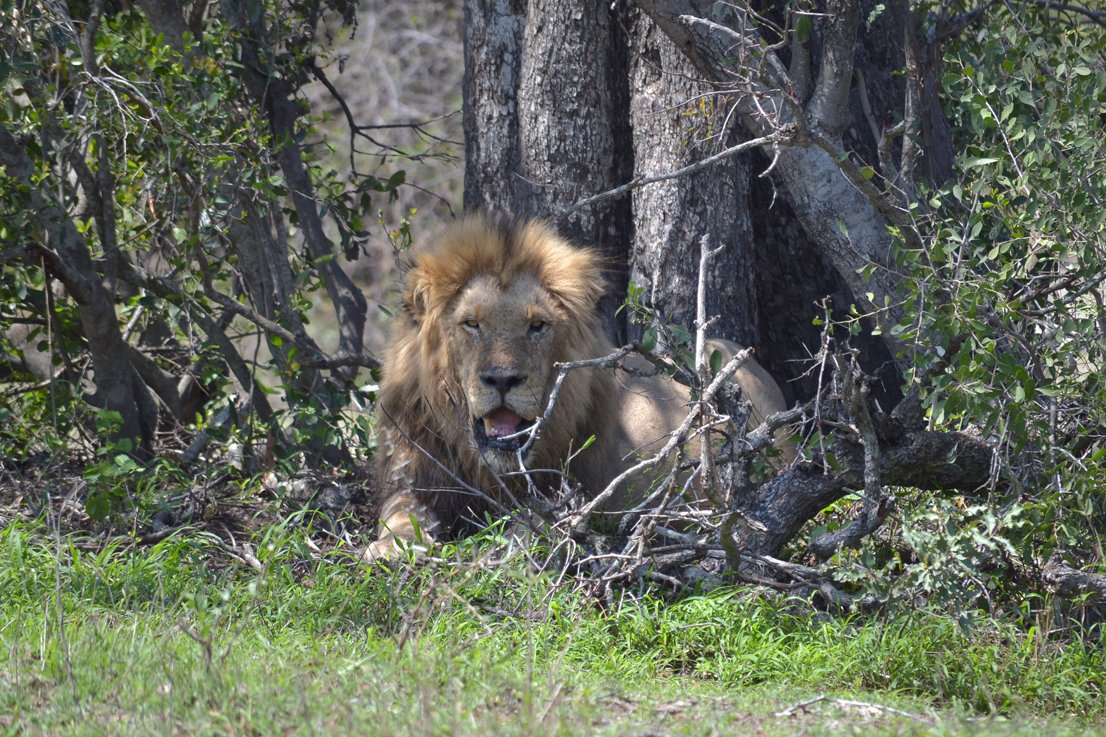
Lion in Kruger Park

King of the Beasts - always a highlight to see a Lion in the Kruger Park

Hundreds, if not thousands, of books, guides and references have been written about this incredible place and so I was wondering if I should even write a blog about it? I realised that I like to write and share about places (gardens, landscapes, parks, nature experiences) that inspire me whether these are well known or not. So even though you may know the Kruger Park very well perhaps this post will inspire you to visit it again in the near future.

Quick Historical Fact

The park was first proclaimed in 1898 as the Sabie Game Reserve by the then president of the Transvaal Republic, Paul Kruger. He first proposed the need to protect the animals of the Lowveld in 1884, but his revolutionary vision took another 12 years to be realised when the area between the Sabie and Crocodile Rivers was set aside for restricted hunting. On 31 May 1926 the National Parks Act was proclaimed and with it the merging of the Sabie and Shingwedzi Game Reserves into the Kruger National Park.
The first motorists entered the park in 1927 for a fee of one pound. (https://www.sanparks.org/parks/kruger/tourism/history.php)

The Place to Go for Nature Lovers

Visiting the Kruger Park is a memorable experience and especially so for nature lovers - the sounds, smells, birds, trees and wildlife are what many South Africans love about the Bush . The Kruger is a special place to visit as each time can be completely different depending on what time of year you visit as well as which parts you go to. It is a very large reserve and with the slow speed limit it can take hours of travelling between camps. Talk to people who have visited before get good tips and plan accordingly. Don’t forget your Mosquito repellent, Binocs, Birdbook, Camera and the essential Snake-Bite Kit (Cooler box of drinks and snacks).

Southern Kruger, Map where sightings can be shared at most stops in the Park

Restcamps

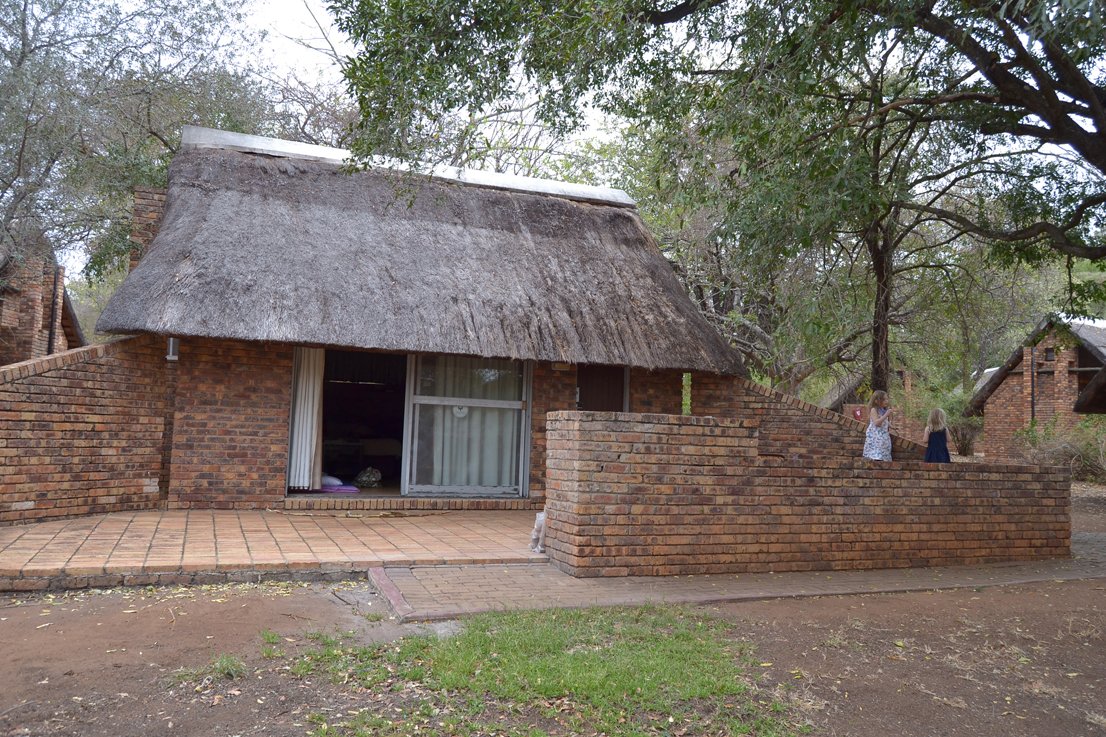
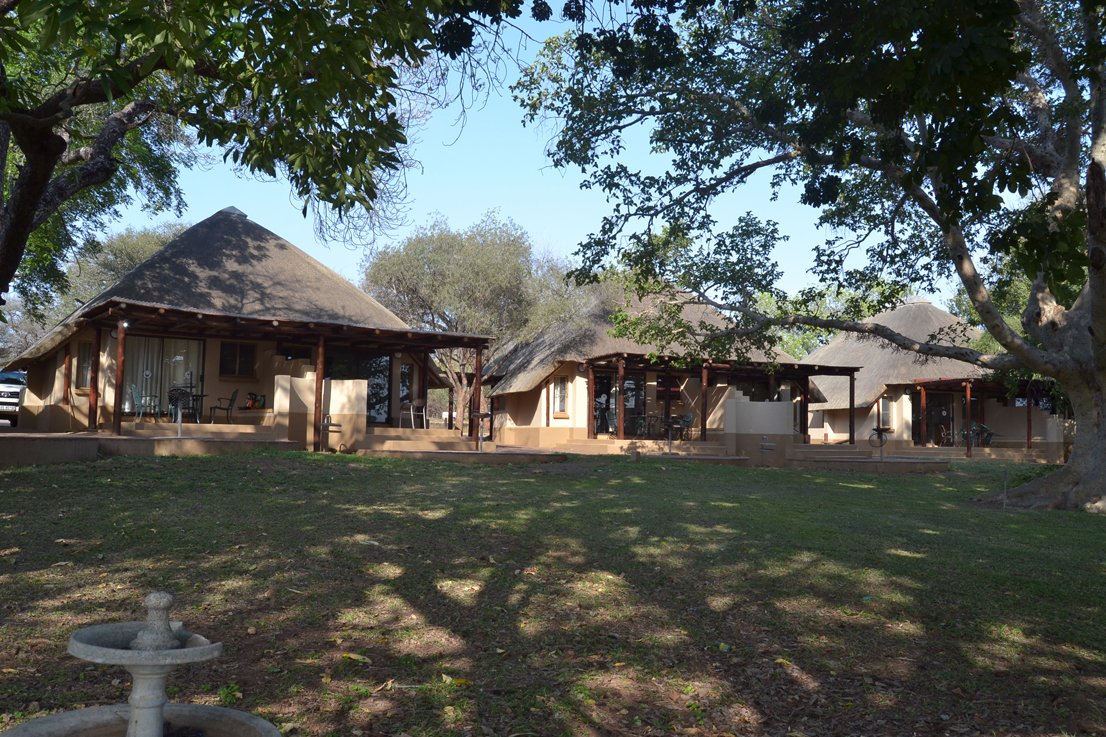
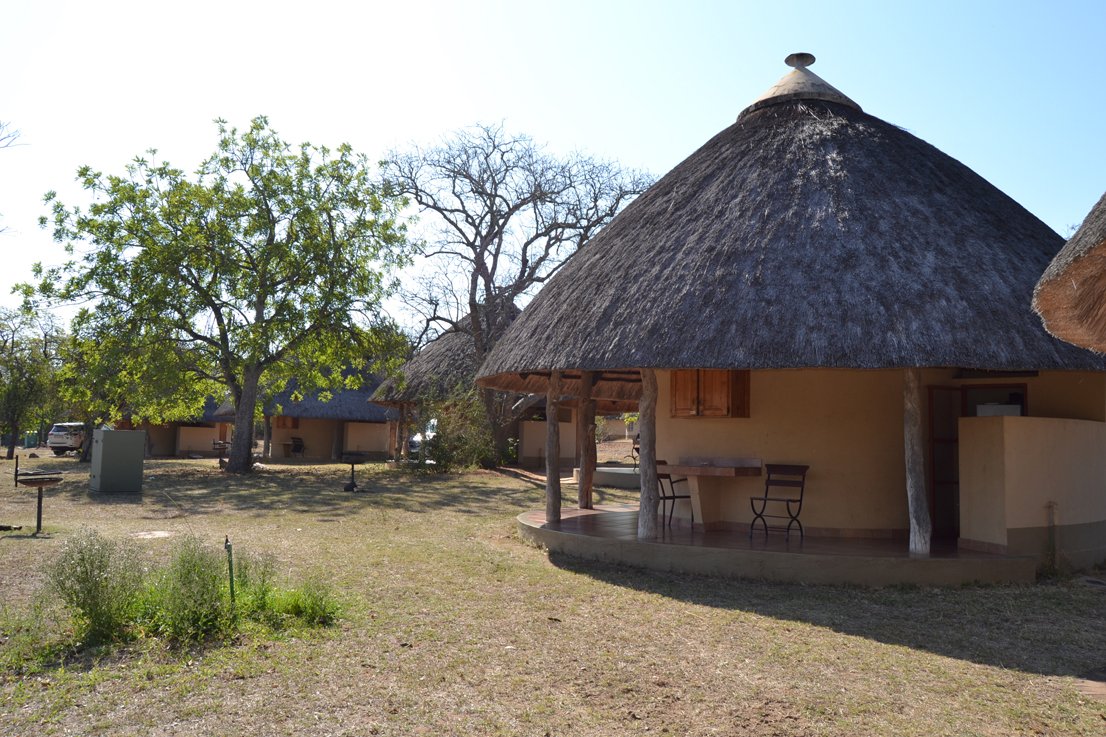
We have stayed at three of the camps in the Southern part of the Kruger Park over the past while and here is a bit more detail about each of them. In most of the camps the accommodation is basic but clean and there are different options to choose from. You can walk around the camps to see birds and small animals and most of the trees have nametags. In all the camps the area for Overnight Guests is normally separated from the area where Day Visitors can access. The pools are reserved for people staying over but the restaurant and shops are open for all.

 Berg en Dal Restcamp

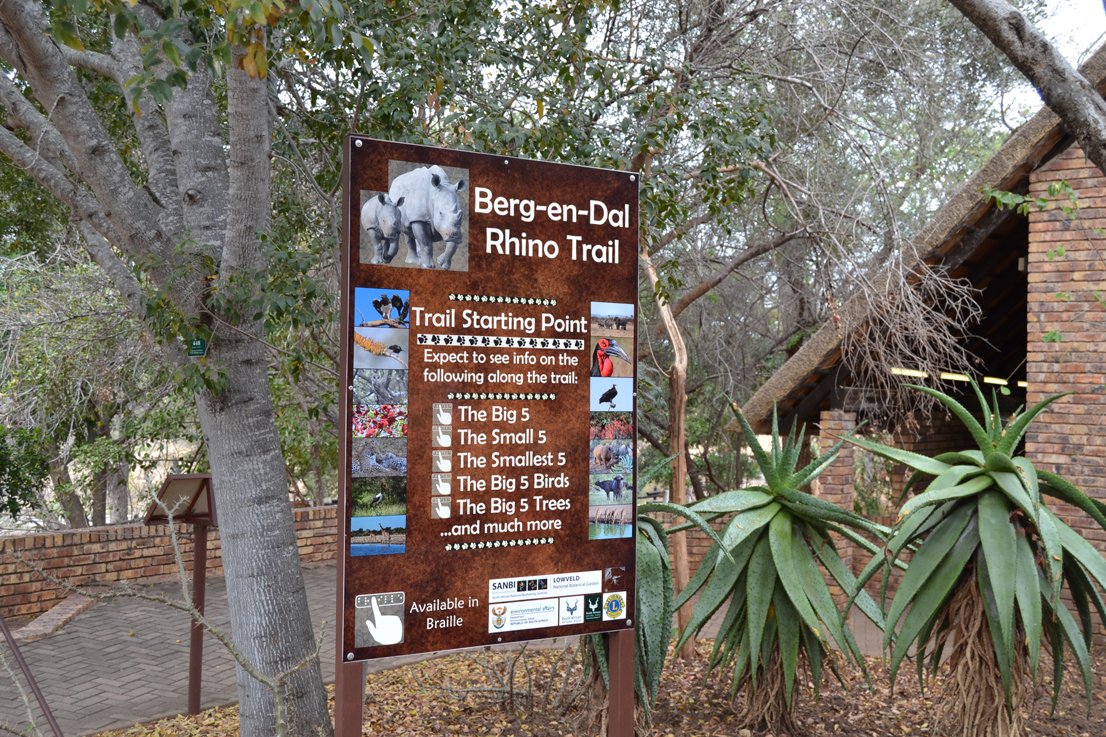
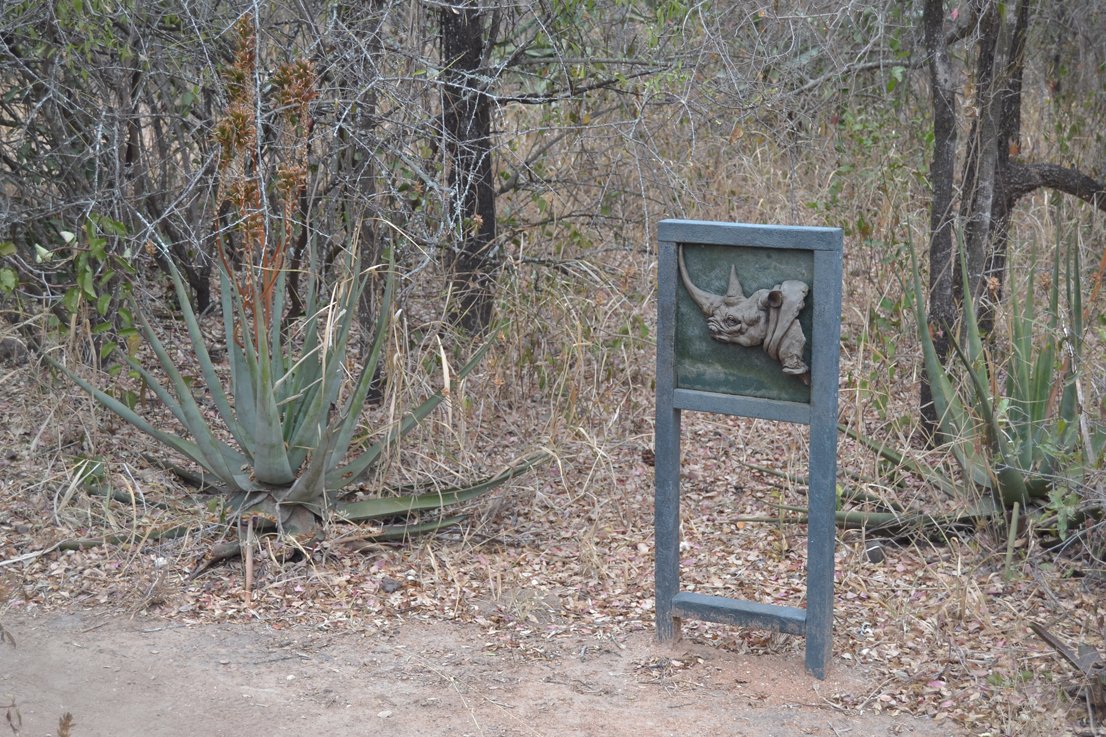
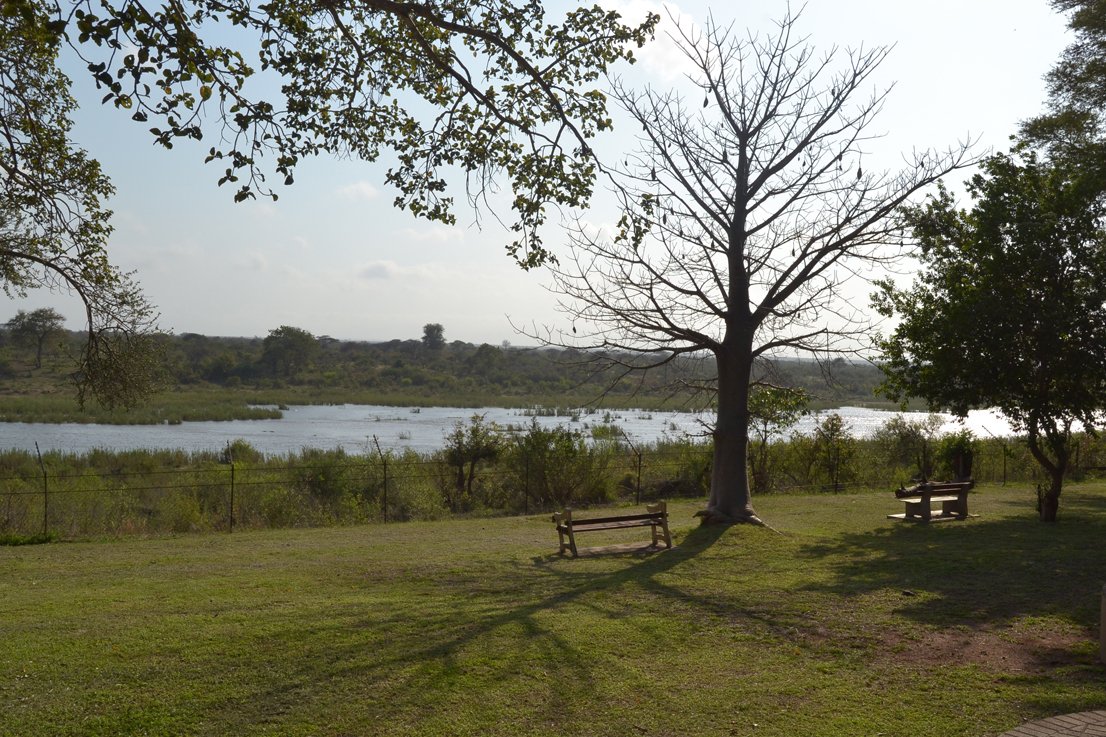
Berg en Dal is the most Southern camp and located very close to the Malelane Gate entrance. A highlight is always stopping on the bridge when entering at Malelane Gate to look down onto the Crocodile River and spot all the birds, crocs and hippos in the waters below. Berg en Dal camp has many beautiful trees and a small museum dedicated to Rhinos. The restaurant overlooks a small dam and there is a walk a short way along the river with braille signage boards. The Rhino walk through the camp is a lovely trail that has information boards and a great way to experience nature while walking safely.

Berg en Dal (Afrikaans for Hill and Valley) is named after the undulating hills in the area

Lower Sabie Restcamp

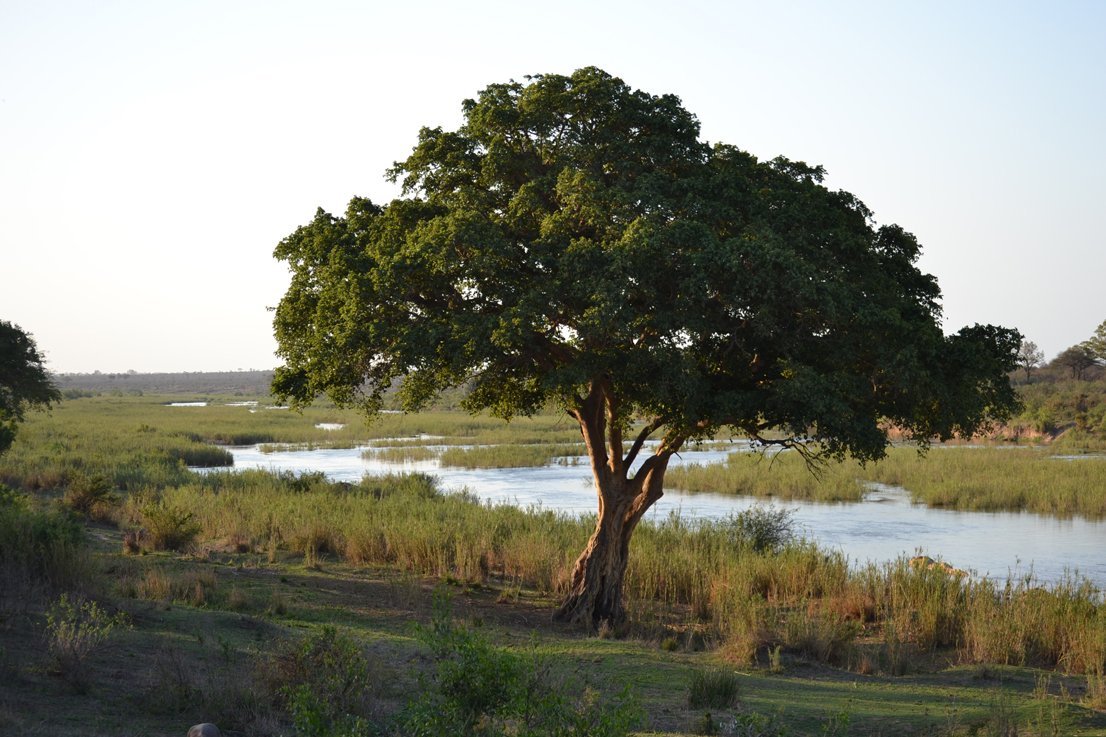
One of the best camps in Kruger in my opinion. This part of the Park is always filled with abundant game as the animals are drawn to the Lower Sabie River that runs adjacent to the camp. There are also magnificent trees to be found along the road that follows the river as well as in the camp. The restaurant at the camp where the shop is located is built out onto a large deck that overlooks the river and it is lovely to sit here and have a drink or ice-cream while game watching the riverbed below. Sunset Dam, just outside the restcamp, is a wonderful dam for seeing game including hippos and crocodiles (and herons surfing on crocodiles!) and there are nice game drive options from the camp.

Pretoriouskop Restcamp

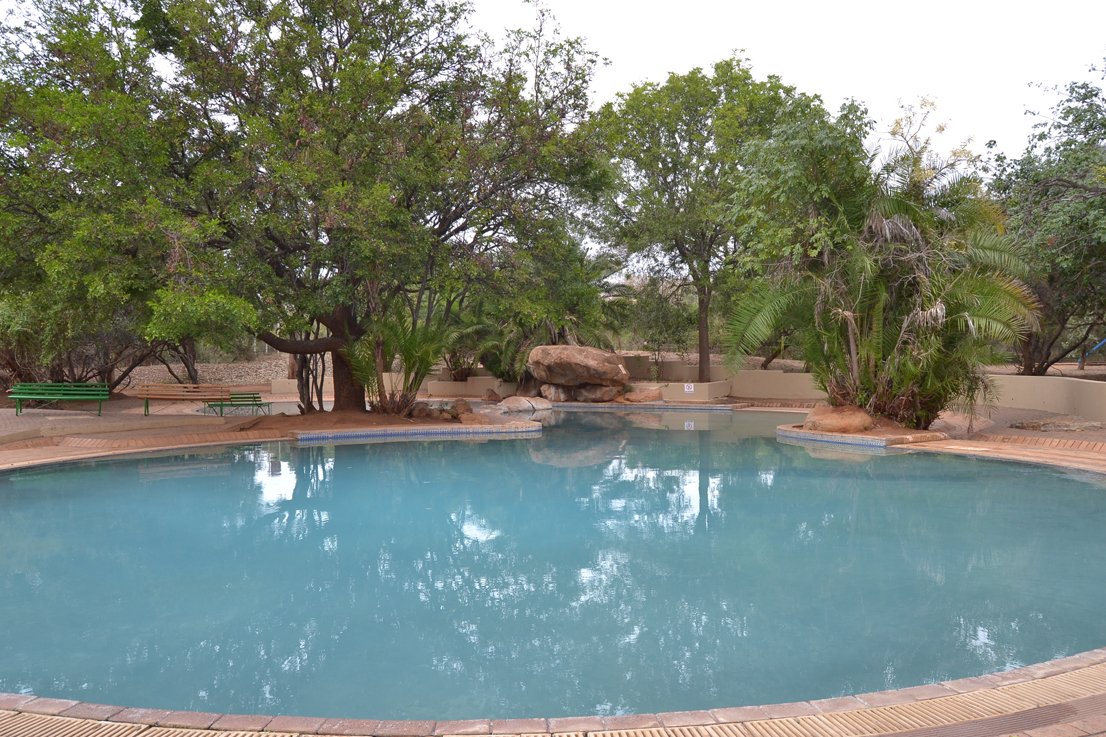
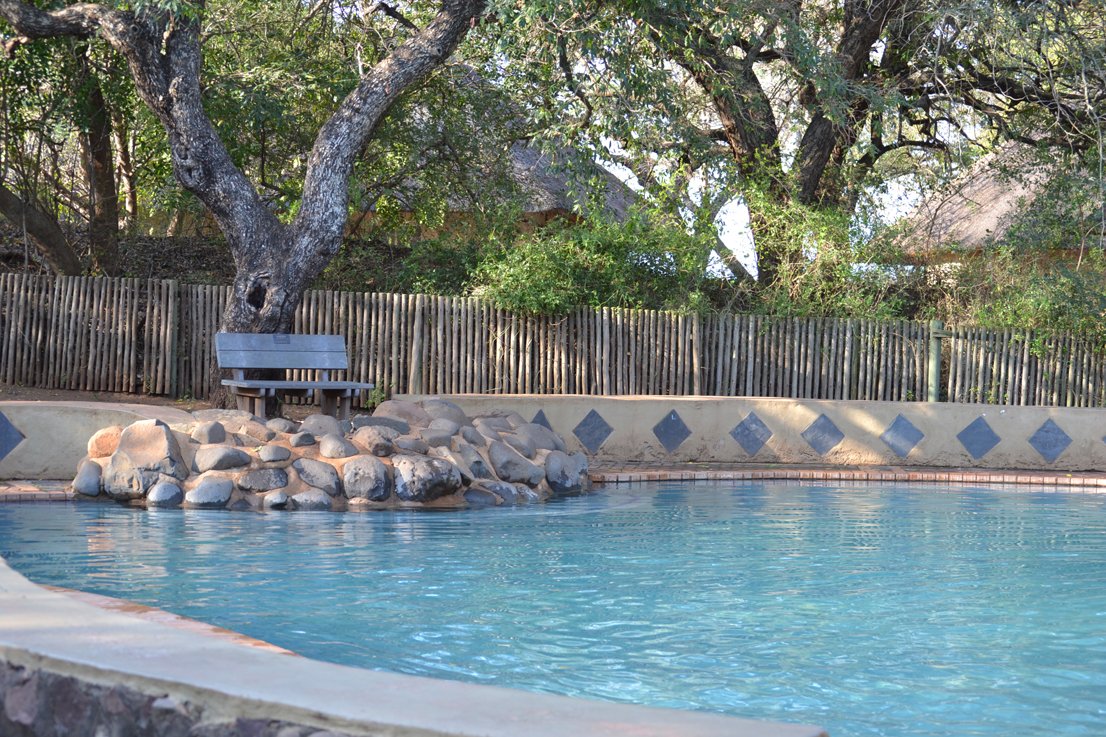
Pretoriuskop is located on the South Western side of the park and is nearest to Numbi Gate. One of the highlights of this camp is the beautiful swimming pool. The pool is built into the rocks and is a great way to cool down from the heat of the Lowveld. There are several routes to take as an afternoon drive from the camp and walking through the camp to see the beautiful trees and birds is also recommended.

Like so many others, I love the experience of visiting the Kruger Park - the animals, the birds, the trees and the closeness to nature. I also want my children to grow up experiencing the beauty of the Bushveld and hope they will appreciate the complexity of plant and animal communities functioning together where every creature is part of a greater system. We don’t go only to see the big 5, we go to see the animals less seen and often the sightings of snakes, tortoises, chameleons and birds have been our most exciting.

Visiting Kruger with Kids

I have been careful to not take my kids while they were too young for fear of malaria. Now that they are old enough where I am comfortable to stay over in the Park I am so excited to share the experience of the Bush with them. Most kids hate the hours of driving but the novelty of going seatbelt-free is one that they love. We normally put a mattress in the boot of the car so they can climb back and forth and read their books when they get bored looking for animals. I keep activity books and loads of snacks ready to keep them entertained. One of the joys of sharing the Kruger with young kids is that every sighting is exciting. We try to limit the amount of time driving and spend more time exploring the restcamp and stopping wherever possible.

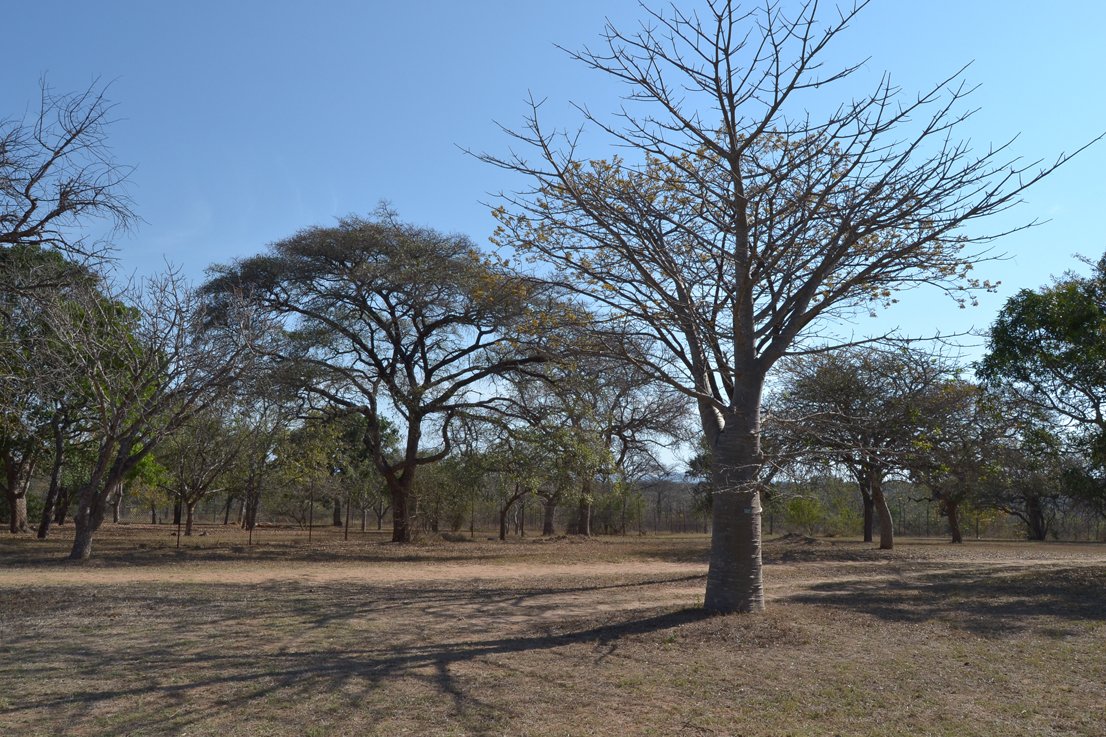
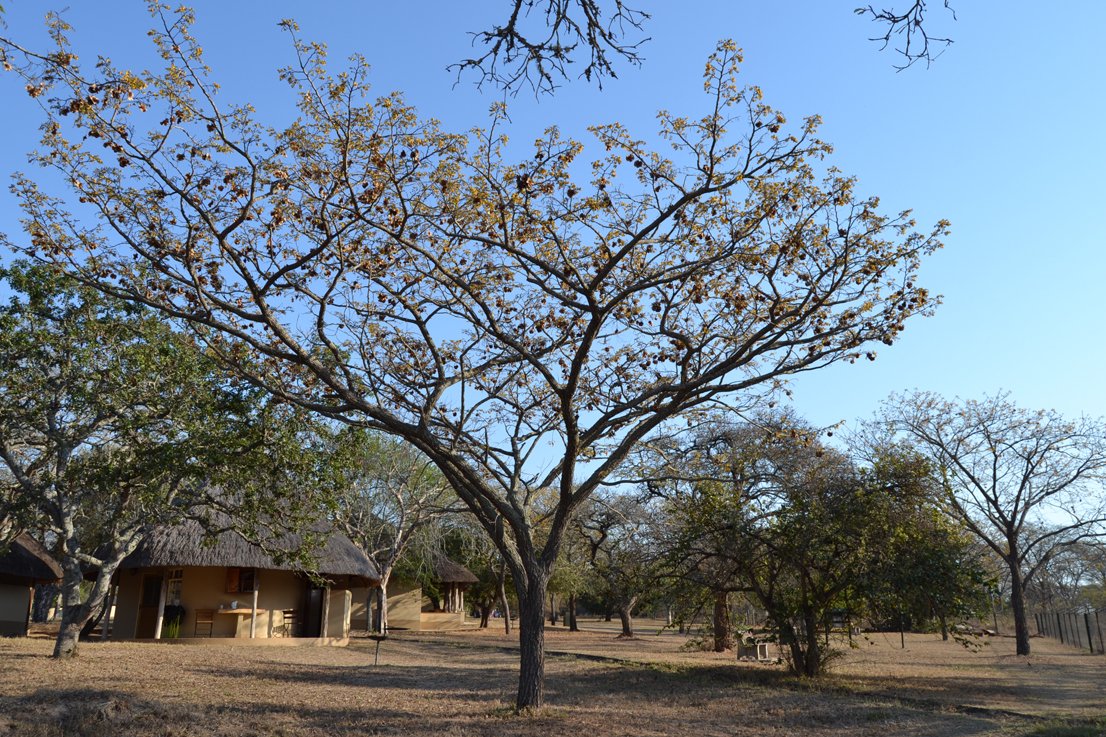
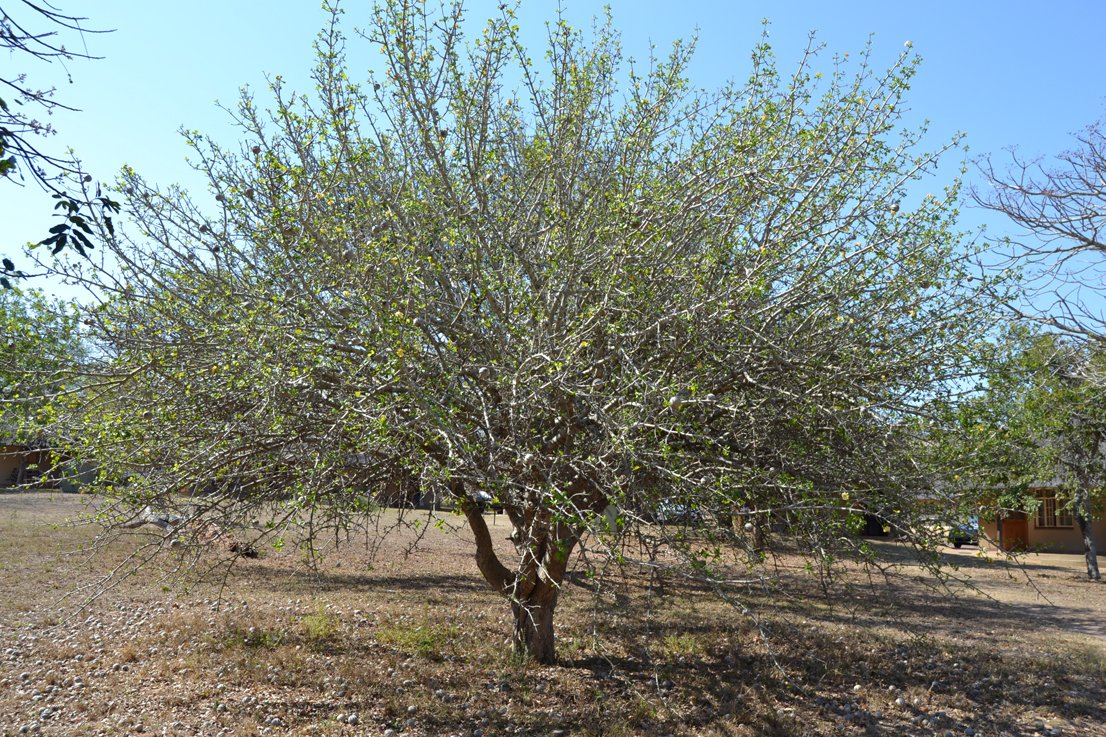
Do you know what my favourite part of visiting the Kruger Park is? The Sunsets.. and the Trees.

Sterculia murex (Lowveld Chestnut)

Sterculia murex (Lowveld Chestnut)

Rhigozum obovatum (Yellow Pomegranate)

What do you love about the Bush or what has been one of your favourite Kruger Park Experiences?

To Book: https://www.sanparks.org/

Bosjes

Bosjes is a truly amazing farm with immense beauty and we spent a lovely morning exploring the gardens and being inspired by the diversity and beauty of the South African landscape.

Bosjes is a privately owned family farm situated in the Breedekloof Valley and surrounded by the picturesque Waaihoek and Slanghoek mountains. It produces olives, wine, grapes, peaches and proteas. The farm has several attractions including Bosjes kombuis, a contemporary restaurant with deli, tea garden and children’s play area as well as luxury accommodation and a Spa.

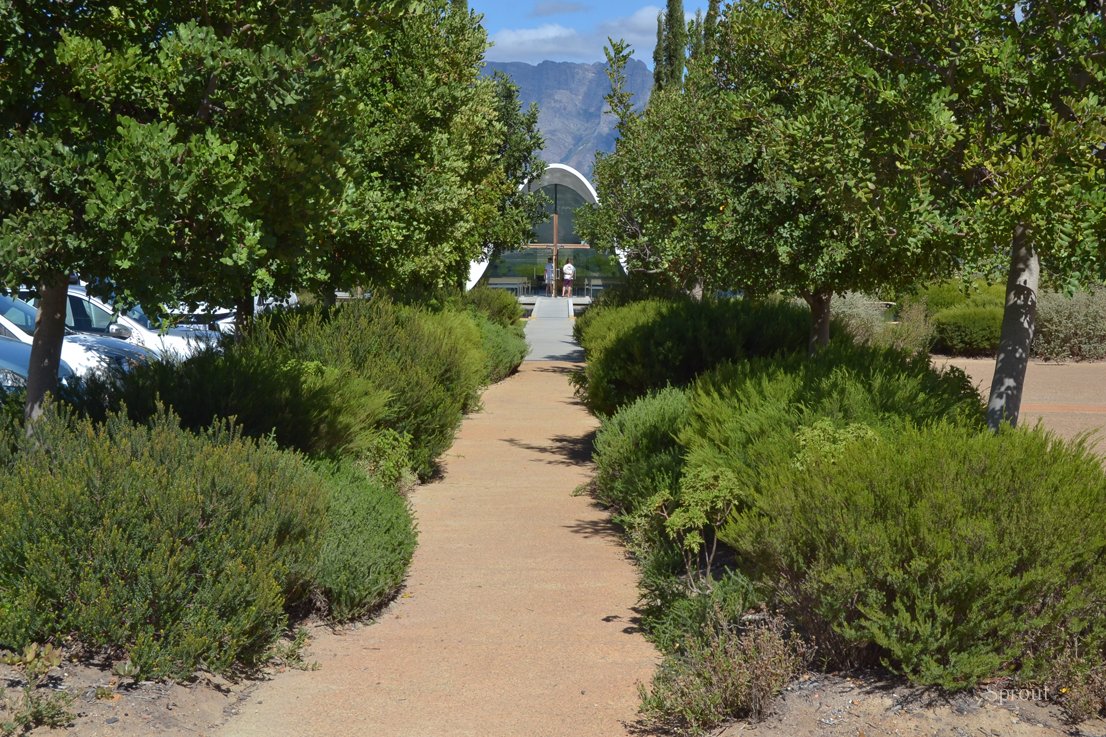
The chapel sits on the main axis of the gardens

The Chapel

The chapel is the focal point of the farm and is a dramatic yet serene icon. The white organic shape of the curving roof floats like a dove with its curving wings merging with the blue flowing hills in the far distance. There is an inscription in the pathway leading to the entrance of the chapel that reads “How precious, O God, is Your constant love! We find protection under the shadow of Your wings” from Psalm 36:7.

The Gardens

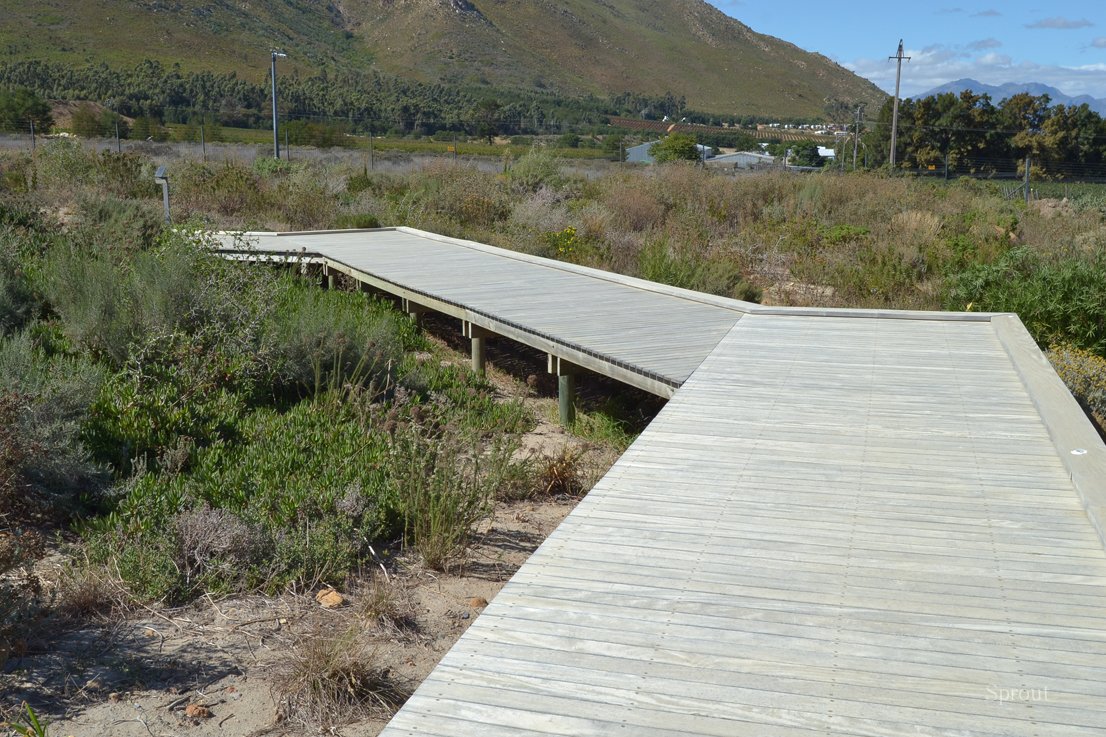
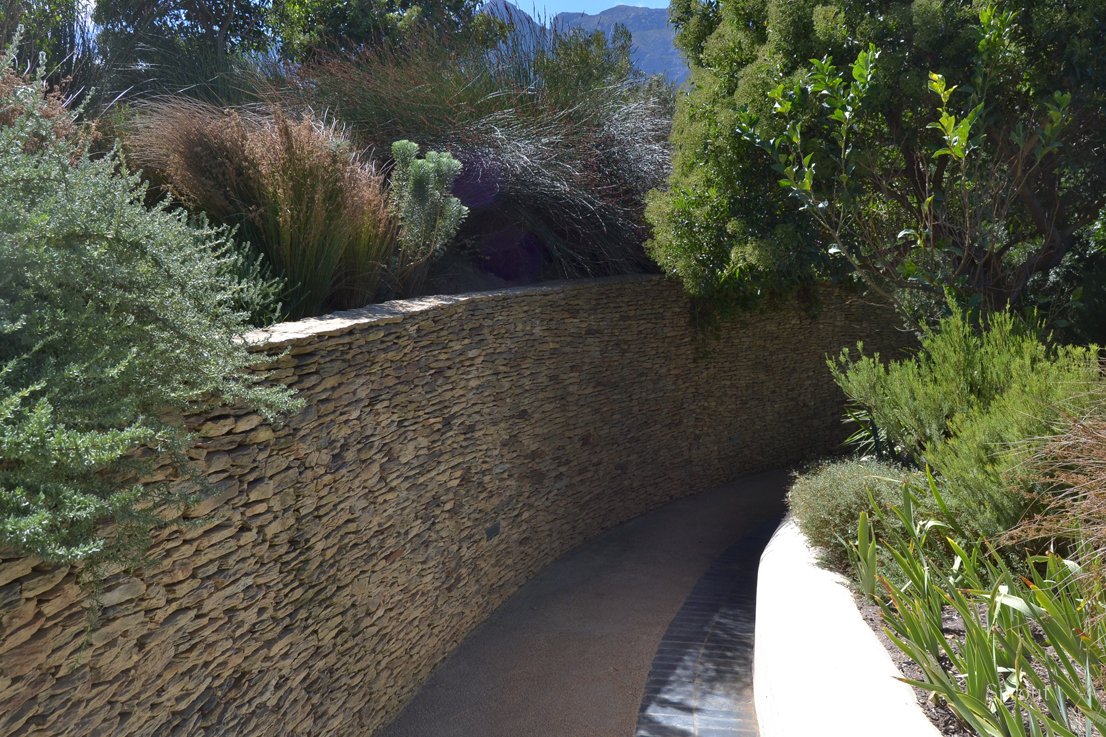
The layout and landscape was designed by award winning landscape architecture firms and truly creates an experience of feeling part of the landscape. Every view and pause area throughout the gardens has been carefully considered and the journey through the beautiful fynbos brings one close to nature, feeling immersed in the landscape. The site has been designed so that views of the surrounding mountains are always part of the experience. You are constantly aware of, and in connection with, the immediate and greater landscape of the valley.

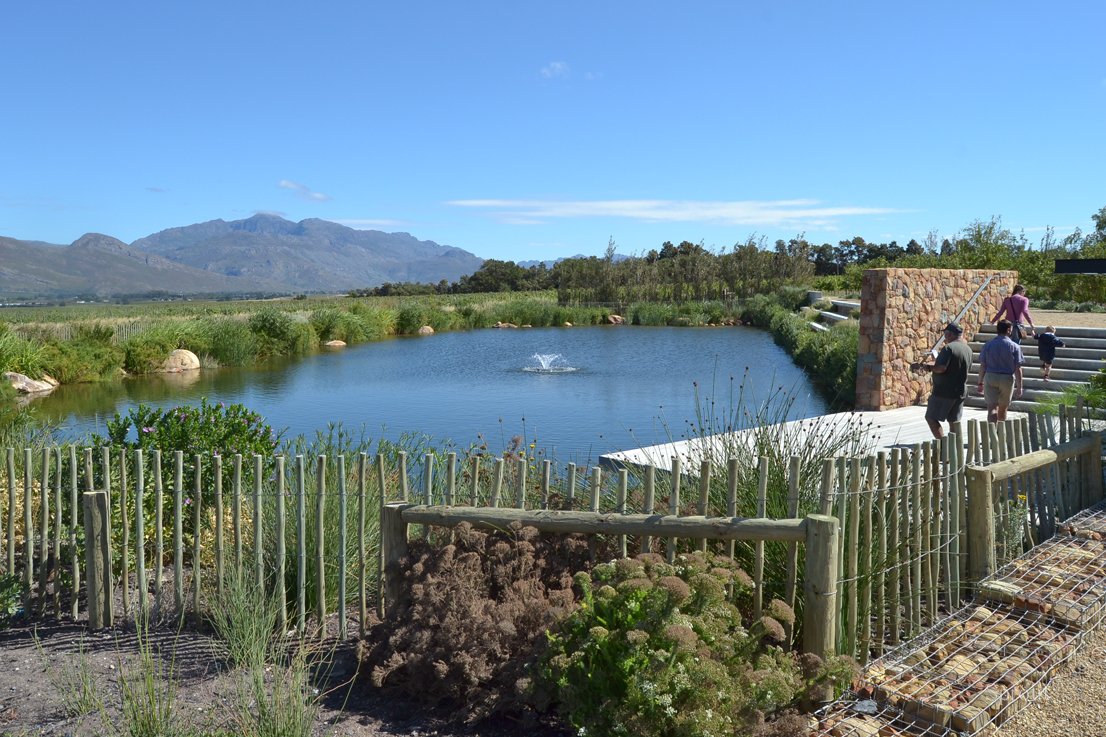
A meandering walk up a small mound leads you to a look out point and seating area where you can appreciate the length of the site as well as the surrounding views. A water feature where you can walk through two banks of cascading water allows for an immersive and poetic experience of ‘walking through water’ or spiritual baptism.

Water Feature

The gardens consist of a predominantly locally indigenous and endemic plant palette although several plants have been included for their Biblical reference and these have sign boards providing  the verse in the Bible where they are mentioned.

Plants with a Biblical reference are sign posted with relevant scripture

There are several garden rooms to explore so make sure you allow enough time to fully enjoy this farm!

The Botha’s Halte Primary School

The Bosjes Trust was conceived by the owners as a tool for social investment. It was established with a vision to create employment and secure a future for the children of the valley. One of the projects, together with the Department of Education, includes the redevelopment of an adjoining school that one can see when entering at the main gate. (https://bosjes.co.za/care/)

We had a wonderful time exploring the gardens and appreciating the beauty of a well designed landscape and our South African culture, heritage and fauna.


See Bosjes Website for more information: https://bosjes.co.za/gardens/

Note that no outside food or pets are allowed onto the grounds.

Adene's Flower Farm

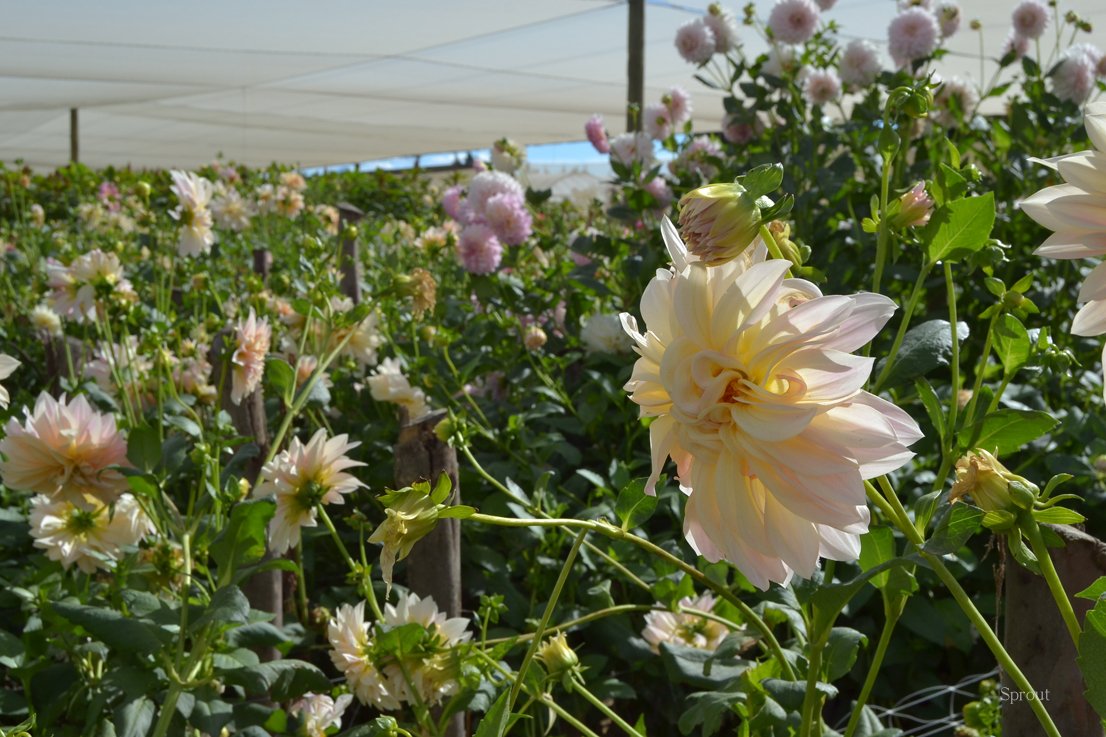
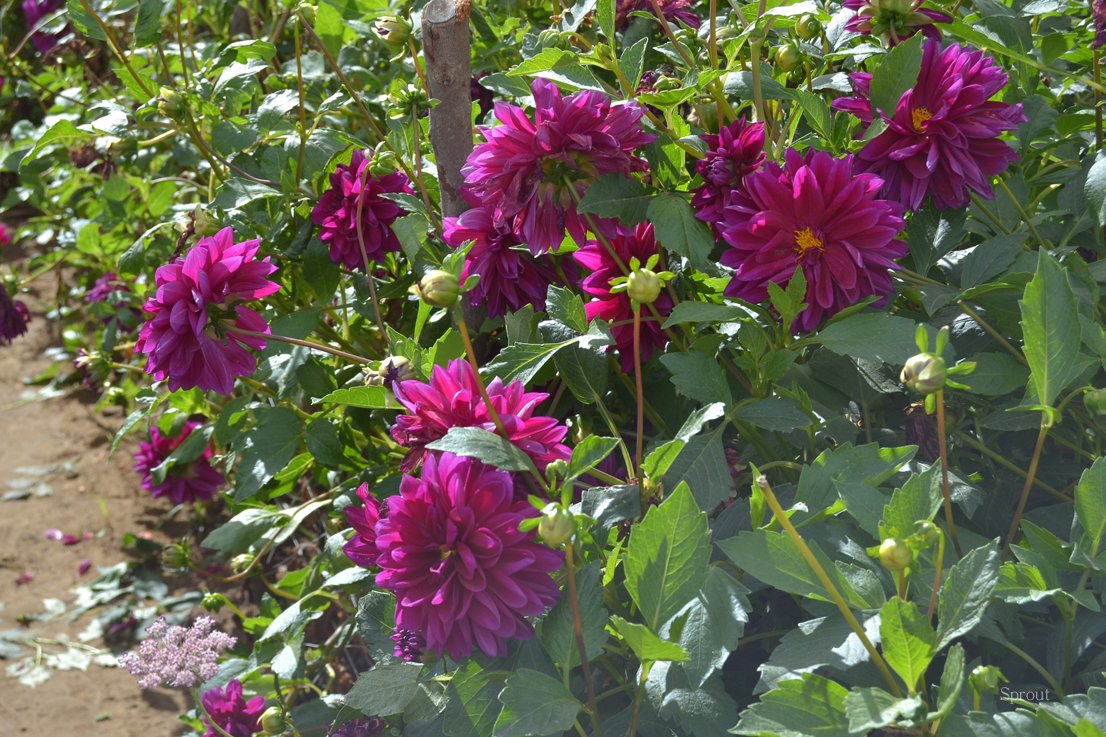
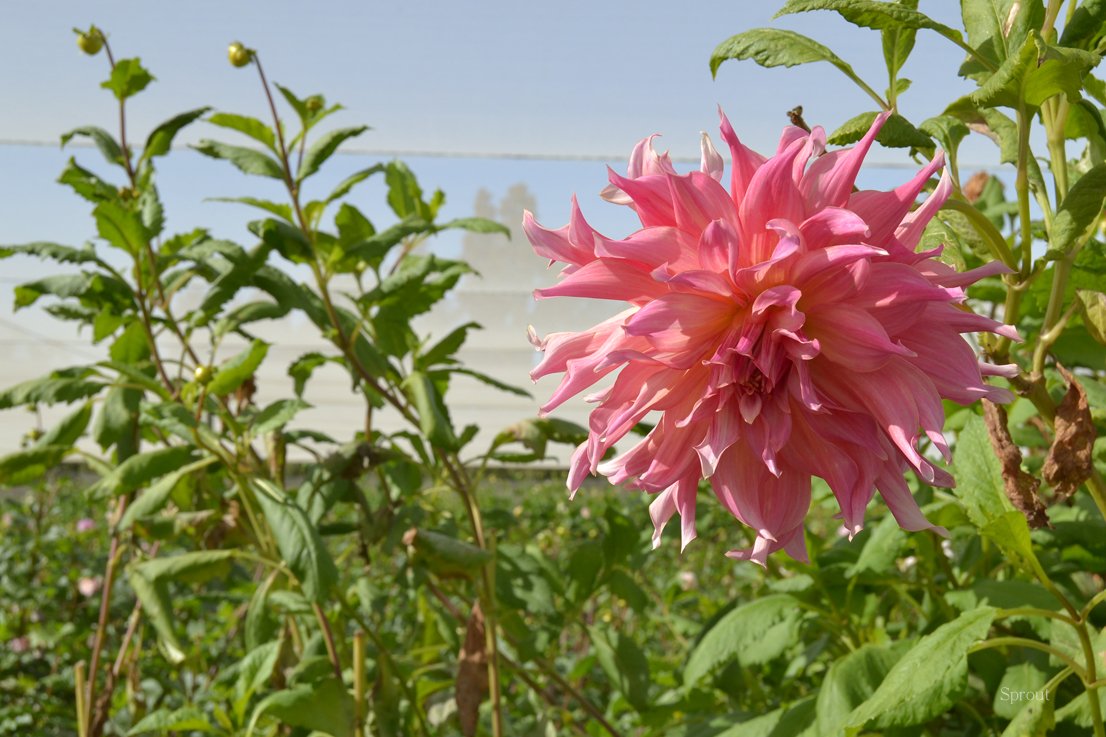
I first discovered Adene’s Flower Farm through Instagram where her stunning pictures of gigantic flowers made me wonder if these could possibly be real. Since we love beautiful and inspiring places we naturally included Adene’s Flower Farm in our itinerary.

About the Farm

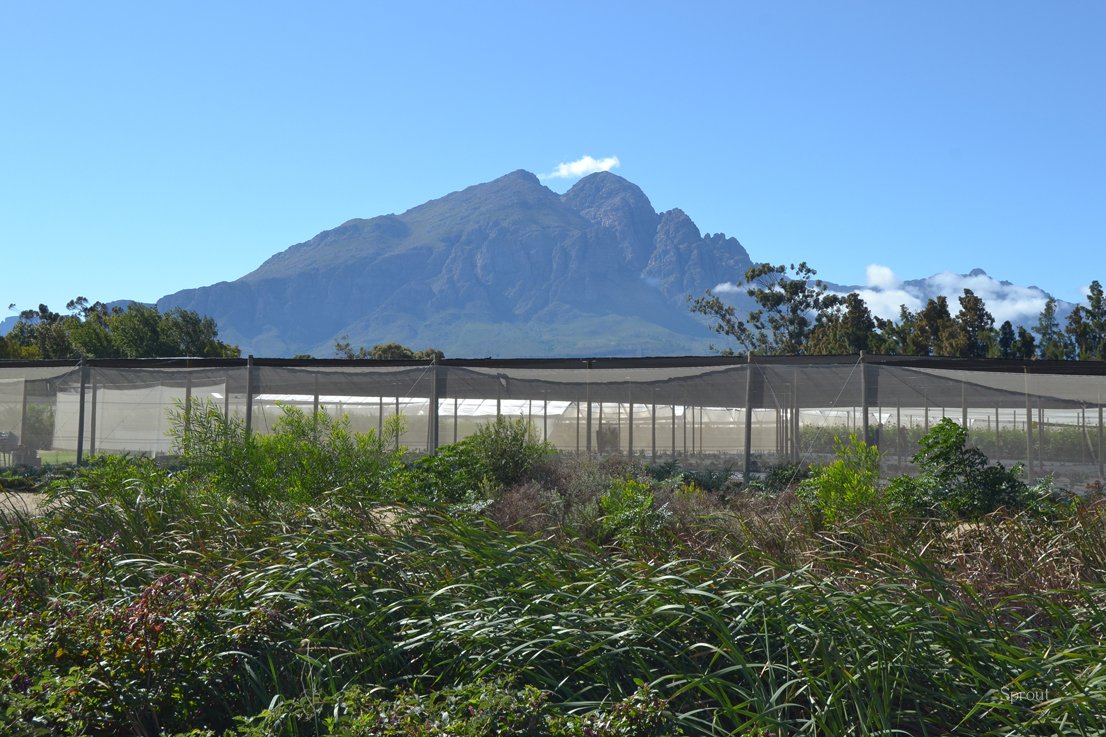
The Flower Farm is situated on a farm called Platvlei Fruit Farm which is a family farm that was purchased by the Nieuwoudts in 1937. Adene Nieuwoudt, the driving force behind the business and beautiful face of the Instagram account, started the flower farm in 2016 after working as a photographer in the wedding industry. The farm has grown considerably over the past few years and is now 5 hectares in size and includes over 200 different varieties of flowers.

The Products

The Flower Farm is dedicated to producing high quality, beautiful and long lasting fresh cut flowers and foliage. They sell their produce (also seeds and tubers) directly to the public, through their website and at markets including the Oranjezicht Market at the Cape Town Waterfront every Saturday and Sunday. This year they will be exporting their Dahlia tubers to Chile, Namibia and Zambia.

Visiting the Farm

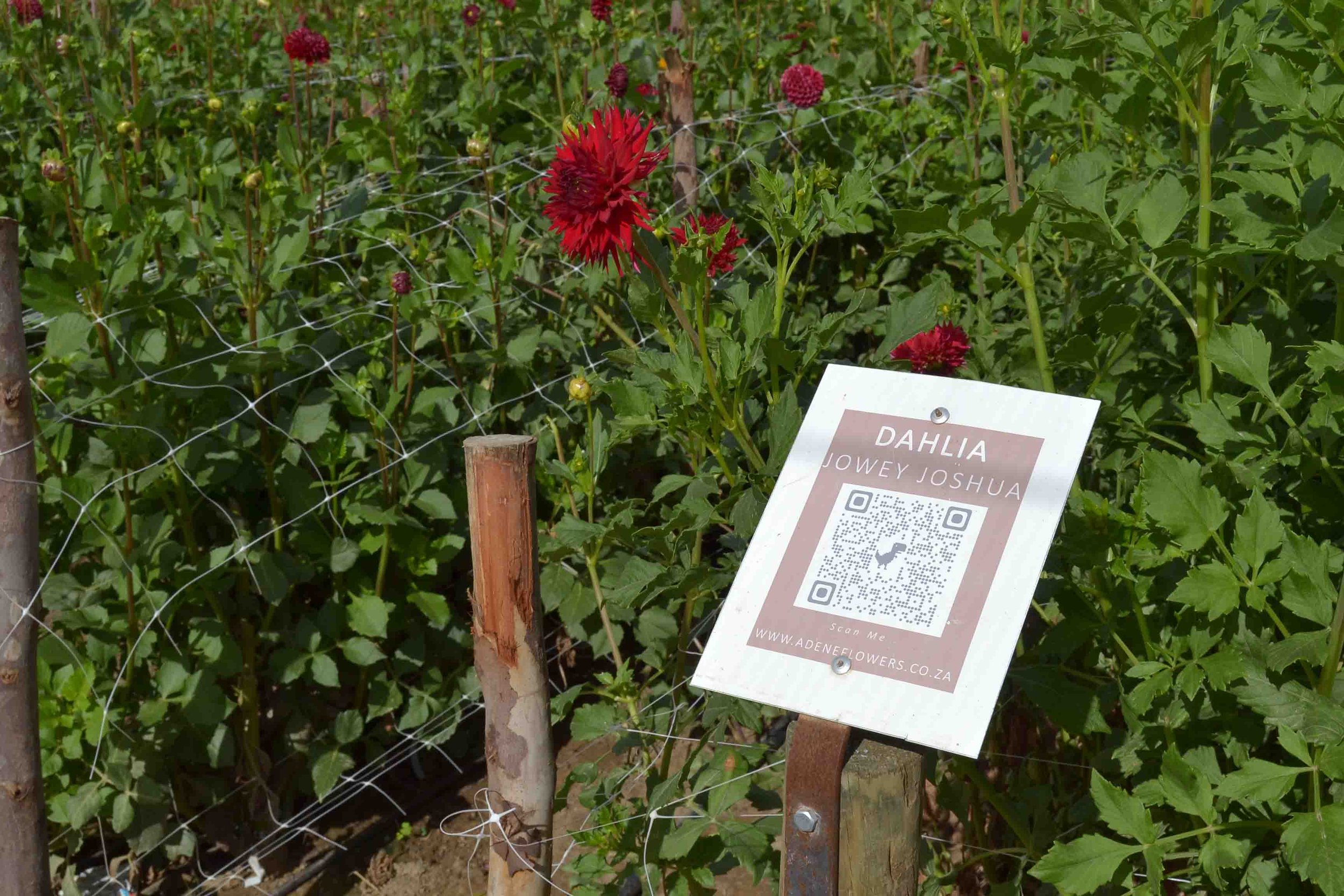
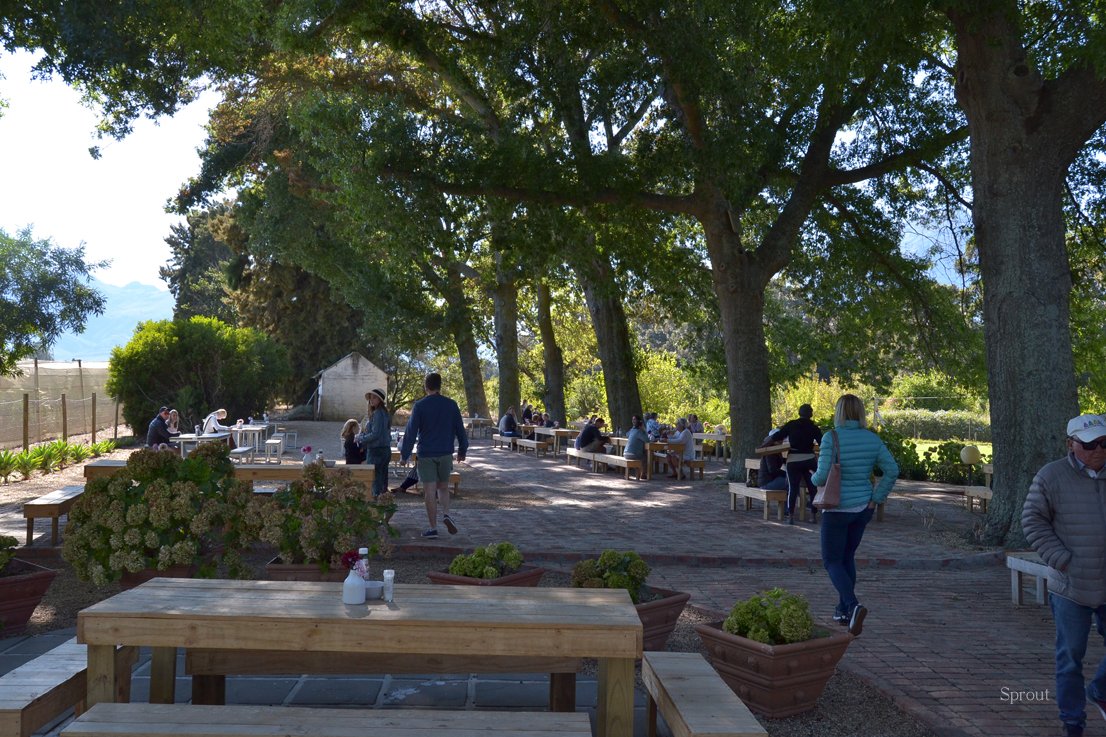
The Farm is open to the public for visits from the middle of December to the first week of April on Saturdays and Sundays. A small fee is payable upon entering and includes a map and packet of seeds to take home. There is a coffee shop that serves drinks and light beverages and seating areas under the Oak trees. The tunnels hold a variety of different plants and name boards with a QR code can be found at most flowers. The QR code on these boards can be scanned to link to the website where you can find more information about the flower or add it to your wishlist.

Coffee shop with seating below the Oak Trees

We enjoyed ambling our way through the tunnels bursting with colour and beauty.

For a botanical experience that any flower lover will appreciate a visit to this flower farm in Wolseley in the Cape is highly recommended. Adene is inspirational in her approach of running a business while still making time for her family and I must say that seeing the joy that this brings her it makes me even more certain that #plantsmakepeoplehappy :)

 www.adeneflowers.co.za

Instagram @adeneflowers

Suikerbosrand Nature Reserve

Situated about an hours drive to the South of Johannesburg lies a nature reserve that is well known to birders, hikers and cyclists. The reserve is named after the Transvaal Sugar-bush (Protea caffra), which occurs chiefly in the eastern and south-eastern parts. The basic objectives of the nature reserve are to “conserve the natural environment ensuring that plant and animal species diversity is maintained and provide open-air outside recreation, environmental education and research opportunities”.

There are several trails in the reserve and more information can be found on the website. The Cheetah Trail is 4km and takes approximately 1.5hours. The Bokmakierie Day Trail is 10 or 11.5km. There are overnight huts along the hiking trail if you would like to do an overnight hike (self-guided and plan your own route).

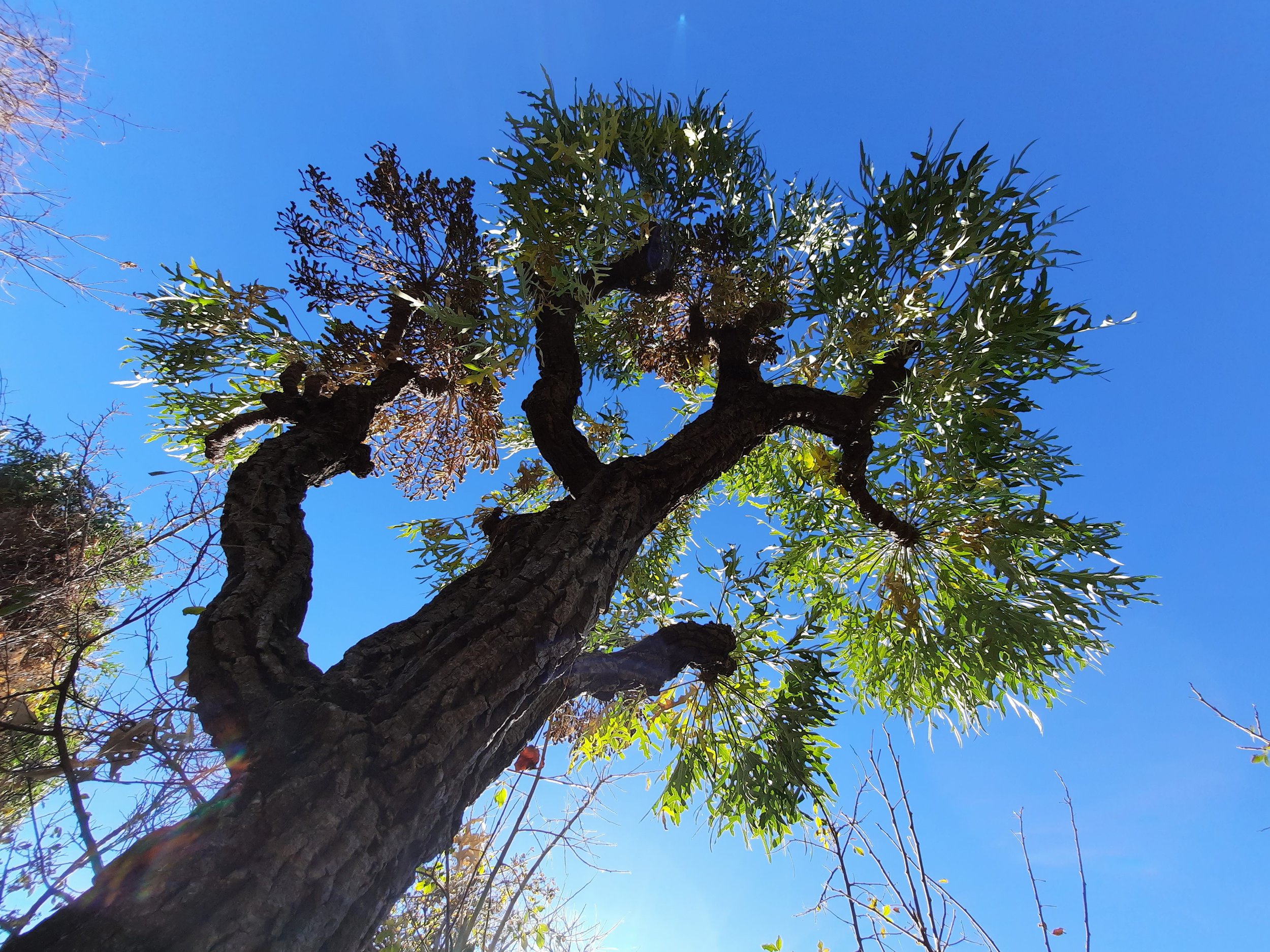
Cussonia paniculata towering above us on the Toktokkie Trail

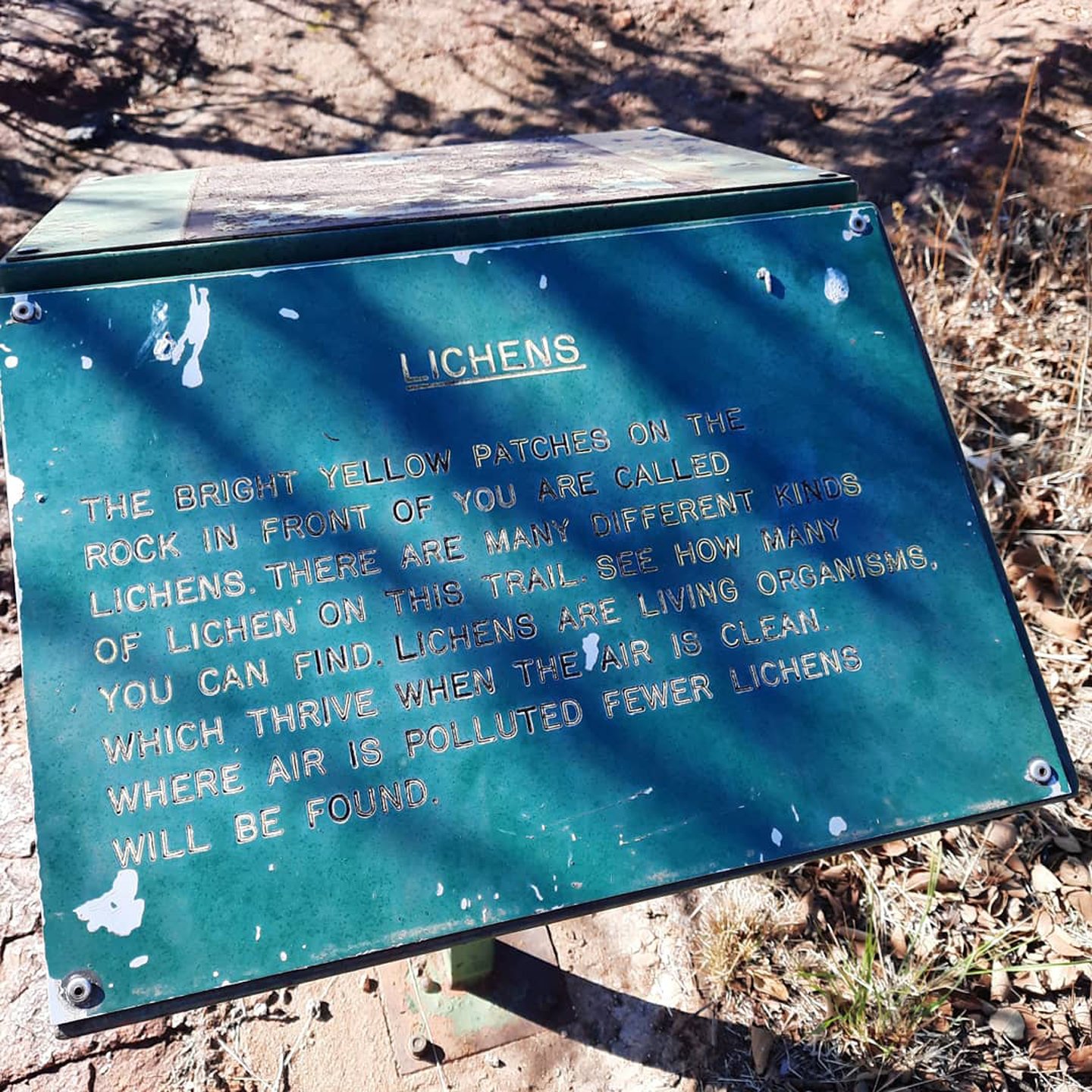
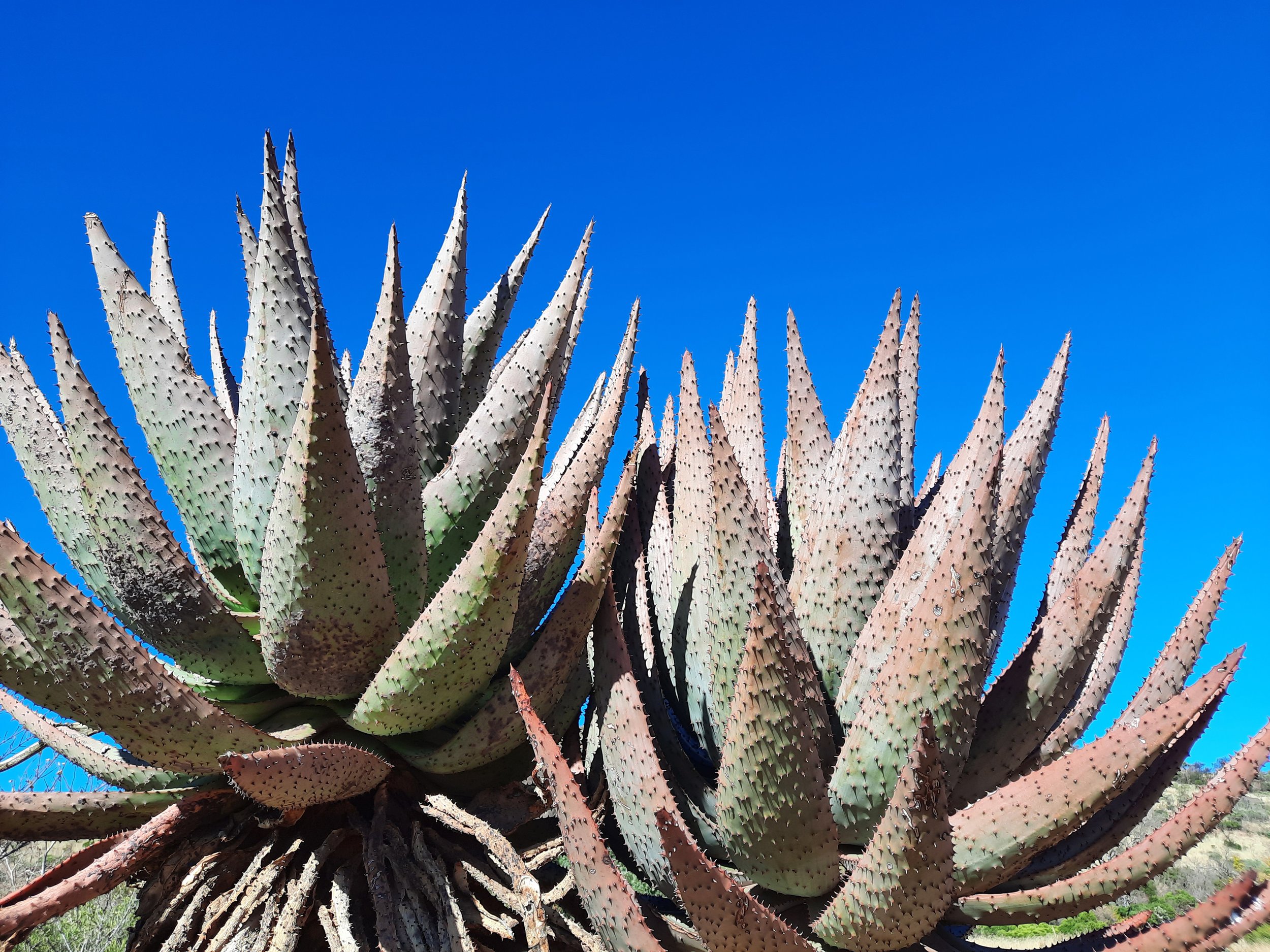
The tar road through the reserve provides the ideal challenge for cyclists as a single loop is 60 km and if you are even fitter you can add the second loop. We drove (this time, hopefully more cycling in the future) and enjoyed the views, stopping to walk short distances to look out points. Once back at the Base Camp (Diepkloof Picnic Area) we walked the short 700m Toktokkie Trail that winds up a gentle hill and provides a lovely view over the reserve. The trail is wheelchair friendly and the paved pathway has several signage boards along the route. The boards provide insights into nature that can be seen along the trail such as cabbage trees, aloes and lichen covered rocks. We also spotted several birds and some zebra.

Toktokkie Trail with Information Boards

We visited the reserve in winter so you can see the grasses are all yellow and the veld often burnt. In summer this reserve is all shades of green and filled with birdsong.

The vegetation is grassland with two grassland types namely Moist Cool Grassland and Rocky Highveld Grassland. Clumps of trees, especially White stinkwood (Celtis africana), Highveld cabbage tree (Cussonia paniculata), Ouhout (Leucosidea sericea), Sweet Thorn (Acacia karroo), the Highveld Protea (Protea caffra), and the Common Guarri (Euclea undulata) can be found.

The reserve boasts small and large game such as zebra, wildebees and antelope as well as excellent birdlife. A variety of habitats (high altitude grassland, rocky outcrops, wooded valleys, protea woodland and wetlands) provide excellent opportunities to see the abundant birdlife and over 270 species have been recorded (See Birdlife South Africa Post). We even spotted a snake warming itself on the tar road and climbed out to get a closer look.

Large parking area for cyclists and hikers

After exploring we enjoyed a picnic at the children’s play area next to the parking area. There are jungle gyms, a trampoline and trees with benches below to sit on.

Visiting this reserve is certainly a memorable nature experience and you may even find yourself singing “Suikerbos Ek wil jou he” on your way home.


https://www.friendsofsuikerbosrand.co.za/

COHEN, C. SPOTTISWOODE, C. & ROSSOUW, J. 2006 Southern African Birdfinder. Cape Town: Struik Nature

Treeshop - Indigenous Tree Nursery

I met Piet and Sandra at their nursery north of Pretoria one Friday morning. Piet was six metres up a tall ladder busy welding a steel structure (new shade structures) while Sandra was walking through the farm keeping track of orders and attending to client requests. Piet and Sandra are both nature enthusiasts who love birdwatching, hiking and travelling South Africa. It is through their passion for the bush that Piet’s hobby of growing trees started. Both look fit and energetic and once they start talking about their business their passion and enthusiasm is contagious.

Piet explained how he presented a course at the University to engineering graduates preparing them for working in the corporate environment. One of the modules taught that when you start working you should have a retirement plan in place for when you reach the end of your working career. The theory explains that you should “start a hobby that you enjoy that can become a stream of income when you retire” and so Piet decided to put the theory that he taught into practice.

Sandra took me through the well organised Nursery - a treasure trove of Indigenous Trees

Piet took a percentage of his retirement savings and invested it towards the tree growing business which originally only started as a hobby. Sandra explains that his first seedlings were grown on the covered patio of their home in Vanderbijlpark. It is from here that they developed the business for a period of 12 years while Piet was still employed. During this period they purchased the farm where the nursery is now established. When Piet retired they moved to Pretoria where he was able to focus all his energy to further develop the farm, automate some of the tree cultivation processes and expand Treeshop’s species offer. Piet uses his engineering background to design new technology that benefits the business – from growing seedlings in trays made with 3D printing technology to building new greenhouses.

The new shade structures under construction

Sandra has a vast knowledge about all the trees and plants that they grow

The nursery is continuously expanding and through Piet and Sandra’s passion and dedication it is also innovating as they aim to become the best supplier of indigenous trees in Southern Africa. It boasts a wide range of indigenous trees of varying sizes and they are specifically attempting to grow trees that are not easily available in cultivation because they are either difficult to grow or find.

Pittosporum viridiflorum (Cheesewood)

Rothmannia globosa (September Bells)

The nursery also includes a bonsai range and it is amazing to see miniature versions of indigenous trees. They have also positioned themselves as forerunners in the market for growing potted trees. These are ideal if you have limited space or if you want to enjoy indigenous trees in situations that would otherwise be impossible to plant such as patios, balconies or small gardens.

Potted Trees are ideal for difficult to grow situations

Most of the trees that they grow are adapted to the climatic conditions of the Highveld, although some are from warmer parts of the country (eg. Albizia, Commiphora, Sterculia). However, the farm receives temperatures of -4 so they are exposed to colder conditions. Always check frost sensitivity of a tree before deciding to plant it.

If you need help choosing indigenous plants or trees for your garden have a look at the ebook I have written at ebook.sproutlandscapes.co.za. The e-book will guide you to decide what steps to take for your own garden in a simple and encouraging way. There are several plant palettes to help you make correct plant choices including shrubs for screening, trees for screening, and planting in sunny or shady conditions.

Combretum hereroense (Russet Bushwillow)

Most of the trees that Treeshop grow can be seen on their website but they also grow more unusual species so if you are looking for something specific it would be best to contact them directly to enquire.

Treeshop Nursery sells quality indigenous trees directly to the public and people can purchase through their website www.indigenoustrees.online or by emailing Sandra.

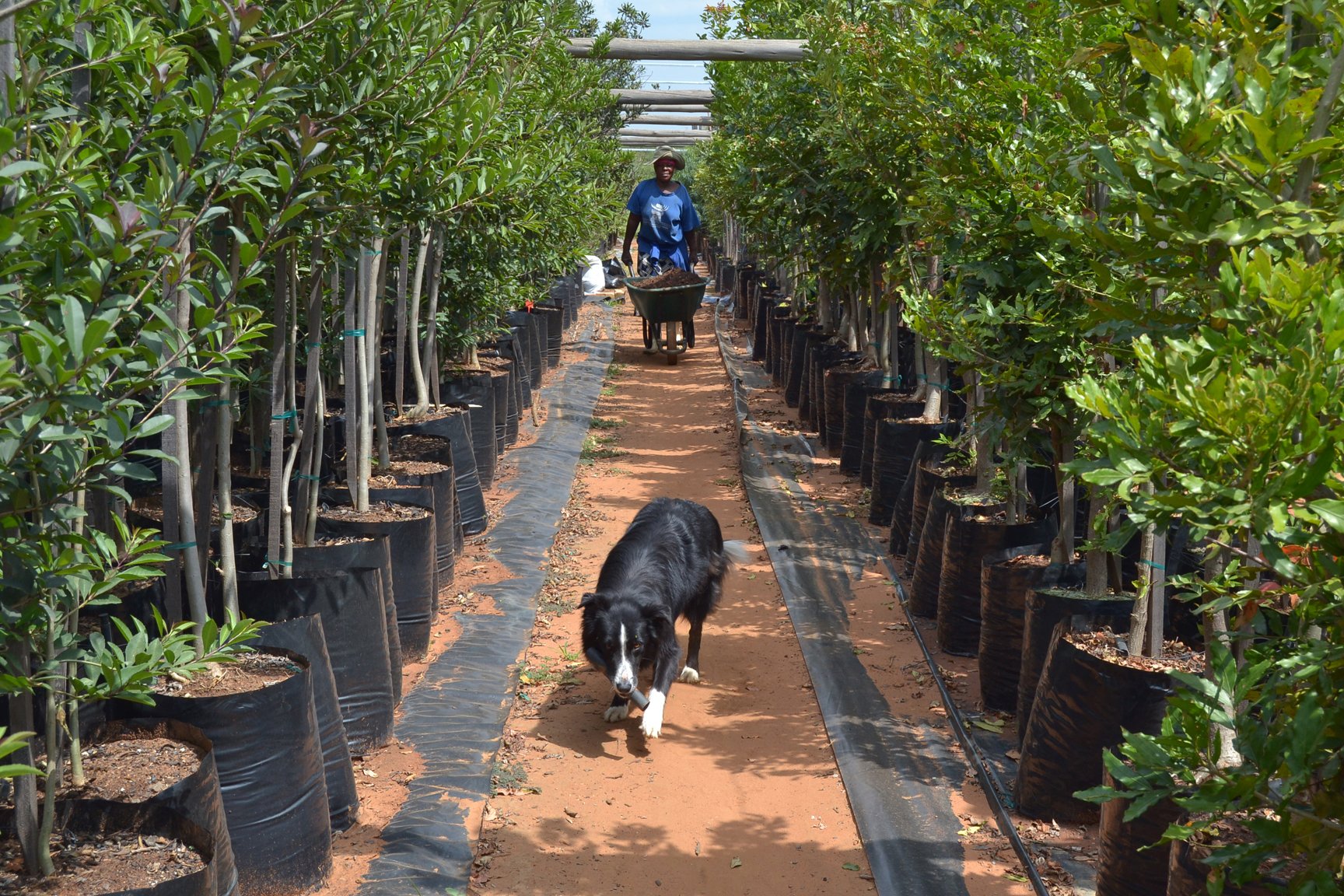
A variety of tree sizes are available - these Ilex mitis (Cape Holly) trees are in 200l. bags